Old Maps of Farmington, Wisconsin for Genealogy
Trace your family roots with 61 historic maps of Farmington. These high-res maps reveal old neighborhoods, homesites, landmarks, and streets — helping you uncover where your ancestors lived and how the area evolved over time.
- Explore historic neighborhoods: Identify where your relatives may have lived in the 1800s or 1900s.
- Compare maps over time: Trace the changes in streets, buildings, and landmarks for multi-generational research.
- Perfect for genealogy & ancestry research: Used by family historians and researchers to map out lineage and migration.
These maps are an incredible resource for exploring your personal connection to Farmington's past.
Farmington, WI maps
(61)- 1909 Map of Sparta
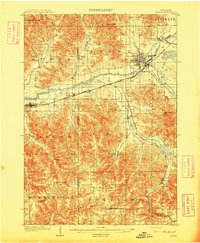 1909 Sparta1909 Print · USGSMonroe and La Crosse Counties are shown here during the height of the steam-rail era, centered on the growing hub of Sparta. Genealogists can trace family holdings across the dissected ridges of Middle Ridge and Portland or along the rail stops at Rockland and Bangor.3 unique versions available
 - 1926 Map of North Bend, 1965 Print
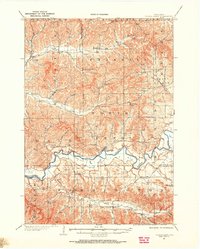 1926 North Bend1965 Print · USGSJackson and La Crosse counties are shown here in the mid-twenties, when the Black River valley was dotted with small family farms and dozens of rural school districts. Genealogists can trace ancestral locations near Stevenstown, Mindoro, and Upper Beaver Creek Ch.
 - 1927 Map of La Crosse, 1960 Print
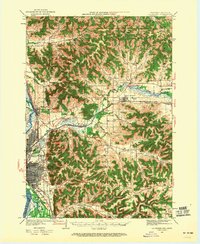 1927 La Crosse1960 Print · USGSLa Crosse and the Mississippi riverfront are captured in the 1920s as rail transit reached its peak. Genealogists can trace family names across dozens of rural school districts like Adams Valley Sch or locate landmarks such as Grand Dad Bluff and the County Asylum.
 - 1928 Map of Melrose
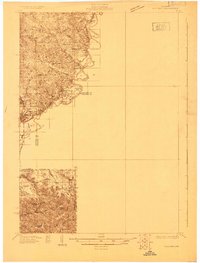 1928 Melrose1928 Print · USGSThe Black River valley in the late nineteen-twenties was a landscape of ridge-top farms and valley-floor schools. Genealogists can trace family footprints through numerous rural landmarks like Irving School No 6, Sand Creek Cem, and Wadels Hill.
 - 1929 Map of North Bend
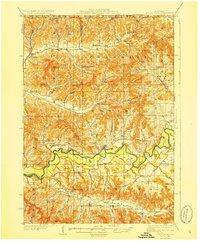 1929 North Bend1929 Print · USGSWisconsin's coulee country comes alive in this late 1920s survey of the tri-county borderlands along the Black River. Genealogists and local historians can trace family-named landmarks and rural hubs like Beachs Corners, Burr Oak, and the many one-room schoolhouses like Lone Star Sch.2 unique versions available
 - 1930 Map of La Crosse
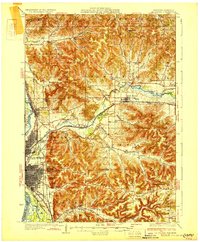 1930 La Crosse1930 Print · USGSThe riverfront and blufflands of western Wisconsin are captured here as the Great Depression began, showing a landscape defined by rail transit and coulee farming. Researchers can find numerous rural landmarks, from the County Asylum to small district sites like Maple Shade Sch and Barre Mills.3 unique versions available
 - 1947 Map of Sparta, 1972 Print
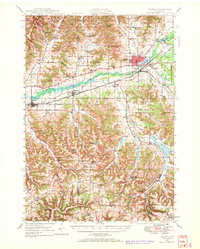 1947 Sparta1972 Print · USGSMid-century Monroe County comes alive through a dense network of valley farms and small-town rail hubs just after the war. Researchers can trace dozens of rural school sites like East Beaver Sch and Lincoln Sch alongside the flight paths of the Sparta Landing Field.
 - 1949 Map of Sparta
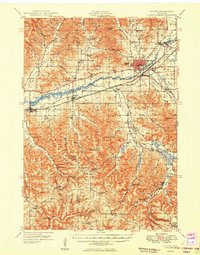 1949 Sparta1949 Print · USGSMonroe and La Crosse Counties in the late 1940s are defined by the rail-carved valleys of the La Crosse River. Genealogists can trace rural life through landmarks like Hylandale Academy, SS Peter & Paul Sch, and the border of Camp McCoy Military Reservation.
 - 1949 Map of Melrose
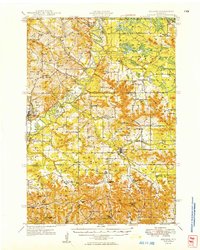 1949 Melrose1949 Print · USGSJackson and Monroe Counties appear here in the late 1940s as a thriving patchwork of valley farms and small rural hubs. Genealogists can locate dozens of family-named landmarks and institutions, from the Little Norway Ch and Irving Cem to the Jenkins Valley Sch.
 - 1953 Map of Eau Claire, 1965 Print
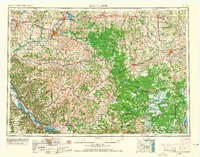 1953 Eau Claire1965 Print · USGSWest-central Wisconsin in the mid-fifties shows a landscape of river-valley industry and vast wildlife refuges during the transition from rails to modern highways. Genealogists and historians can trace the rail corridors of the Chicago and North Western or locate family-named landmarks like Decorah Mound and Chippewa Island.4 unique versions available
 - 1958 Map of Eau Claire
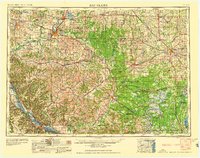 1958 Eau Claire1958 Print · USGSWestern Wisconsin in the late fifties shows a landscape of growing regional hubs and massive wildlife refuges. Trace the rail lines of the Chicago and North Western between Eau Claire and Marshfield, or explore the terrain around Iron Mound and Lake Wissota.
 - 1958 Map of La Crosse, 1979 Print
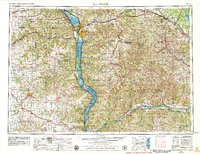 1958 La Crosse1979 Print · USGSThe Driftless Area of Wisconsin and Iowa is captured here during the late seventies, showing the intricate river valleys and ridge-top settlements. Genealogists and historians can trace the rail corridors of the Soo Line or locate landmarks like Grandad Bluff and Effigy Mounds National Monument.2 unique versions available
 - 1961 Map of La Crosse
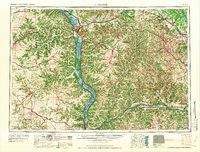 1961 La Crosse1961 Print · USGSThe Driftless Area at the start of the 1960s reveals a complex network of river towns and rail lines along the Mississippi River. Genealogists and historians can trace old settlements like New Amsterdam and Wyattville or locate major landmarks like Camp McCoy Military Reservation and Effigy Mounds National Monument.
 - 1963 Map of Onalaska, 1964 Print
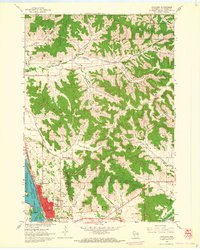 1963 Onalaska1964 Print · USGSOnalaska and the Black River bottoms are captured here in the early sixties, showing the transition from river life to the upland coulee country. Researchers can trace rural school locations like Halfway Sch, family-named landmarks like Jostad Coulee, and local sites such as the Halfway Creek Cem.2 unique versions available
 - 1963 Map of West Salem, 1964 Print
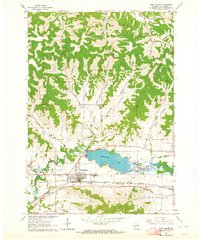 1963 West Salem1964 Print · USGSWest Salem and the surrounding coulee country are captured here in the early sixties as the modern interstate era begins to reshape the valley. Genealogists and local historians can trace rural landmarks from Bell Coulee Ch to the Neshonoc Cem and the busy rail corridors of the Bangor area.2 unique versions available
 - 1963 Map of La Crosse, 1965 Print
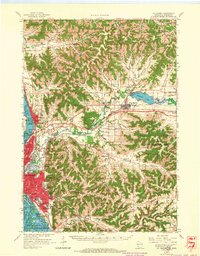 1963 La Crosse1965 Print · USGSLa Crosse and the Mississippi River bluffs are captured here in the early sixties, showing the complex interplay of rail lines and river commerce. Genealogists and local historians can trace small rural schools like Halfway Creek Sch and landmarks such as Granddad Bluff or the Holy Cross Seminary.3 unique versions available
 - 1964 Map of Eau Claire
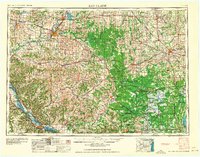 1964 Eau Claire1964 Print · USGSWest-central Wisconsin in the mid-1960s was a hub of river-driven industry and expanding rail networks. Researchers can trace historic homesteads near Menomonie, follow the Soo Line RR through Marshfield, or explore the grounds of the Camp McCoy Military Reservation.
 - 1965 Map of La Crosse
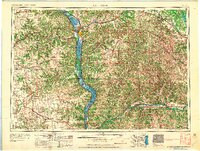 1965 La Crosse1965 Print · USGSThe Driftless Area and the Upper Mississippi valley are captured here during a period of steady mid-century growth. Researchers can trace the rail lines of the Chicago and North Western or locate riverfront sites like Effigy Mounds National Monument and the Camp McCoy Military Reservation.
 - 1969 Map of Stevenstown, 1971 Print
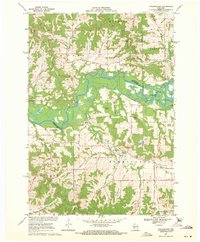 1969 Stevenstown1971 Print · USGSThe Black River valley during the late sixties serves as a crossroads of family history and conservation in rural Wisconsin. Genealogists can trace lineage through Hardies Cemetery or Sacia Cemetery, while outdoorsmen can locate the State Game Refuge and Horseshoe Lake.2 unique versions available
 - 1969 Map of North Bend, 1971 Print
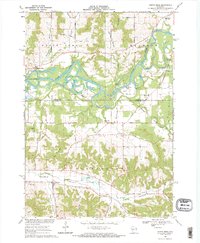 1969 North Bend1971 Print · USGSThe Black River valley and its intricate coulees are documented here during the late sixties, spanning the border of Jackson and La Crosse counties. Genealogists can locate family-named landmarks and rural burial sites like Oxbow Cem, the historic Red School, and the German Settlement.2 unique versions available
 - 1976 Map of La Crosse
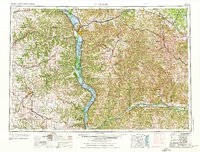 1976 La Crosse1976 Print · USGSThe Driftless Area and Mississippi River valley are captured here in the mid-seventies, showing a landscape of deep coulees and river commerce. Genealogists can trace family footprints from La Crosse to smaller hamlets like Newburg Corners and Witoka.
 - 1976 Map of Sparta NW, 1978 Print
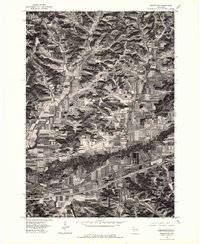 1976 Sparta NW1978 Print · USGSThe river valley between Bangor and Rockland is captured here during the mid-seventies, showing a landscape defined by contour farming and rail lines. You can trace the winding path of the La Crosse River and several tributaries including Burns Creek.2 unique versions available
 - 1983 Map of Four Corners, 1984 Print
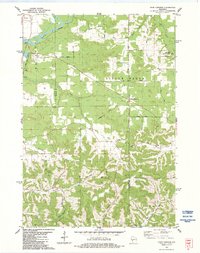 1983 Four Corners1984 Print · USGSMonroe and La Crosse counties show a landscape of deep coulees and ridges during the early 1980s. Local researchers can trace family-named landmarks like Wanlass Hill, visit the Sand Creek Cem, or explore the rural intersection at Four Corners.
 - 1983 Map of Bangor, 1984 Print
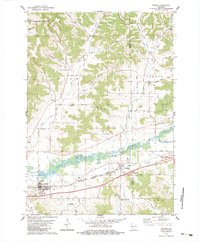 1983 Bangor1984 Print · USGSThe La Crosse River valley and the dual-railroad corridor of the 1980s show a settled landscape of coulees and river flats. Genealogists can locate St Marys Cem, the Welsh Calvinistic Cem, and traces of the Chicago and North Western line.
 - 1984 Map of La Crosse, 1985 Print
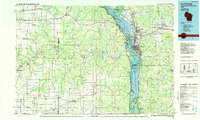 1984 La Crosse1985 Print · USGSThe Driftless Area of the upper Mississippi valley appears here in the mid-eighties, showing the tri-state intersections of Wisconsin, Minnesota, and Iowa. Genealogists and local historians can trace family-named landmarks such as Peacock Ridge or Prosch Coulee and locate rural landmarks like St Marys Ch.
Showing maps 1-25 of 61
Top cities near Farmington
- La Crosse historical maps
- Onalaska historical maps
- Holmen historical maps
- Sparta historical maps
- Sparta historical maps
- West Salem historical maps
See more
Top neighborhoods of Farmington
Frequently asked questions
- What are the different types of historical maps available for Farmington?
- What is the oldest map of Farmington?
- Where can I purchase historical maps of Farmington for my home or office?
- Where can I download high-res historical maps of Farmington?
- Are there historical topographic maps available for Farmington?
- Is there historical aerial imagery available for Farmington?
- Where are historical maps of Farmington sourced from?