1900s (20th Century) Maps of Byron, Wisconsin
Explore 17 historic maps of Byron from the 1900s (20th Century). These maps offer a rare glimpse into what life looked like during the 1900s — showing old roads, neighborhoods, homes, and landmarks that have changed or disappeared over time.
Whether you're researching your family's past, planning a metal detecting trip, or studying how Byron's landscape evolved across the 1900s, these high-resolution maps are a powerful tool for exploring the history of this region.
- Focus on a specific era: All maps on this page are from the 1900s, giving you a focused view of this time period.
- See what’s changed: Compare century-old streets, trails, and buildings to today's modern landscape using overlays and satellite layers.
- Research with precision: Use these maps for genealogy, historical research, land use analysis, or educational projects.
- View, download, or print: Maps are fully viewable online in high resolution, and can be downloaded or printed for your own records.
Start exploring Byron's history through authentic maps from the 1900s. This is your window into the past.
Byron, WI maps
(17)- 1919 Map of Kendall, 1959 Print
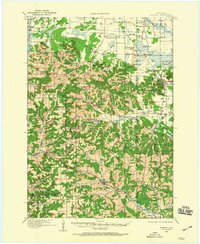 1919 Kendall1959 Print · USGSMonroe and Juneau counties are mapped here at the height of the rural school era, before the consolidation of the hill country districts. Genealogists can trace family footprints at Dorset Ridge Church, Little Ireland School, and small rail stops like Hustler.
 - 1921 Map of Kendall
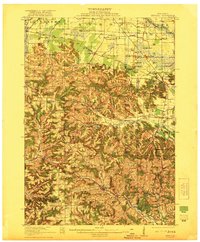 1921 Kendall1921 Print · USGSMonroe and Juneau Counties are shown here during the early twenties, where steep ridges and isolated bluffs meet productive farm valleys. Genealogists can trace family names and local landmarks like Dorset Ridge Church, Hoffman Corners, and Sugar Bowl Bluff.2 unique versions available
 - 1953 Map of Eau Claire, 1965 Print
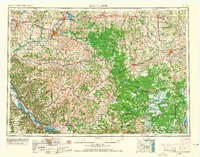 1953 Eau Claire1965 Print · USGSWest-central Wisconsin in the mid-fifties shows a landscape of river-valley industry and vast wildlife refuges during the transition from rails to modern highways. Genealogists and historians can trace the rail corridors of the Chicago and North Western or locate family-named landmarks like Decorah Mound and Chippewa Island.4 unique versions available
 - 1958 Map of Eau Claire
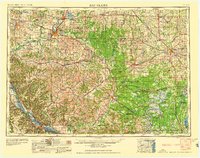 1958 Eau Claire1958 Print · USGSWestern Wisconsin in the late fifties shows a landscape of growing regional hubs and massive wildlife refuges. Trace the rail lines of the Chicago and North Western between Eau Claire and Marshfield, or explore the terrain around Iron Mound and Lake Wissota.
 - 1958 Map of Wyeville, 1960 Print
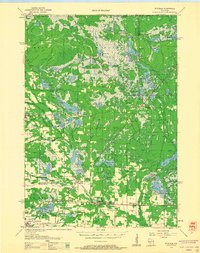 1958 Wyeville1960 Print · USGSWisconsin's cranberry and timber country is documented here in the late fifties, centered on the rail junctions of Monroe and Juneau Counties. You can trace the rural infrastructure of the day, from the Indian Cem and St Marks Ch to the Chicago and North Western rail lines.
 - 1958 Map of La Crosse, 1979 Print
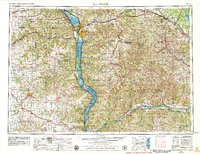 1958 La Crosse1979 Print · USGSThe Driftless Area of Wisconsin and Iowa is captured here during the late seventies, showing the intricate river valleys and ridge-top settlements. Genealogists and historians can trace the rail corridors of the Soo Line or locate landmarks like Grandad Bluff and Effigy Mounds National Monument.2 unique versions available
 - 1961 Map of La Crosse
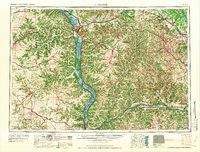 1961 La Crosse1961 Print · USGSThe Driftless Area at the start of the 1960s reveals a complex network of river towns and rail lines along the Mississippi River. Genealogists and historians can trace old settlements like New Amsterdam and Wyattville or locate major landmarks like Camp McCoy Military Reservation and Effigy Mounds National Monument.
 - 1962 Map of Kendall, 1964 Print
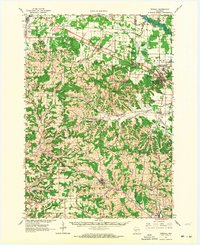 1962 Kendall1964 Print · USGSMid-century Monroe and Juneau Counties are captured here as military training sites and railroad engineering meet rural valley life. Genealogists and historians can locate family landmarks like Hoffman Corners, the Dorset Ridge Ch, and the high-elevation Sunny Ridge Sch.2 unique versions available
 - 1964 Map of Eau Claire
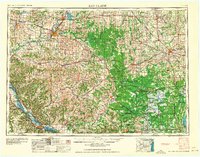 1964 Eau Claire1964 Print · USGSWest-central Wisconsin in the mid-1960s was a hub of river-driven industry and expanding rail networks. Researchers can trace historic homesteads near Menomonie, follow the Soo Line RR through Marshfield, or explore the grounds of the Camp McCoy Military Reservation.
 - 1965 Map of La Crosse
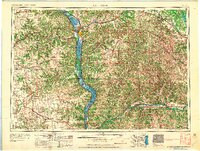 1965 La Crosse1965 Print · USGSThe Driftless Area and the Upper Mississippi valley are captured here during a period of steady mid-century growth. Researchers can trace the rail lines of the Chicago and North Western or locate riverfront sites like Effigy Mounds National Monument and the Camp McCoy Military Reservation.
 - 1970 Map of Wyeville, 1972 Print
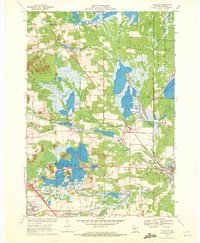 1970 Wyeville1972 Print · USGSMonroe County was a nexus of rail activity and cranberry production around 1970, centered on the village of Wyeville. Local historians can trace the Chicago and North Western line or locate sites like Valley Junction, Indian Cem, and the Veterans Administration Hospital.2 unique versions available
 - 1970 Map of Shennington, 1972 Print
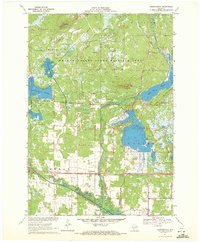 1970 Shennington1972 Print · USGSWisconsin’s cranberry and timber country is well-documented in the early seventies, centered on the Chicago and North Western rail line. Genealogists and historians can trace the rural community through Shennington, St Peters Cem, and the Norway Ridge Lookout Tower.
 - 1976 Map of La Crosse
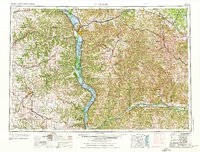 1976 La Crosse1976 Print · USGSThe Driftless Area and Mississippi River valley are captured here in the mid-seventies, showing a landscape of deep coulees and river commerce. Genealogists can trace family footprints from La Crosse to smaller hamlets like Newburg Corners and Witoka.
 - 1983 Map of Oakdale, 1984 Print
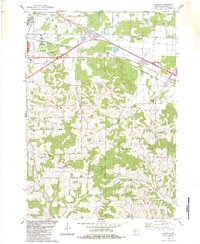 1983 Oakdale1984 Print · USGSThe rail-and-road corridor of Monroe County comes into focus in the early eighties, centered on the expansion of Tomah and the village of Oakdale. Genealogists and local historians can trace family-named sites like Sunny Ridge Sch, Oakdale Cem, and the high ground of Indian Ridge.
 - 1983 Map of Camp Douglas, 1984 Print
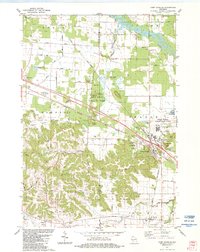 1983 Camp Douglas1984 Print · USGSJuneau County in the early 1980s shows a landscape of strategic military installations and striking glacial geology centered on Camp Douglas. Genealogists and researchers can trace local family names through sites like Sorenson Cem, Bethel Ch, and the outlying settlement of Hustler.
 - 1985 Map of Black River Falls
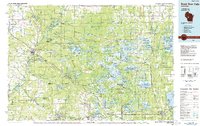 1985 Black River Falls1985 Print · USGSCentral Wisconsin in the mid-1980s is defined by its sprawling wildlife refuges and the winding Black River corridor. Genealogists and researchers can trace rural settlements like Millston and Warrens or locate historical sites such as the Iron Mine and the grounds of Fort McCoy.2 unique versions available
 - 1985 Map of Sparta
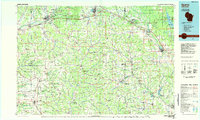 1985 Sparta1985 Print · USGSWestern Wisconsin in the 1980s shows the unique ridge-and-valley terrain of the Driftless Area during a period of transition for its rails and rural hubs. Trace the historic rail tunnels of the Elroy-Sparta State Trail and find local landmarks like St Marys Ch and Castle Rock Lake.2 unique versions available
End of results
Showing maps 1-17 of 17
Top cities near Byron
- Tomah historical maps
- New Lisbon historical maps
- Lindina historical maps
- Clifton historical maps
- Camp Douglas historical maps
- Wilton historical maps
See more
Top neighborhoods of Byron
Frequently asked questions
- What are the different types of historical maps available for Byron?
- What is the oldest map of Byron?
- Where can I purchase historical maps of Byron for my home or office?
- Where can I download high-res historical maps of Byron?
- Are there historical topographic maps available for Byron?
- Is there historical aerial imagery available for Byron?
- Where are historical maps of Byron sourced from?