1980s Maps of Cranmoor, Wisconsin
Explore 6 historic maps of Cranmoor from the 1980s. These maps offer a rare glimpse into what life looked like during the 1980s — showing old roads, neighborhoods, homes, and landmarks that have changed or disappeared over time.
Whether you're researching your family's past, planning a metal detecting trip, or studying how Cranmoor's landscape evolved across the 1980s, these high-resolution maps are a powerful tool for exploring the history of this region.
- Focus on a specific era: All maps on this page are from the 1980s, giving you a focused view of this time period.
- See what’s changed: Compare century-old streets, trails, and buildings to today's modern landscape using overlays and satellite layers.
- Research with precision: Use these maps for genealogy, historical research, land use analysis, or educational projects.
- View, download, or print: Maps are fully viewable online in high resolution, and can be downloaded or printed for your own records.
Start exploring Cranmoor's history through authentic maps from the 1980s. This is your window into the past.
Cranmoor, WI maps
(6)- 1984 Map of Lake Dexter
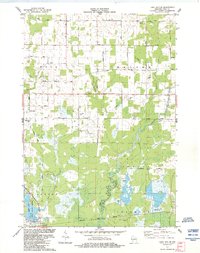 1984 Lake Dexter1984 Print · USGSWood County’s marshy lowlands and agricultural tracts are captured here in the mid-eighties, showing the intersection of local industry and the outdoors. Researchers can trace the path of the Green Bay and Western Railroad Grade or locate family plots at St Johns Cem and Dexterville.
 - 1984 Map of Nekoosa
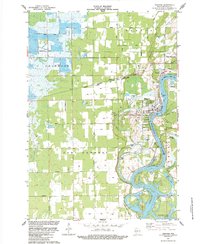 1984 Nekoosa1984 Print · USGSThe Wisconsin River corridor in the mid-1980s reveals a unique landscape of industrial river towns and sprawling commercial wetlands. Genealogists and local historians can trace the development of Nekoosa and Port Edwards near landmarks like Nekoosa Cem and the Townhall.
 - 1984 Map of Babcock
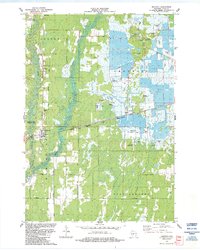 1984 Babcock1984 Print · USGSWood County’s cranberry country is documented here in the mid-1980s, showing a unique landscape of bogs and rural landing strips. Genealogists and local historians can locate the Babcock Cem and trace early routes like Lonesome Road or Creamery Road.
 - 1984 Map of Vesper
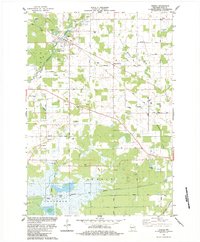 1984 Vesper1984 Print · USGSWood County in the mid-1980s shows a landscape of specialized agriculture and rural faith. Genealogists and local historians can trace family plots at Trinity Cem and Sigel Cem, while mapping the industrial footprint of the Soo Line and the extensive Cranberry Bogs near Walker.
 - 1985 Map of Black River Falls
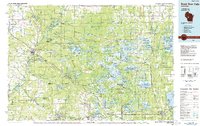 1985 Black River Falls1985 Print · USGSCentral Wisconsin in the mid-1980s is defined by its sprawling wildlife refuges and the winding Black River corridor. Genealogists and researchers can trace rural settlements like Millston and Warrens or locate historical sites such as the Iron Mine and the grounds of Fort McCoy.2 unique versions available
 - 1985 Map of Wisconsin Rapids
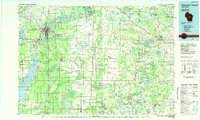 1985 Wisconsin Rapids1985 Print · USGSCentral Wisconsin in the mid-eighties shows a landscape of engineered waterways and active rail corridors between Wisconsin Rapids and Waupaca. Genealogists and researchers can trace local landmarks like Roche A Cri State Park, the SOO LINE, and small settlements like Coddington or Rudolph.2 unique versions available
End of results
Showing maps 1-6 of 6
Top cities near Cranmoor
- Wisconsin Rapids historical maps
- Nekoosa historical maps
- Port Edwards historical maps
- Big Flats historical maps
- Pittsville historical maps
- Biron historical maps
See more
Top neighborhoods of Cranmoor
Frequently asked questions
- What are the different types of historical maps available for Cranmoor?
- What is the oldest map of Cranmoor?
- Where can I purchase historical maps of Cranmoor for my home or office?
- Where can I download high-res historical maps of Cranmoor?
- Are there historical topographic maps available for Cranmoor?
- Is there historical aerial imagery available for Cranmoor?
- Where are historical maps of Cranmoor sourced from?