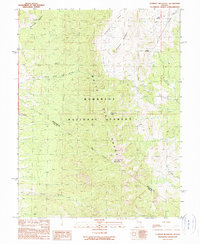
1990 Map of Currant Mountain
USGS Topo · Published 1990About this map
Currant Mountain dominates the high-altitude topography of this Nevada study, where the boundary between White Pine and Nye counties cuts across the high ridges of the Humboldt National Forest. The landscape is defined by steep drainage basins and isolated water sources that were critical to early regional movement and survival, including Limerock Spring and Vanover Spring. In the lower elevations, small-scale mineral exploration is evident by a lonely Prospect near Broom Canyon, signaling the persistent search for ore in the Great Basin. The network of canyons, such as White River Pass Canyon and Blackrock Canyon, provides a clear view of the natural corridors used to navigate this complex terrain before modern infrastructure reached the interior of the range.
Find a feature on this map
15 named features on this map. Tap any name to fly to it.
Don’t see what you’re looking for? This feature index may not catch every label — zoom into the map to look around manually.
Map Details
Editions of this 1990 Currant Mountain Map
This is the sole edition of this map. No revisions or reprints were ever made.
Other maps of this area
1949 · Treasure Hill
USGS Topo · 1:62,500
1950 · Treasure Hill
USGS Topo · 1:62,500
1951 · Green Springs
USGS Topo · 1:62,500
1956 · Lund
USGS Topo · 1:250,000
1956 · Ely
USGS Topo · 1:250,000
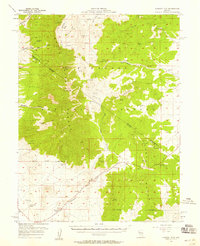
1957 · Currant Mtn
USGS Topo · 1:62,500
1959 · Ely
USGS Topo · 1:250,000
1960 · Lund
USGS Topo · 1:250,000
1963 · Ely
USGS Topo · 1:250,000
1964 · Duckwater
USGS Topo · 1:62,500