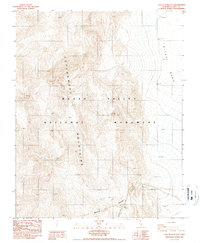
1987 Map of East of Sand Flat
USGS Topo · Published 1987About this map
Death Valley National Monument is the primary focus of this high-altitude topographical study, which captures the stark geological transitions within Inyo County in the late 1980s. The landscape is dominated by the steep, dissected ridges of the Cottonwood Mountains, where numerous surveyed peaks and ridges demonstrate the dramatic elevation changes characteristic of the Great Basin. To the east, the terrain descends toward the Niter Beds, a region shaped by mineral deposits and alluvial processes. Navigational details are limited in this undeveloped wilderness, though a single 4wd track is marked as it winds through Marble Canyon, indicating the primary route for exploration or maintenance access. This provisional map provides a precise record of the natural contours and drainage patterns before the monument's expansion into a national park, offering essential data for those studying the physical geography and remote access routes of the Mojave Desert.
Find a feature on this map
5 named features on this map. Tap any name to fly to it.
Don’t see what you’re looking for? This feature index may not catch every label — zoom into the map to look around manually.
Map Details
Editions of this 1987 East of Sand Flat Map
This is the sole edition of this map. No revisions or reprints were ever made.
Other maps of this area
1908 · Ballarat
USGS Topo · 1:250,000
1913 · Ballarat
USGS Topo · 1:250,000
1948 · Death Valley
USGS Topo · 1:250,000
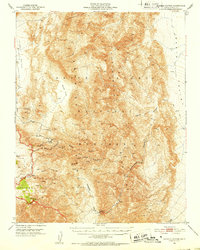
1951 · Marble Canyon
USGS Topo · 1:62,500
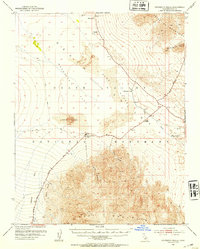
1952 · Stovepipe Wells
USGS Topo · 1:62,500
1954 · Death Valley
USGS Topo · 1:250,000
1956 · Death Valley
USGS Topo · 1:250,000
1957 · Death Valley
USGS Topo · 1:250,000
1957 · Grapevine Peak
USGS Topo · 1:62,500
1957 · Tin Mountain
USGS Topo · 1:62,500