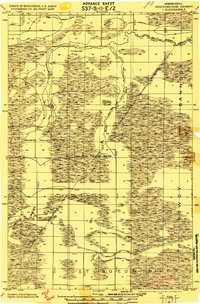
1919 Map of I
USGS Topo · Published 1919About this map
Fairland sits near the northern edge of this northern Minnesota landscape, which was meticulously documented by the Corps of Engineers just after the First World War. The region is defined by extensive wetlands and drainage efforts, indicated by the numerous Ditch labels crossing the terrain. The survey captures a significant transition in land history, clearly marking the Original Red Lake Indian Reservation Boundary and the current Red Lake Indian Reservation Boundary. The Black River and the Sturgeon River are the primary watercourses, carving through areas labeled as Timbered, reflecting the importance of the lumber industry and the 1908 reservation survey. Surveyors noted the 14th Standard Parallel North as a primary East-West baseline for land division in these frontier sections of Bannock and Gowdy.
Find a feature on this map
15 named features on this map. Tap any name to fly to it.
Don’t see what you’re looking for? This feature index may not catch every label — zoom into the map to look around manually.
Map Details
Editions of this 1919 I Map
This is the sole edition of this map. No revisions or reprints were ever made.
Other maps of this area
1919 · Lundgren
USGS Topo · 1:62,500
1919 · Norden
USGS Topo · 1:62,500
1919 · Birchdale
USGS Topo · 1:62,500
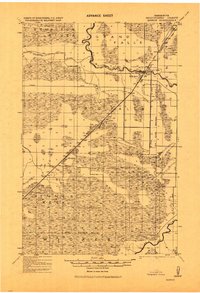
1919 · Margie
USGS Topo · 1:62,500
1943 · Lindford
USGS Topo · 1:62,500
1954 · Roseau
USGS Topo · 1:250,000
1954 · International Falls
USGS Topo · 1:250,000
1957 · Roseau
USGS Topo · 1:250,000
1957 · International Falls
USGS Topo · 1:250,000
1958 · International Falls
USGS Topo · 1:250,000