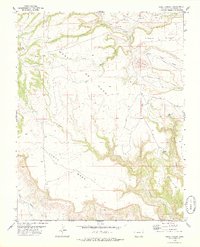
1978 Map of Jesus Canyon
USGS Topo · Published 1979About this map
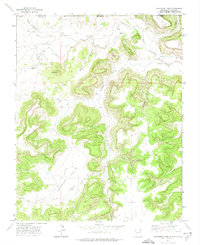
The Mesa De Maya dominates this southeastern Colorado landscape, rising above a complex network of drainage systems and high mesas. Mapped in the late 1970s, the terrain is defined by the deep incision of Jesus Canyon and its many tributaries, reflecting a remote ranching environment where water sources like Clay Spring and Tomasa Creek were vital landmarks. The presence of Mayfield Ranch underscores the sparse settlement pattern of Las Animas County during this era, where human activity centered on established ranching outposts within the canyons. Other prominent landmarks include the Seven Buttes and the volcanic-named Cerro Negro, which served as navigation points across the high plateaus. The map also traces the winding courses of West Carrizo Creek and Middle Water Creek, illustrating the natural water-driven erosion that sculpted the canyons and side drainages like Flathead Canyon and Cobert Canyon.
Find a feature on this map
16 named features on this map. Tap any name to fly to it.
Don’t see what you’re looking for? This feature index may not catch every label — zoom into the map to look around manually.
Map Details
Editions of this 1978 Jesus Canyon Map
This is the sole edition of this map. No revisions or reprints were ever made.
Other maps of this area
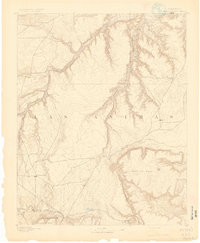
1891 · Mesa De Maya
USGS Topo · 1:125,000
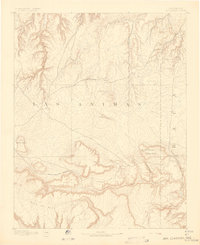
1892 · Mt Carrizo
USGS Topo · 1:125,000
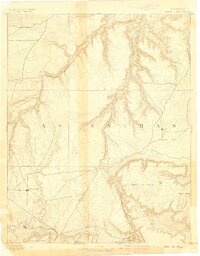
1893 · Mesa de Maya
USGS Topo · 1:125,000
1954 · Dalhart
USGS Topo · 1:250,000
1955 · La Junta
USGS Topo · 1:250,000
1958 · La Junta
USGS Topo · 1:250,000
1958 · Dalhart
USGS Topo · 1:250,000
1962 · Dalhart
USGS Topo · 1:250,000
1968 · La Junta
USGS Topo · 1:250,000
1972 · Travesser Park
USGS Topo · 1:24,000