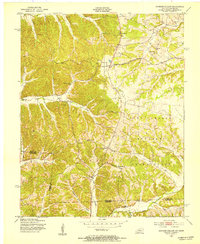
1951 Map of Johnson Hollow
USGS Topo · Published 1953About this map
The Fort Campbell Military Reservation dominates the eastern half of this landscape along the state line in the early 1950s. The terrain is defined by deep drainages like Johnson Hollow and Cheatam Hollow, where small family-named cemeteries and rural schools reflect a pattern of upland settlement that was being reshaped by the military presence. Local life centers on remote outposts like Delmont Sch and numerous country churches, including Rock Front Ch and Union Hill Ch.
Find a feature on this map
30 named features on this map. Tap any name to fly to it.
Don’t see what you’re looking for? This feature index may not catch every label — zoom into the map to look around manually.
Map Details
Editions of this 1951 Johnson Hollow Map
This is the sole edition of this map. No revisions or reprints were ever made.
Other maps of this area
1936 · Tharpe
USGS Topo · 1:24,000
1950 · Caledonia
USGS Topo · 1:24,000
1951 · Caledonia
USGS Topo · 1:24,000
1951 · Model
USGS Topo · 1:24,000
1951 · Roaring Spring
USGS Topo · 1:24,000
1951 · Tharpe
USGS Topo · 1:24,000
1951 · Indian Mound
USGS Topo · 1:24,000
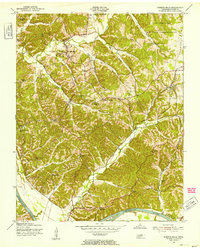
1951 · Bumpus Mills
USGS Topo · 1:24,000
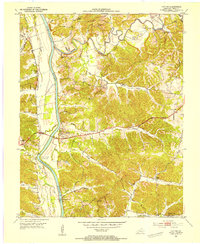
1953 · Canton
USGS Topo · 1:24,000
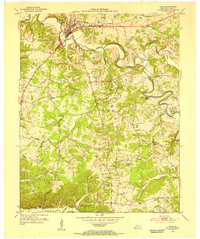
1953 · Cadiz
USGS Topo · 1:24,000