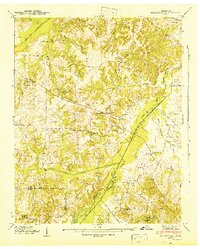
1941 Map of Manleyville
USGS Topo · Published 1941About this map
Manleyville serves as the focal point for this rural landscape in the early 1940s, situated at the meeting of the Henry and Benton County borders. The terrain is defined by a dense network of small waterways and drainage infrastructure, including West Sandy Creek, the Bear Creek drainage ditch, and the meandering path of the Big Sandy River. This survey reveals a highly distributed rural society where educational and spiritual life was centered on numerous small institutions like Carter School, Young School, and Manley Chapel.
Find a feature on this map
48 named features on this map. Tap any name to fly to it.
Don’t see what you’re looking for? This feature index may not catch every label — zoom into the map to look around manually.
Map Details
Editions of this 1941 Manleyville Map
This is the sole edition of this map. No revisions or reprints were ever made.
Other maps of this area
1936 · Poplar Creek
USGS Topo · 1:24,000
1936 · Camden
USGS Topo · 1:24,000
1936 · Big Sandy
USGS Topo · 1:24,000
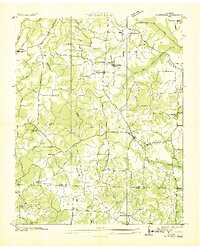
1936 · Mansfield
USGS Topo · 1:24,000
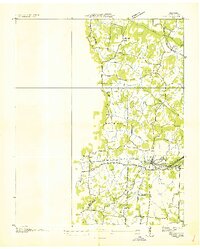
1936 · Vale
USGS Topo · 1:24,000
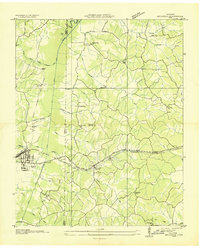
1936 · Bruceton
USGS Topo · 1:24,000
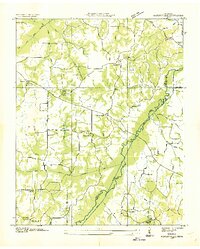
1936 · Manleyville
USGS Topo · 1:24,000
1936 · Paris
USGS Topo · 1:24,000
1936 · Springville
USGS Topo · 1:24,000
1938 · Springville
USGS Topo · 1:24,000