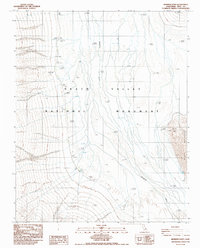
1986 Map of Mormon Point
USGS Topo · Published 1987About this map
Death Valley National Monument dominates this mid-1980s terrain study, revealing a landscape defined by dramatic elevation changes and ephemeral water sources. The Amargosa River traces a path through the valley floor, terminating in expansive Mud-Alkali flats that characterize this arid basin. To the east, the steep ascent of the Black Mountains provides a stark contrast to the low-lying salt pans. Small-scale water infrastructure is documented through labels like Gravel Well and Well WT, essential landmarks for desert navigation and early resource extraction. The prominence of Mormon Point serves as a key topographical anchor along the eastern mountain front, where alluvial fans spread toward the valley center. This survey captures the region just before significant administrative changes, providing a detailed record of drainage patterns and isolated springs.
Find a feature on this map
10 named features on this map. Tap any name to fly to it.
Don’t see what you’re looking for? This feature index may not catch every label — zoom into the map to look around manually.
Map Details
Editions of this 1986 Mormon Point Map
This is the sole edition of this map. No revisions or reprints were ever made.
Other maps of this area
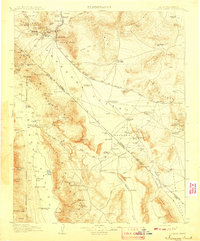
1908 · Furnace Creek
USGS Topo · 1:250,000
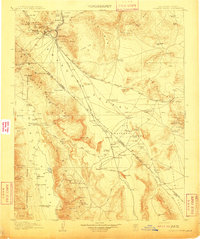
1910 · Furnace Creek
USGS Topo · 1:250,000
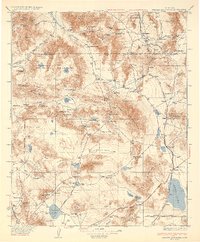
1933 · Avawatz Mountains
USGS Topo · 1:250,000
1947 · Trona
USGS Topo · 1:250,000
1948 · Trona
USGS Topo · 1:250,000
1948 · Death Valley
USGS Topo · 1:250,000
1950 · Wingate Wash
USGS Topo · 1:62,500
1950 · Confidence Hills
USGS Topo · 1:62,500
1951 · Funeral Peak
USGS Topo · 1:62,500
1952 · Bennetts Well
USGS Topo · 1:62,500