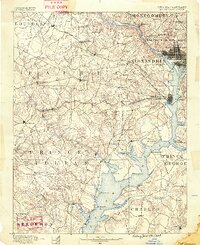
1890 Map of Mt. Vernon
USGS Topo · Published 1890About this map
The Potomac River corridor south of the capital serves as the central artery of this late nineteenth-century landscape, capturing a critical era of post-war growth across Northern Virginia and Southern Maryland. The survey illustrates a decentralized network of agrarian settlements and growing railroad stops like Silver Spr. Sta. and Herndon. In the District, the dense street grid of Washington is visible alongside critical infrastructure like the Receiving Reservoir, while to the south, the riverfront is defined by ancestral estates and fortifications, most notably Mt. Vernon and Fort Washington. The terrain is characterized by intricate drainage systems, with long-established crossing points and communities along Occoquan Creek and Difficult Run. From the heights of Arlington to the burgeoning junctions at Manassas and Alexandria, the map documents a region transitioning from its mid-century military legacy toward modern suburbanization and commerce.
Find a feature on this map
95 named features on this map. Tap any name to fly to it.
Don’t see what you’re looking for? This feature index may not catch every label — zoom into the map to look around manually.
Map Details
Editions of this 1890 Mt. Vernon Map
This is the sole edition of this map. No revisions or reprints were ever made.
Other maps of this area
1884 · Harpers Ferry
USGS Topo · 1:125,000
1887 · Spottsylvania
USGS Topo · 1:125,000
1889 · Fredericksburg
USGS Topo · 1:125,000
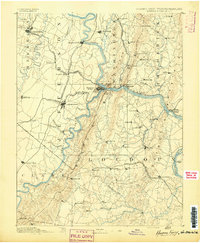
1891 · Harpers Ferry
USGS Topo · 1:125,000
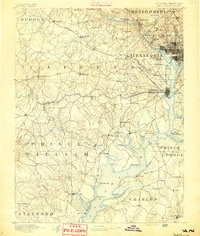
1891 · Mt. Vernon
USGS Topo · 1:125,000
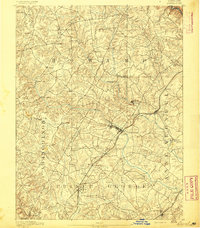
1892 · Laurel
USGS Topo · 1:62,500
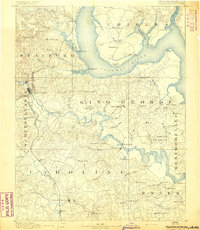
1892 · Fredericksburg
USGS Topo · 1:125,000
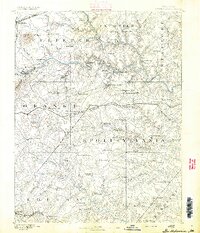
1892 · Spottsylvania
USGS Topo · 1:125,000
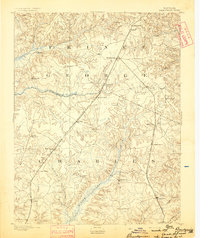
1892 · Brandywine
USGS Topo · 1:62,500
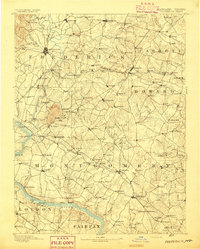
1893 · Frederick
USGS Topo · 1:125,000