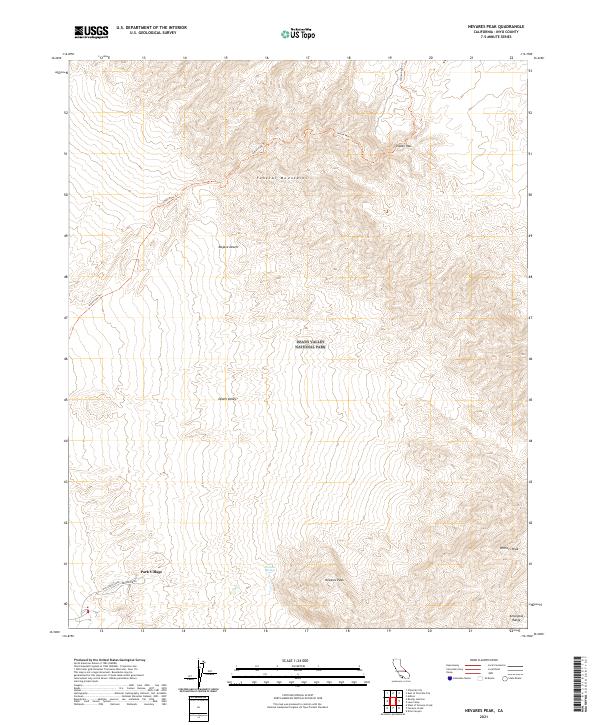
2021 Map of Nevares Peak
USGS Topo · Published 2021About this map
Death Valley National Park encompasses this dramatic transition from the arid floor of Death Valley to the high crests of the Funeral Mountains and the Amargosa Range. The landscape is defined by its topographic extremes, anchored by the prominent Nevares Peak and Winters Peak. Human movement through this environment is traced by the historic Indian Pass Trl crossing through Indian Pass, alongside evocative routes like the Old Ghost Road and Skyline Drive.
Find a feature on this map
19 named features on this map. Tap any name to fly to it.
Don’t see what you’re looking for? This feature index may not catch every label — zoom into the map to look around manually.
Map Details
Editions of this 2021 Nevares Peak Map
This is the sole edition of this map. No revisions or reprints were ever made.
Other maps of this area
1908 · Furnace Creek
USGS Topo · 1:250,000
1910 · Furnace Creek
USGS Topo · 1:250,000
1942 · Bullfrog
USGS Topo · 1:125,000
1948 · Death Valley
USGS Topo · 1:250,000
1952 · Chloride Cliff
USGS Topo · 1:50,000
1952 · Furnace Creek
USGS Topo · 1:62,500
1952 · Ryan
USGS Topo · 1:62,500
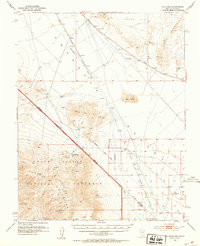
1952 · Big Dune
USGS Topo · 1:62,500
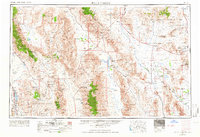
1954 · Death Valley
USGS Topo · 1:250,000
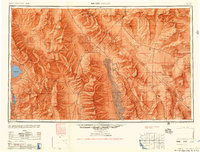
1956 · Death Valley
USGS Topo · 1:250,000