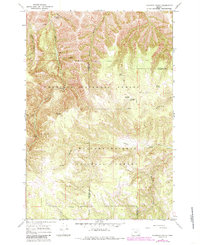
1967 Map of Tamarack Gulch
USGS Topo · Published 1985About this map
Tamarack Gulch and the surrounding high country of northeastern Oregon are defined by the intersection of the Umatilla National Forest and the Wallowa Whitman National Forest. This 1967 survey, later revised in 1983, illustrates a landscape heavily dependent on seasonal water sources and natural openings in the timber. The terrain is marked by deep cuts such as South Canyon and Dark Canyon, while human activity is evidenced primarily by an unnamed Jeep Trail winding through the forested slopes. Local drainage patterns are anchored by Meadow Creek and Pearson Creek, which draw from numerous family-named or descriptive water sources like McClellan Spring and Windy Spring. McClellan Meadow serves as a prominent natural landmark near the forest boundary, reflecting the region's characteristic mountain geography prior to modern development.
Find a feature on this map
22 named features on this map. Tap any name to fly to it.
Don’t see what you’re looking for? This feature index may not catch every label — zoom into the map to look around manually.
Map Details
Editions of this 1967 Tamarack Gulch Map
This is the sole edition of this map. No revisions or reprints were ever made.
Other maps of this area
1953 · Pendleton
USGS Topo · 1:250,000
1956 · Pendleton
USGS Topo · 1:250,000
1967 · Bassey Creek
USGS Topo · 1:24,000
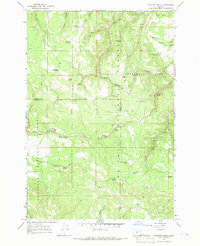
1967 · Sullivan Gulch
USGS Topo · 1:24,000
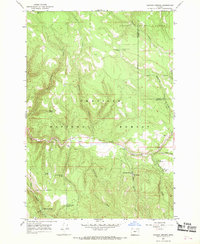
1967 · Lehman Springs
USGS Topo · 1:24,000
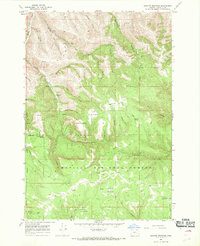
1967 · Granite Meadows
USGS Topo · 1:24,000
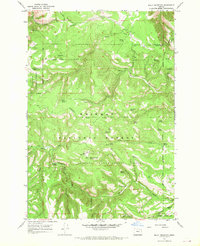
1967 · Bally Mountain
USGS Topo · 1:24,000
1967 · Pilot Rock
USGS Topo · 1:24,000
1967 · Owens Butte
USGS Topo · 1:24,000
1967 · Sevenmile Creek
USGS Topo · 1:24,000