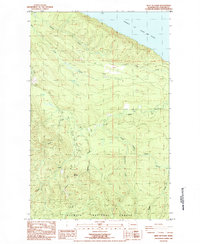
1984 Map of West of Pysht
USGS Topo · Published 1984About this map
The Strait of Juan de Fuca defines the northern shoreline of this coastal landscape, where the Olympic Peninsula meets the sea in a series of wooded ridges and deep drainages. In the southern half of the map, the Olympic National Forest encompasses the high ground around Burnt Mountain, a prominent landmark that influences the local watershed. The drainage network is particularly dense here, dominated by the Pysht River and its various tributaries, including the South Fork and Salmonberry Creek. Resource extraction and land management are evident through the presence of industrial sites like the Barrow Pit and Gravel Pit, which reflect the area's development during the late 1970s and early 1980s. A network of unimproved roads and trails winds through the forest, connecting the upland terrain to the coast.
Find a feature on this map
18 named features on this map. Tap any name to fly to it.
Don’t see what you’re looking for? This feature index may not catch every label — zoom into the map to look around manually.
Map Details
Editions of this 1984 West of Pysht Map
This is the sole edition of this map. No revisions or reprints were ever made.
Other maps of this area
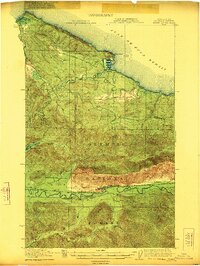
1922 · Pysht
USGS Topo · 1:62,500
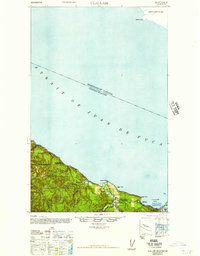
1935 · Clallam
USGS Topo · 1:62,500
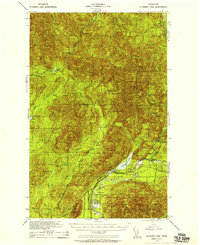
1935 · Lake Pleasant
USGS Topo · 1:62,500
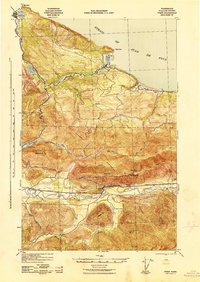
1942 · Pysht
USGS Topo · 1:62,500
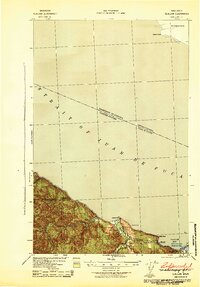
1942 · Clallam
USGS Topo · 1:62,500
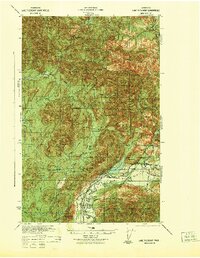
1942 · Lake Pleasant
USGS Topo · 1:62,500
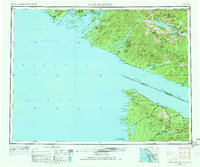
1953 · Cape Flattery
USGS Topo · 1:250,000
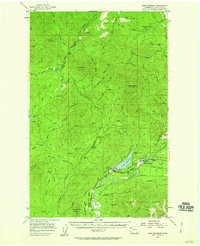
1957 · Lake Pleasant
USGS Topo · 1:62,500
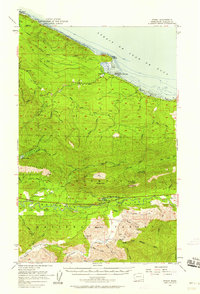
1957 · Pysht
USGS Topo · 1:62,500
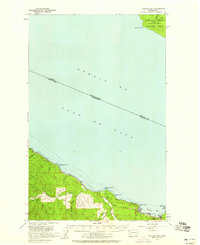
1957 · Clallam Bay
USGS Topo · 1:62,500