Old Maps of Isabela for Hiking & Exploration
Hike through history with 30 historic maps of Isabela. Explore old trails, ghost towns, and forgotten backroads — perfect for outdoor adventurers and local explorers.
- Rediscover forgotten places: Map out old mining camps, roads, and footpaths that no longer exist on modern maps.
- Layer with modern tools: Combine with LiDAR or satellite views to plan hikes through historical terrain.
- Made for exploration: Popular among hikers, overlanders, and local history lovers.
Use these maps to find adventure and explore the hidden past of Isabela.
Isabela maps
(30)- 1937 Map of Moca
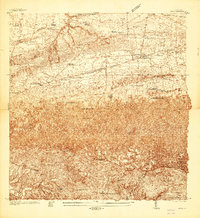 1937 Moca1937 Print · USGSNorthwestern Puerto Rico in the late thirties reveals a landscape defined by rail transit and a remarkably dense network of rural schools. Family historians can trace ancestral roots through dozens of local sites like Escuela Aceituna No 1, Iglesia Presbiteriana, and the American RR of Porto Rico stations.2 unique versions available
 - 1938 Map of Quebradillas
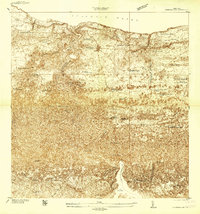 1938 Quebradillas1938 Print · USGSNorthern Puerto Rico in the late 1930s reveals a landscape of winding rivers and densely mapped rural schools. Genealogists and historians can trace family roots through named sites like Pueblito de Ponce, the American Porto Rico rail line, and Iglesia Virgen del Carmen.2 unique versions available
 - 1941 Map of Moca
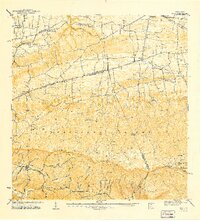 1941 Moca1941 Print · USGSNorthwestern Puerto Rico is captured here in the early 1940s, showing a landscape where the coastal railroad meets the high ridges of the Cordillera. Researchers can trace the American RR of Porto Rico line through Estacion Santiago and find local landmarks like the Iglesia de la Virgen del Rosario.
 - 1941 Map of Isabela
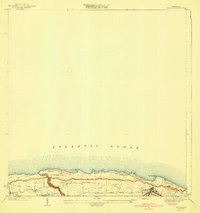 1941 Isabela1941 Print · USGSThe northern coast of Puerto Rico is captured here in the late thirties, when rail travel was still the backbone of local transit. Genealogists and historians can trace the early layout of Isabela, the route of the RR of PR, and local landmarks like San Antonio.5 unique versions available
 - 1942 Map of Moca
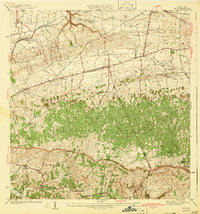 1942 Moca1942 Print · USGSNorthwestern Puerto Rico during the early forties shows a landscape transitioning between coastal rail industry and the rural interior. Genealogists can trace family footprints near Jobos and the American R. R. of Porto Rico or at the Escuela Segunda Unidad de Voladoras.5 unique versions available
 - 1950 Map of Moca SE
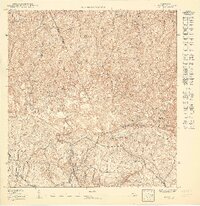 1950 Moca SE1950 Print · USGSMid-century Puerto Rico is captured here during a period of transition in the rural uplands between Isabela and San Sebastián. Researchers can trace ancestral home sites and small community centers like La Vega or find the Iglesia de la Virgen del Rosario.
 - 1950 Map of Moca NE
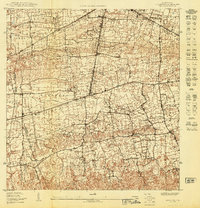 1950 Moca NE1950 Print · USGSNorthwestern Puerto Rico is captured here at mid-century, showing a high density of rural settlements and early infrastructure. Genealogists can trace family sites near Mora or the Iglesia Arenales Altos, while the American R R of Porto Rico marks the era's rail transit.
 - 1950 Map of Quebradillas NO
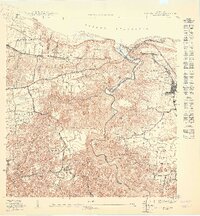 1950 Quebradillas NO1950 Print · USGSMid-century Isabela and Quebradillas are defined here by the coastal path of the American Railroad and the deep gorge of the Río Guajataca. Genealogy researchers can locate family sites near San Antonio, the Iglesia Virgen del Carmen, or Estación Quebradillas.
 - 1950 Map of Moca NO
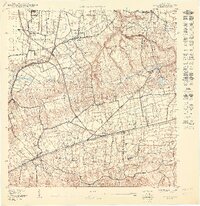 1950 Moca NO1950 Print · USGSNorthwestern Puerto Rico during the mid-century is captured here as a landscape of rural barrios and vital rail connections. Genealogists and historians can trace family roots through landmarks like Iglesia Ceiba Alta and the rail stops at Estación Montaña or Estación Santiago.
 - 1950 Map of Isabela SO
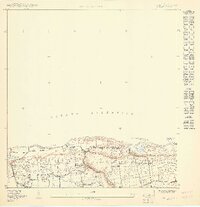 1950 Isabela SO1950 Print · USGSNorthwest Puerto Rico at the midpoint of the century reveals a coastal landscape of traditional barrios and growing infrastructure. Genealogists can trace family footprints through the settlements of Aguacate and San Antonio or locate the Iglesia Católica and local schools.
 - 1950 Map of Quebradillas SO
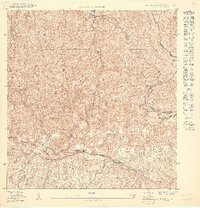 1950 Quebradillas SO1950 Print · USGSNorthwestern Puerto Rico’s interior barrios are captured here in the mid-twentieth century, showing a landscape of steep ridgelines and isolated agricultural settlements. Researchers can trace rural life and land use around Pueblito de Ponce and the high peaks of Cerro de la Bandera and Cerro del Judío.
 - 1950 Map of Quebradillas SE
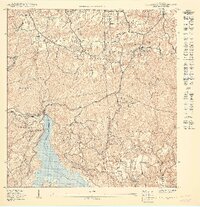 1950 Quebradillas SE1950 Print · USGSNorthwestern Puerto Rico’s interior is revealed in the early fifties, showing the rural life and infrastructure surrounding the Lago de Guajataca. Researchers can trace old mountain roads and local schools like the Escuela Segunda Unidad Baldorioty de Castro.
 - 1950 Map of Isabela SE
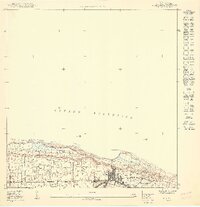 1950 Isabela SE1950 Print · USGSCoastal Puerto Rico at the midpoint of the century reveals a landscape of traditional barrios and growing rail infrastructure. Trace the early layout of Isabela and the path of the American R. R. of P. R. near Pta Sardina.
 - 1956 Map of Moca, 1959 Print
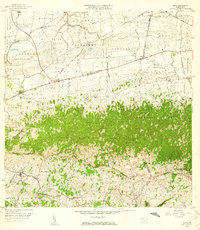 1956 Moca1959 Print · USGSMoca and the surrounding northwest highlands are shown here in the mid-fifties, during a period of transition between traditional agriculture and modern infrastructure. You can trace the Antigua Vía del Ferrocarril through the karst hills or locate family landmarks like Central Isabel No 2 and the Cementerio de Isabela.
 - 1957 Map of Quebradillas, 1961 Print
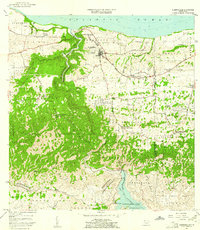 1957 Quebradillas1961 Print · USGSCoastal Puerto Rico in the late fifties shows a landscape defined by traditional barrios and the winding Rio Guajataca. Genealogy researchers can locate rural schools like Escuela José de Diego and landmarks such as the Iglesia Virgen del Carmen.2 unique versions available
 - 1960 Map of Isabela, 1961 Print
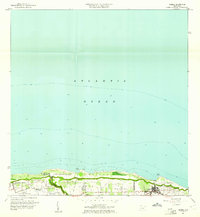 1960 Isabela1961 Print · USGSThe northwestern coast of Puerto Rico is captured here in the early sixties, showing the intersection of local town life and major military installations. Researchers can trace the perimeter of Ramey Air Force Base and locate family homesites within Jobos, Bejucos, and the Isabela town center.4 unique versions available
 - 1964 Map of Moca, 1967 Print
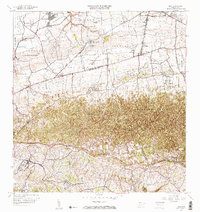 1964 Moca1967 Print · USGSNorthwestern Puerto Rico in the mid-sixties shows a landscape defined by the rugged Cordillera Jaicoa and vital water infrastructure. Genealogists can trace family footprints near Moca and find landmarks like the Iglesia Ceiba Alta or the Antigua Via del Ferrocarril.3 unique versions available
 - 1972 Map of Quebradillas, 1974 Print
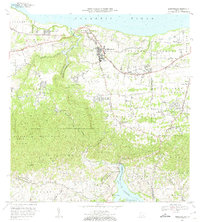 1972 Quebradillas1974 Print · USGSThe northwestern coast of Puerto Rico is revealed here in the early seventies, from the urban center of Quebradillas to the heights of Planas. Genealogists can locate family landmarks like Pueblito de Ponce and La Casa de Piedra.2 unique versions available
 - 2013 Map of Isabela, 2013 Print
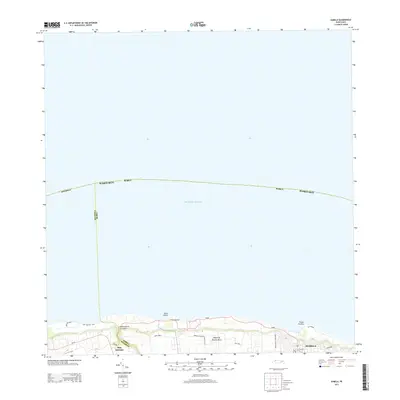 2013 Isabela2013 Print · USGSThe northern coastline of Puerto Rico is captured here in the early twenty-first century as the town of Isabela expanded. Researchers can trace coastal landmarks like Punta Sardina and Punta Jacinto alongside the streets of San Antonio.
 - 2013 Map of Moca, 2013 Print
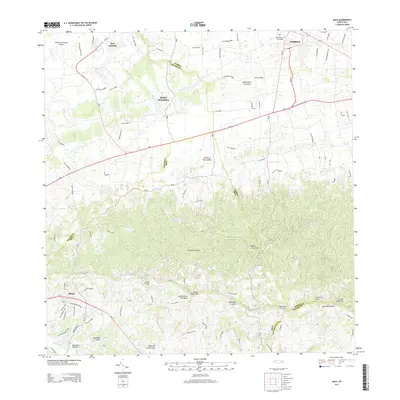 2013 Moca2013 Print · USGSNorthwestern Puerto Rico is captured here in the early twenty-first century as urban centers like Moca and Isabela expand into the hills. Researchers can trace the complex drainage of Rio Culebrinas and locate landmarks like Cementerio de Isabela or the Rafael Hernandez Airport.
 - 2013 Map of Quebradillas OE N, 2013 Print
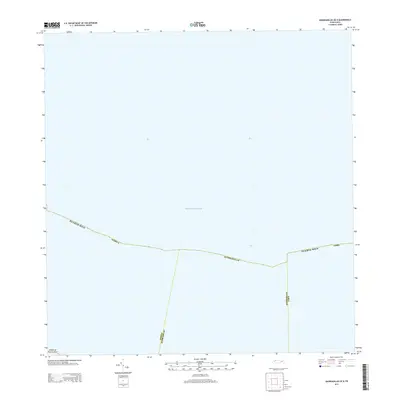 2013 Quebradillas OE N2013 Print · USGSOff the northern coast of Puerto Rico in the early 2010s, this chart maps the maritime jurisdictions of the island. Genealogists and historians can trace the seaward boundaries of Isabela, Quebradillas, and Camuy where they meet the Atlantic Ocean.
 - 2013 Map of Quebradillas, 2013 Print
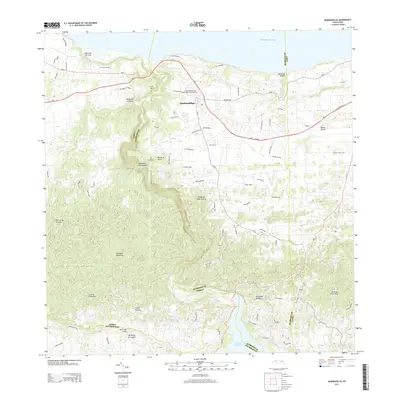 2013 Quebradillas2013 Print · USGSQuebradillas and the northwestern karst country are documented here in the early twenty-first century, from the coastal cliffs to the interior mountains. Researchers can trace local landmarks like the San Rafael de las Quebradillas Cemetery and the deep gorge of the Río Guajataca.
 - 2018 Map of Moca, 2018 Print
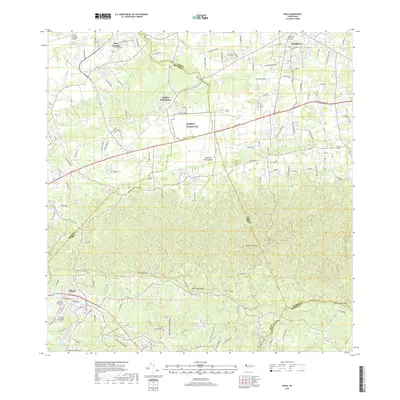 2018 Moca2018 Print · USGSNorthwestern Puerto Rico is captured here in the late 2010s, showing the transition from the coastal plains to the interior heights. Researchers can trace local heritage through the Cementerio Municipal de Isabela, the Canal Moca, and the peaks of the Cordillera Jaicoa.
 - 2018 Map of Isabela, 2018 Print
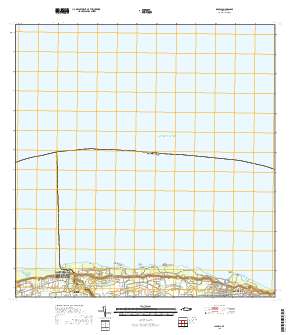 2018 Isabela2018 Print · USGSCovers Isabela, including Sector Quique Bravo, Reparto Santa María, and other nearby areas
 - 2018 Map of Quebradillas OE N, 2018 Print
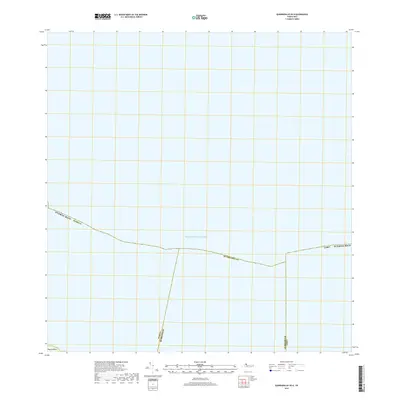 2018 Quebradillas OE N2018 Print · USGSThe northern coast of Puerto Rico is captured here in the late 2010s, focusing on the maritime interface of several key municipalities. Researchers can trace the exact administrative boundaries separating Isabela, Quebradillas, and Camuy along the edge of the Atlantic Ocean.
Showing maps 1-25 of 30
Frequently asked questions
- What are the different types of historical maps available for Isabela?
- What is the oldest map of Isabela?
- Where can I purchase historical maps of Isabela for my home or office?
- Where can I download high-res historical maps of Isabela?
- Are there historical topographic maps available for Isabela?
- Is there historical aerial imagery available for Isabela?
- Where are historical maps of Isabela sourced from?