1900s (20th Century) Maps of Coosada, Alabama
Explore 16 historic maps of Coosada from the 1900s (20th Century). These maps offer a rare glimpse into what life looked like during the 1900s — showing old roads, neighborhoods, homes, and landmarks that have changed or disappeared over time.
Whether you're researching your family's past, planning a metal detecting trip, or studying how Coosada's landscape evolved across the 1900s, these high-resolution maps are a powerful tool for exploring the history of this region.
- Focus on a specific era: All maps on this page are from the 1900s, giving you a focused view of this time period.
- See what’s changed: Compare century-old streets, trails, and buildings to today's modern landscape using overlays and satellite layers.
- Research with precision: Use these maps for genealogy, historical research, land use analysis, or educational projects.
- View, download, or print: Maps are fully viewable online in high resolution, and can be downloaded or printed for your own records.
Start exploring Coosada's history through authentic maps from the 1900s. This is your window into the past.
Coosada, AL maps
(16)- 1901 Map of Wetumpka
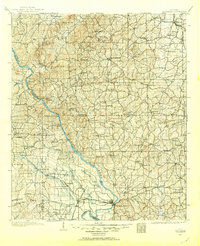 1901 Wetumpka1901 Print · USGSCentral Alabama at the dawn of the twentieth century was a landscape of river ferries and emerging rail lines. Genealogists and local historians can trace family-named river crossings like Knights Ferry and Nobles Ferry or early community centers such as Nixburg and Eclectic.
 - 1903 Map of Wetumpka
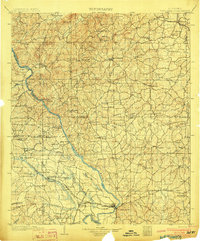 1903 Wetumpka1903 Print · USGSCentral Alabama at the turn of the century remains a landscape of river ferries and emerging rail lines along the Coosa River. Genealogists and researchers can trace the early locations of Sykes Mills, Liberty Church, and river crossings like Nobles Ferry.3 unique versions available
 - 1927 Map of Montgomery
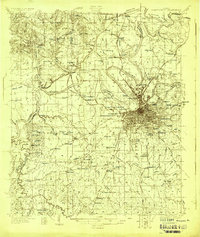 1927 Montgomery1927 Print · USGSThe Alabama state capital and its river-bend surroundings are seen here in the late twenties during a period of growth. Researchers can trace the footprints of Maxwell Aviation Field, the Masonic Home, and rural sites like Stones Cem.
 - 1930 Map of Montgomery
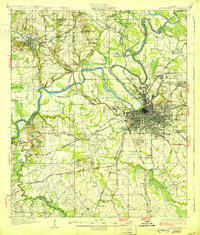 1930 Montgomery1930 Print · USGSThe Alabama state capital is seen here as a bustling rail and river crossroads in the late twenties. Trace the historic growth of the city and its surrounding rural communities through sites like Maxwell Aviation Field, Kilby Prison, and Oakwood Cemetery.4 unique versions available
 - 1953 Map of Montgomery, 1964 Print
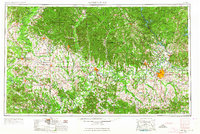 1953 Montgomery1964 Print · USGSCentral Alabama's river-and-rail corridor is mapped here in the mid-fifties, showing the vital connections between the capital and the Black Belt. Genealogists and historians can trace rail depots and crossroads from Marion Junction to Wetumpka, alongside landmarks like Craig AFB.4 unique versions available
 - 1956 Map of Montgomery
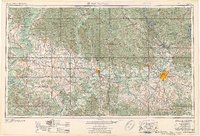 1956 Montgomery1956 Print · USGSCentral Alabama in the mid-1950s shows a landscape defined by its great river systems and a booming military aviation presence. Genealogists and historians can trace the rail corridors of the Southern Railway and locate tactical bases like Maxwell AFB and Craig AFB.
 - 1957 Map of Montgomery
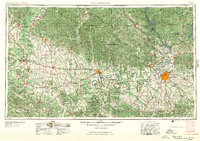 1957 Montgomery1957 Print · USGSCentral Alabama in the mid-fifties is defined by the winding Alabama River and a strategic network of military bases and rail lines. Trace family roots in Montgomery and Selma, or locate landmarks like Craig AFB and the State Capitol before the interstate era.
 - 1958 Map of Montgomery, 1959 Print
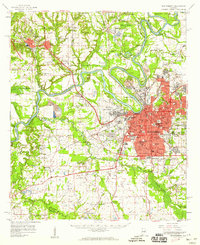 1958 Montgomery1959 Print · USGSThe state capital and its surrounding river bends are captured here during the late fifties, a period of significant military and urban growth. Researchers can trace historic institutions like Alabama State College and the extensive grounds of Maxwell Air Force Base.2 unique versions available
 - 1958 Map of Montgomery North, 1959 Print
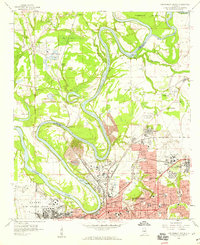 1958 Montgomery North1959 Print · USGSMontgomery and its northern river bends are captured here in the late fifties, showcasing a period of significant urban and military expansion. Genealogists can trace family landmarks and neighborhoods from Oakwood Cemetery to Millbrook, including rural sites like Coles Chapel and Goodship Ch.4 unique versions available
 - 1959 Map of Elmore, 1960 Print
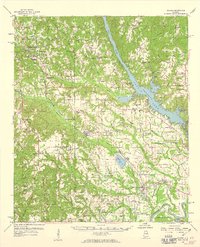 1959 Elmore1960 Print · USGSElmore County during the late fifties reveals a landscape shaped by the Coosa River and the bustling Louisville and Nashville railroad. Genealogists can trace family names at Zeigler Cem, visit the Union Rosenwald Sch, or locate the aviation footprint of the Elmore Landing Field.2 unique versions available
 - 1975 Map of Elmore SE, 1977 Print
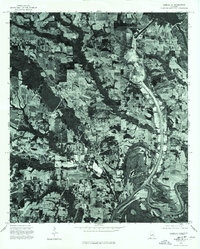 1975 Elmore SE1977 Print · USGSThe river-rich landscape near Elmore is captured here in the mid-1970s through high-altitude aerial photography. Trace the winding paths of the Alabama River and Coosa River or examine the rural layout of the settlement at Elmore.
 - 1975 Map of Montgomery North, 1977 Print
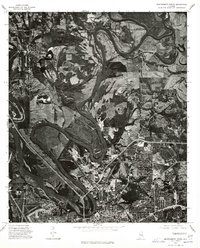 1975 Montgomery North1977 Print · USGSThe northern reaches of Montgomery and the winding Alabama River are shown in detail during the mid-1970s. Trace the development of local settlements like Boylston and Brook alongside the dramatic river meanders and growing road networks.
 - 1986 Map of Montgomery
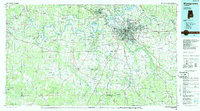 1986 Montgomery1986 Print · USGSCentral Alabama's river-and-rail corridor is captured in the mid-1980s, centered on the state capital and its surrounding rural counties. Researchers can trace ancestral landmarks like Oakwood Cemetery, military sites like Maxwell Air Force Base, and small towns such as Lowndesboro.2 unique versions available
 - 1986 Map of Clanton
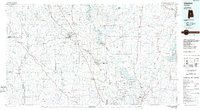 1986 Clanton1986 Print · USGSCentral Alabama’s river-driven landscape is captured here in the mid-eighties, centered on the growth of Clanton and the hydroelectric lakes of the Coosa River. Genealogists and historians can trace the Old Indian Treaty Boundary or locate landmarks like Sykes Mill and Collins Chapel.
 - 1987 Map of Elmore
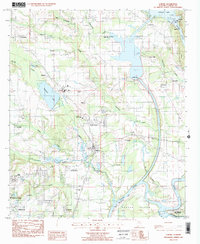 1987 Elmore1987 Print · USGSThe riverfront communities of Elmore County appear in the late 1980s as the Coosa River landscape transitions from industrial dam sites to historic parklands. Researchers can trace family roots at Jones Chapel, Zeigler Cem, and the old settlement of Coosada.2 unique versions available
 - 1987 Map of Clanton, 1990 Print
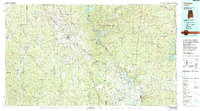 1987 Clanton1990 Print · USGSCentral Alabama in the late eighties reveals a landscape of massive river reservoirs and forest reserves. Trace the rail-and-road corridors through Clanton and Wetumpka to find historic sites like Fort Toulouse and Collins Chapel.
End of results
Showing maps 1-16 of 16
Top cities near Coosada
- Montgomery historical maps
- Prattville historical maps
- Millbrook historical maps
- Pike Road historical maps
- Wetumpka historical maps
- Holtville historical maps
See more
Frequently asked questions
- What are the different types of historical maps available for Coosada?
- What is the oldest map of Coosada?
- Where can I purchase historical maps of Coosada for my home or office?
- Where can I download high-res historical maps of Coosada?
- Are there historical topographic maps available for Coosada?
- Is there historical aerial imagery available for Coosada?
- Where are historical maps of Coosada sourced from?