Old Maps of Leeds, Alabama for Metal Detecting
Plan your next treasure hunt with 47 historic maps of Leeds. Find old homesites, ghost towns, trails, and gathering spots that may be lost to time — perfect for identifying promising metal detecting locations.
- Locate forgotten sites: Uncover places like long-lost settlements, abandoned rail lines, or gathering spots.
- Plan better hunts: Use map overlays combined with LiDAR or satellite views to narrow in on historically rich areas.
- Made for detectorists: Thousands of hobbyists use these maps to discover relics, coins, and hidden history.
Use these historic maps to boost your research and find new opportunities beneath the surface of Leeds.
Leeds, AL maps
(47)- 1889 Map of Springville
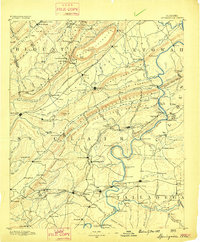 1889 Springville1889 Print · USGSSt. Clair County and its neighbors are mapped here during the late Victorian era as railroads began to transform the old plantation and river economy. Genealogists can locate family landmarks like Henry's Mill, trace the path of Jackson's Trace, or find the location of old river crossings at Colman's Ferry.
 - 1889 Map of Birmingham
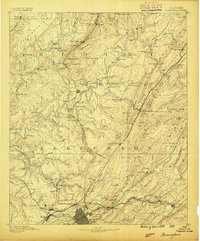 1889 Birmingham1889 Print · USGSIn the late nineteenth century, the Iron City was a growing urban core surrounded by intensive extraction sites and river crossings. Trace early industrial footprints at the Pratt Mines, Sloss Quarry, and the Old Irondale Furnace.
 - 1890 Map of Bessemer
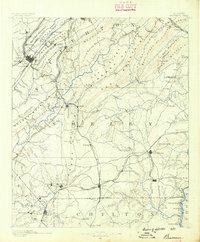 1890 Bessemer1890 Print · USGSCentral Alabama emerges as an industrial powerhouse in the late nineteenth century as railroads weave through the ridges of Jefferson and Shelby counties. Genealogists and historians can trace the early footprints of Bessemer, the iron operations at Sloss, and remote landmarks like Woods Ferry.
 - 1892 Map of Birmingham
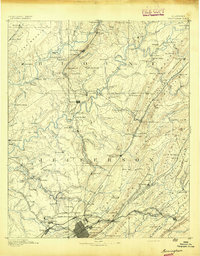 1892 Birmingham1892 Print · USGSBirmingham and the surrounding iron district emerge in the late nineteenth century as a hub of heavy industry and rail expansion. Trace the early footprints of the Sloss Mine, locate river crossings like Doss Ferry, and find family-named landmarks like Hanby Mill.
 - 1892 Map of Springville
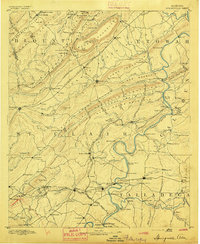 1892 Springville1892 Print · USGSNortheast Alabama at the end of the nineteenth century is a landscape of river crossings and expanding rail lines. Genealogists can trace family footprints at St. Clair Springs, Greensport, and numerous river crossings like Colman's Ferry or Goodwin's Mill.7 unique versions available
 - 1892 Map of Bessemer
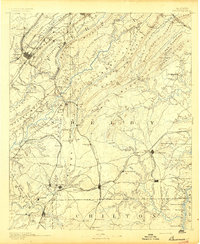 1892 Bessemer1892 Print · USGSCentral Alabama was at its industrial peak in the late nineteenth century as railroads and iron mines transformed the ridges south of Birmingham. Genealogists and researchers can trace the early foundations of Bessemer, the operations at Smith Mine, and rural crossings like Nunley's Ford.2 unique versions available
 - 1895 Map of Birmingham
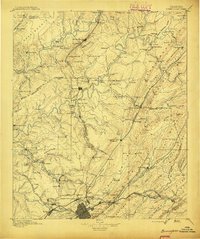 1895 Birmingham1895 Print · USGSBirmingham at the peak of its industrial boom is captured here as the city’s rail and mining networks spread through the surrounding valleys. Researchers can trace early iron production at Old Irondale Furnace or locate family roots at Doss Ferry and Pratt Mines.2 unique versions available
 - 1905 Map of Leeds, 1956 Print
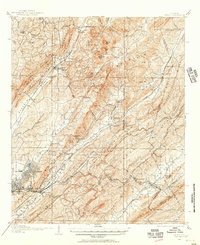 1905 Leeds1956 Print · USGSJefferson County industrial expansion meets early mountain settlements at the start of the century. You can trace the mineral economy through the Alfretta Mines and Lucy Duke Furnace, or locate family roots at Mount Pinson Pinson P.O. and Argo Station.
 - 1906 Map of Vandiver, 1954 Print
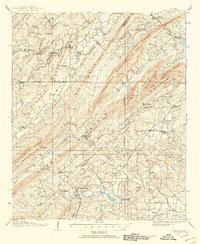 1906 Vandiver1954 Print · USGSShelby and Jefferson counties appear as a network of high ridges and rural valley settlements at the turn of the century. Genealogists can trace family landmarks like Hays Crossroads, Tinney Mill, and the Cave Spring School among the mountains.
 - 1907 Map of Birmingham
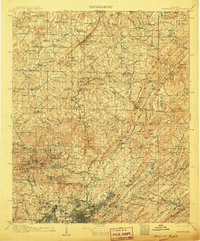 1907 Birmingham1907 Print · USGSJefferson and Blount counties are shown in the early twentieth century as the industrial heart of Alabama was taking shape. Genealogists can trace family roots through named landmarks like Box Schoolhouse, Watson PO, and the coal works at Watts Mines.5 unique versions available
 - 1907 Map of Leeds
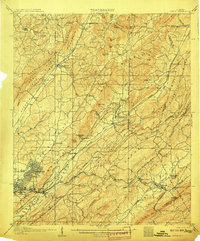 1907 Leeds1907 Print · USGSJefferson County was an industrial and rail hub in the early twentieth century as iron mining and agriculture shaped its valleys. Genealogists can trace family names and early community nodes like Mount Pinson Pinson PO, Alfretta Mines, and Oakgrove Church.3 unique versions available
 - 1908 Map of Vandiver
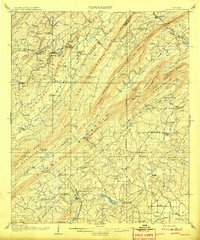 1908 Vandiver1908 Print · USGSShelby and Jefferson Counties are shown here during a period of mountain-gap settlement and early industrial growth. Trace family roots at Cave Spring School, find old river crossings like De Shazo Mill Ford, and locate the Coosa Tunnel.3 unique versions available
 - 1953 Map of Birmingham, 1964 Print
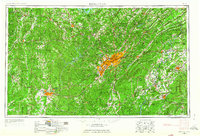 1953 Birmingham1964 Print · USGSCentral Alabama at mid-century shows a landscape defined by industrial expansion and the iron-rich ridges surrounding Birmingham. Researchers can trace the extensive rail networks of the L & N RR or locate historic federal sites like the Anniston Ordnance Depot.4 unique versions available
 - 1956 Map of Birmingham
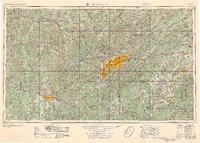 1956 Birmingham1956 Print · USGSCentral Alabama in the mid-fifties exhibits a landscape of growing cities and deep-rooted industrial corridors. Genealogists and historians can trace the development of suburban Mountain Brook or locate regional hubs like Sylacauga and Jasper.
 - 1957 Map of Birmingham
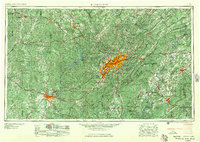 1957 Birmingham1957 Print · USGSNorth-Central Alabama in the mid-fifties is an industrial powerhouse centered on the steel valleys and sprawling iron ridges. Genealogists and historians can trace the rail-linked growth of Birmingham and Tuscaloosa, or locate rural landmarks like Talladega College and the Anniston Ordnance Depot.
 - 1959 Map of Irondale, 1960 Print
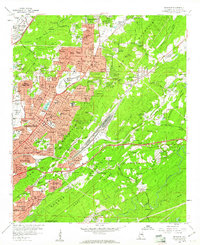 1959 Irondale1960 Print · USGSBirmingham's northeastern suburbs expanded rapidly through the ridges and valleys of Jefferson County during the late fifties. Researchers can trace the development of Tarrant City, Huffman, and Roebuck Springs alongside landmarks like Mt Zion Cemetery and Banks High School.7 unique versions available
 - 1959 Map of Leeds, 1960 Print
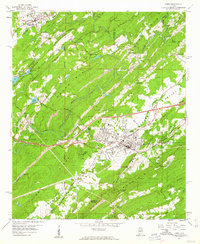 1959 Leeds1960 Print · USGSThe industrial corridor of the Cahaba Valley comes to life in the late fifties as rail lines and mines converge. Local researchers can trace the locations of Moton High Sch, Leeds Mineral Well, and early neighborhoods like Henry Ellen or Trussville.4 unique versions available
 - 1959 Map of Vandiver, 1960 Print
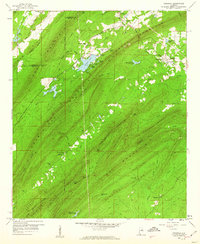 1959 Vandiver1960 Print · USGSThe ridges of Shelby County are captured here in the late fifties, showing a rural landscape defined by mountain gaps and rail lines. Genealogists can trace family landmarks like Brasher Cem, Union Hill Ch, and the settlement of Vandiver.5 unique versions available
 - 1962 Map of Cooks Springs, 1964 Print
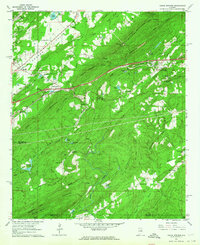 1962 Cooks Springs1964 Print · USGSSt. Clair County in the early sixties is a landscape of steep ridges and rail-side hamlets. Genealogists and local historians can trace family locations at Stewarts Crossroads, find rural landmarks like Taylors Ch, or follow the Southern Railway through Cooks Springs.4 unique versions available
 - 1975 Map of Irondale, 1977 Print
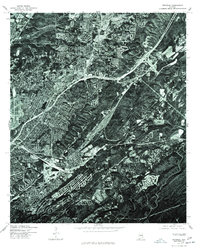 1975 Irondale1977 Print · USGSThe industrial and residential growth of Jefferson County is visible in this mid-seventies aerial survey, showing the landscape just as the modern interstate system matured. Trace the development of Irondale and its surrounding ridge-and-valley terrain.
 - 1975 Map of Cooks Springs, 1977 Print
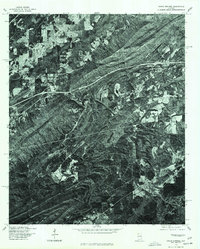 1975 Cooks Springs1977 Print · USGSSt. Clair County appears in high-detail aerial imagery during the mid-seventies, showing the ridge-and-valley landscape of central Alabama. Genealogists and historians can pinpoint homesites and property boundaries near Cooks Springs, Moody, and Prescott.
 - 1975 Map of Vandiver, 1977 Print
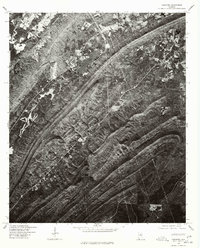 1975 Vandiver1977 Print · USGSShelby County land patterns and ridge-top forests are revealed in this 1970s aerial study. Local historians and genealogists can trace property boundaries and rural roads around Vandiver and the waters of Wehapa Lake.
 - 1975 Map of Leeds, 1977 Print
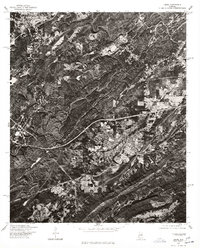 1975 Leeds1977 Print · USGSJefferson County during the mid-seventies shows a landscape of growing towns and industrial sites set against the sharp ridges of central Alabama. Trace the development of Leeds and Trussville through direct aerial imagery from this era.
 - 1984 Map of Birmingham South, 1985 Print
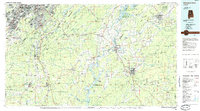 1984 Birmingham South1985 Print · USGSThe Birmingham metropolitan region and the Coosa River valley are shown here in the mid-eighties as suburban growth expanded south into the ridges. Genealogists and local historians can trace the development of communities from Bessemer to Sylacauga alongside the Lay Lake shoreline and the Talladega National Forest.2 unique versions available
 - 1984 Map of Birmingham North, 1985 Print
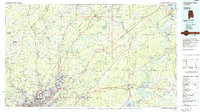 1984 Birmingham North1985 Print · USGSNorth Alabama in the mid-eighties shows the bustling intersection of the Appalachian foothills and the Deep South's industrial heart. Genealogists and historians can trace the paths of the Southern Railway and Seaboard System Railroad through towns like Oneonta, Leeds, and Springville.2 unique versions available
Showing maps 1-25 of 47
Top cities near Leeds
- Birmingham historical maps
- Hoover historical maps
- Vestavia Hills historical maps
- Homewood historical maps
- Trussville historical maps
- Pelham historical maps
See more
Top neighborhoods of Leeds
- Cahaba Hills historical maps
- Maplewood historical maps
- Oak Crossing historical maps
- Austin Hill historical maps
Frequently asked questions
- What are the different types of historical maps available for Leeds?
- What is the oldest map of Leeds?
- Where can I purchase historical maps of Leeds for my home or office?
- Where can I download high-res historical maps of Leeds?
- Are there historical topographic maps available for Leeds?
- Is there historical aerial imagery available for Leeds?
- Where are historical maps of Leeds sourced from?