1940s Maps of Oxford, Alabama
Explore 6 historic maps of Oxford from the 1940s. These maps offer a rare glimpse into what life looked like during the 1940s — showing old roads, neighborhoods, homes, and landmarks that have changed or disappeared over time.
Whether you're researching your family's past, planning a metal detecting trip, or studying how Oxford's landscape evolved across the 1940s, these high-resolution maps are a powerful tool for exploring the history of this region.
- Focus on a specific era: All maps on this page are from the 1940s, giving you a focused view of this time period.
- See what’s changed: Compare century-old streets, trails, and buildings to today's modern landscape using overlays and satellite layers.
- Research with precision: Use these maps for genealogy, historical research, land use analysis, or educational projects.
- View, download, or print: Maps are fully viewable online in high resolution, and can be downloaded or printed for your own records.
Start exploring Oxford's history through authentic maps from the 1940s. This is your window into the past.
Oxford, AL maps
(6)- 1947 Map of Oxford, 1953 Print
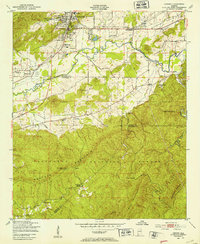 1947 Oxford1953 Print · USGSThe Choccolocco Creek valley in the late 1940s shows the growth of Oxford and Hobson City near the foothills. Researchers can trace local landmarks like Oxford Lake, Trinity Ch, and the old Southern railroad line.2 unique versions available
 - 1947 Map of Anniston, 1953 Print
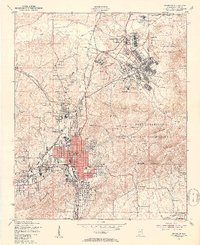 1947 Anniston1953 Print · USGSAnniston and the surrounding Calhoun County hills appear here in the immediate post-war period as the city and military grounds expanded. Researchers can trace the layout of the Fort Mc Clellan Military Reservation, locate the Prisoner of War Camp, and find local landmarks like Thankful Schools.2 unique versions available
 - 1947 Map of Eastaboga, 1953 Print
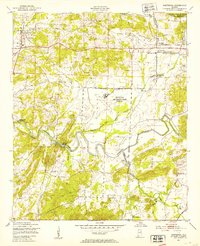 1947 Eastaboga1953 Print · USGSEastaboga and Lincoln appear at the transition from wartime mobilization to a peacetime economy in the late 1940s. Genealogists can locate family landmarks like Kiddstreet Ch, Union Springs Ch, and the Eastaboga Sch near the Southern tracks.4 unique versions available
 - 1947 Map of Ragland, 1953 Print
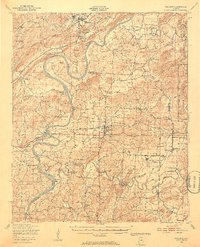 1947 Ragland1953 Print · USGSIn the late 1940s, the Coosa River valley was a landscape of deep-rooted rural communities and growing military installations. Genealogists can trace family landmarks like Rhodes Chapel and old mills such as Martins Mill or Francis Mill.3 unique versions available
 - 1947 Map of Eulaton, 1953 Print
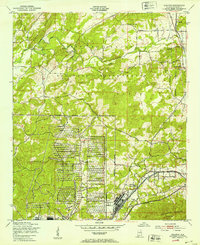 1947 Eulaton1953 Print · USGSCalhoun County was a hub of military and rail activity in the years following World War II. Genealogists and historians can trace the intersection of small communities like Eulaton and Tarsus with the sprawling Anniston Ordnance Depot and New Bethel Cem.2 unique versions available
 - 1947 Map of Munford, 1953 Print
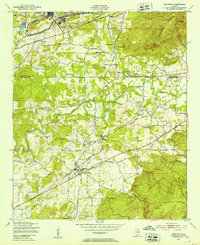 1947 Munford1953 Print · USGSTalladega and Calhoun counties appear here in the late 1940s, showing a landscape defined by the intersection of military industrial sites and rural rail towns. Researchers can trace the old paths of the Louisville and Nashville railroad through Jenifer and locate schools like Sweet Home Sch.2 unique versions available
End of results
Showing maps 1-6 of 6
Top cities near Oxford
- Anniston historical maps
- Talladega historical maps
- Jacksonville historical maps
- Saks historical maps
- Lincoln historical maps
- Weaver historical maps
See more
Top neighborhoods of Oxford
- DeArmanville historical maps
- Oak Hill historical maps
- McKibben historical maps
- Gauldinville historical maps
- New Haven historical maps
- Bynum historical maps
See more
Frequently asked questions
- What are the different types of historical maps available for Oxford?
- What is the oldest map of Oxford?
- Where can I purchase historical maps of Oxford for my home or office?
- Where can I download high-res historical maps of Oxford?
- Are there historical topographic maps available for Oxford?
- Is there historical aerial imagery available for Oxford?
- Where are historical maps of Oxford sourced from?