Old Maps of Mount Hope, Alabama for Academic Research
Study the evolution of Mount Hope with 12 high-resolution historic maps. Whether you're teaching, researching, or modeling changes in land use, these maps provide essential visual documentation of urban, environmental, and geographic change.
- Analyze long-term change: Track patterns in development, transportation, and natural features.
- Ideal for environmental or urban studies: Support academic projects with primary historical map data.
- Use in the classroom or lab: Educators and researchers rely on these maps to bring historical context to life.
These maps are a powerful tool for teaching, research, and visualizing how Mount Hope has changed over the decades.
Mount Hope, AL maps
(12)- 1893 Map of Jasper
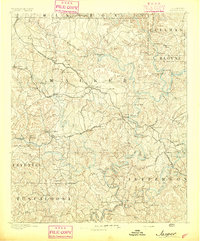 1893 Jasper1893 Print · USGSNorthern Alabama’s coal and timber country comes into focus in the 1890s as railroads began to penetrate the river valleys. Genealogists and historians can trace family-named river crossings like Miller Ferry and Baltimore Ford or early industry at Gamble Mines.5 unique versions available
 - 1949 Map of Cordova, 1967 Print
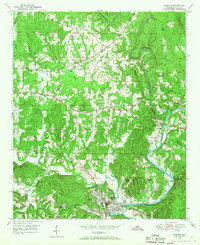 1949 Cordova1967 Print · USGSWalker County during the late 1940s shows a complex network of river bends and rail lines centered on Cordova. Researchers can trace old family settlements and rural landmarks like Gardiners Gin, Wesley Ch, and the crossing at Benoit.4 unique versions available
 - 1951 Map of Cordova
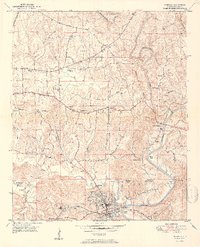 1951 Cordova1951 Print · USGSWalker County at the start of the 1950s reveals a landscape defined by the Mulberry Fork river and a dense network of competing rail lines. Researchers can trace family roots through numerous local landmarks like Gardiners Gin, Sardis Cem, and the rural Wesley Ch.2 unique versions available
 - 1953 Map of Birmingham, 1964 Print
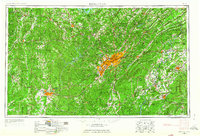 1953 Birmingham1964 Print · USGSCentral Alabama at mid-century shows a landscape defined by industrial expansion and the iron-rich ridges surrounding Birmingham. Researchers can trace the extensive rail networks of the L & N RR or locate historic federal sites like the Anniston Ordnance Depot.4 unique versions available
 - 1956 Map of Birmingham
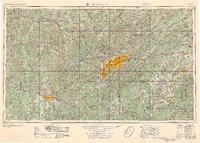 1956 Birmingham1956 Print · USGSCentral Alabama in the mid-fifties exhibits a landscape of growing cities and deep-rooted industrial corridors. Genealogists and historians can trace the development of suburban Mountain Brook or locate regional hubs like Sylacauga and Jasper.
 - 1957 Map of Birmingham
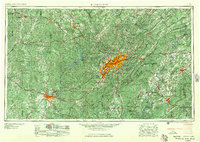 1957 Birmingham1957 Print · USGSNorth-Central Alabama in the mid-fifties is an industrial powerhouse centered on the steel valleys and sprawling iron ridges. Genealogists and historians can trace the rail-linked growth of Birmingham and Tuscaloosa, or locate rural landmarks like Talladega College and the Anniston Ordnance Depot.
 - 1984 Map of Jasper, 1985 Print
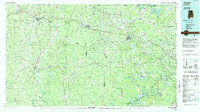 1984 Jasper1985 Print · USGSIn the mid-1980s, the Walker County coalfields were a complex web of rail lines and river terminals. Researchers can trace the industrial heritage of the Mulberry Fork and locate local landmarks like the Carbon Hill National Fish Hatchery or Saragossa Ch.2 unique versions available
 - 2011 Map of Cordova, 2011 Print
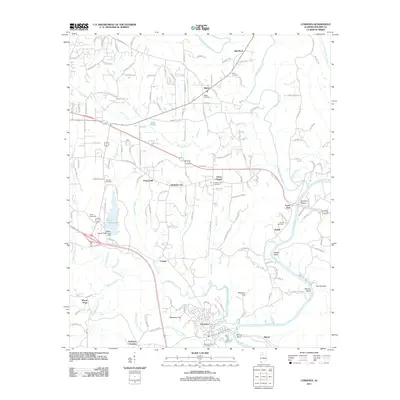 2011 Cordova2011 Print · USGSWalker County's river-driven landscape comes into focus here during the early twenty-first century. Genealogists and historians can trace the development of Cordova and rural outposts like Gardiners Gin or locate family plots at Mount Carmel Cemetery and Sardis Cemetery.
 - 2014 Map of Cordova, 2014 Print
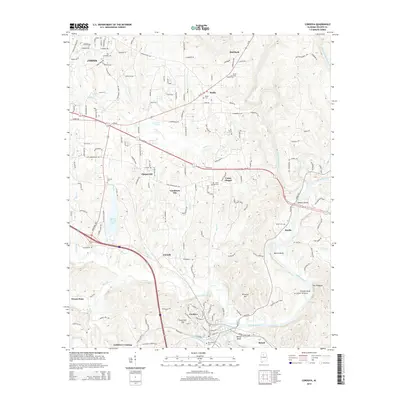 2014 Cordova2014 Print · USGSWalker County at the start of the 2010s shows a landscape of river-bend settlements and deep-rooted local history. Genealogists and researchers can locate family landmarks like Gardiners Gin and numerous burial grounds including Union Chapel Cem and Sardis Cem.
 - 2018 Map of Cordova, 2018 Print
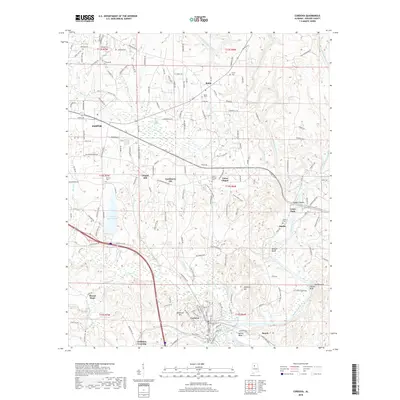 2018 Cordova2018 Print · USGSWalker County in the late 2010s reveals a landscape where river industry and rural community life meet. Researchers can trace family history at Samaria Cem or Sardis Cem, or explore local landmarks like Union Chapel Mine and Gardiners Gin.
 - 2020 Map of Cordova, 2020 Print
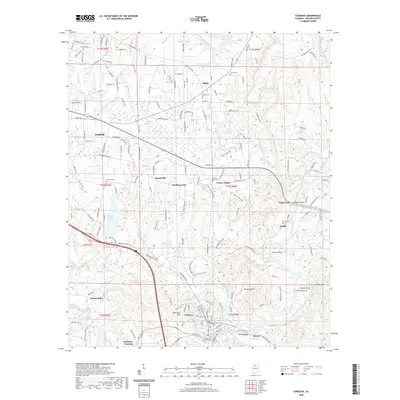 2020 Cordova2020 Print · USGSWalker County, Alabama, is documented here in the early twenty-first century as a landscape of rural communities and winding waterways. Researchers can trace family history through several local landmarks like Boldo Cem, Gardiners Gin, and the bend at Benoit.
 - 2024 Map of Cordova, 2024 Print
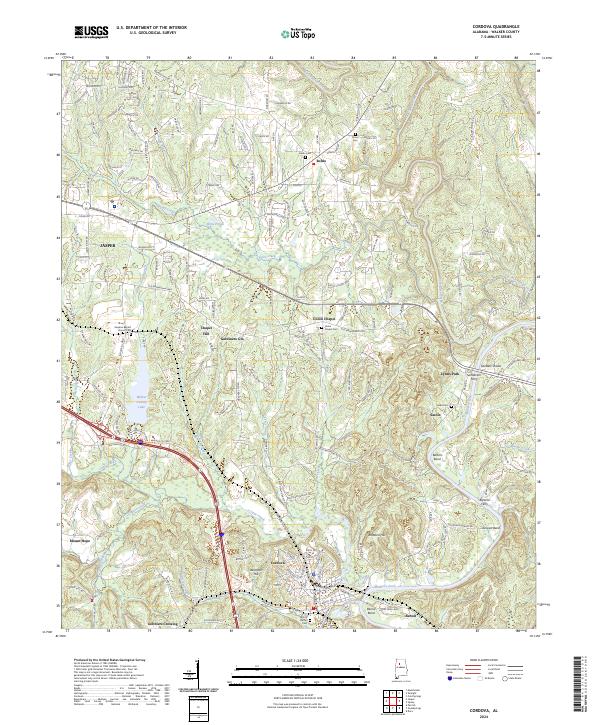 2024 Cordova2024 Print · USGSWalker County at the headwaters of the Black Warrior River remains a landscape of river bends and rural crossroads. You can trace old family roots at Samaria Baptist Church Cem, locate former river crossings like Bartons Ferry, or explore the settlement at Gobblers Crossing.
End of results
Showing maps 1-12 of 12
Top cities near Mount Hope
- Birmingham historical maps
- Jasper historical maps
- Adamsville historical maps
- Sumiton historical maps
- Dora historical maps
- Cordova historical maps
See more
Frequently asked questions
- What are the different types of historical maps available for Mount Hope?
- What is the oldest map of Mount Hope?
- Where can I purchase historical maps of Mount Hope for my home or office?
- Where can I download high-res historical maps of Mount Hope?
- Are there historical topographic maps available for Mount Hope?
- Is there historical aerial imagery available for Mount Hope?
- Where are historical maps of Mount Hope sourced from?