1950s Maps of Tanana Valley, Alaska
Explore 7 historic maps of Tanana Valley from the 1950s. These maps offer a rare glimpse into what life looked like during the 1950s — showing old roads, neighborhoods, homes, and landmarks that have changed or disappeared over time.
Whether you're researching your family's past, planning a metal detecting trip, or studying how Tanana Valley's landscape evolved across the 1950s, these high-resolution maps are a powerful tool for exploring the history of this region.
- Focus on a specific era: All maps on this page are from the 1950s, giving you a focused view of this time period.
- See what’s changed: Compare century-old streets, trails, and buildings to today's modern landscape using overlays and satellite layers.
- Research with precision: Use these maps for genealogy, historical research, land use analysis, or educational projects.
- View, download, or print: Maps are fully viewable online in high resolution, and can be downloaded or printed for your own records.
Start exploring Tanana Valley's history through authentic maps from the 1950s. This is your window into the past.
Tanana Valley, AK maps
(7)- 1951 Map of Anchorage
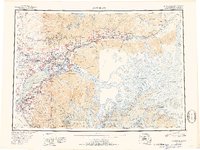 1951 Anchorage1951 Print · USGSMid-century Anchorage and the Matanuska Valley are seen here during a period of rapid strategic growth. Trace the development of Fort Richardson, early rail stops at Wasilla, and established mining operations like the Independence Mine or Premier Mine.4 unique versions available
 - 1951 Map of Tyonek
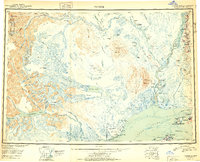 1951 Tyonek1951 Print · USGSThe Cook Inlet and the Alaska Range come into focus in the early fifties as the region's rail and trail networks evolved. Trace the path of the Alaska Railroad through Willow or locate the historic Iditarod Trail near Susitna.
 - 1951 Map of Tyonek A-1, 1971 Print
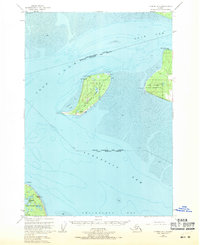 1951 Tyonek A-11971 Print · USGSThe upper Cook Inlet and Fire Island are captured in the early 1950s, showing a critical maritime and military landscape just west of Anchorage. Researchers can locate early aviation markers like the Landing Strip and coastal landmarks such as Fire Island Light and Pt Possession.2 unique versions available
 - 1952 Map of Tyonek A-1, 1954 Print
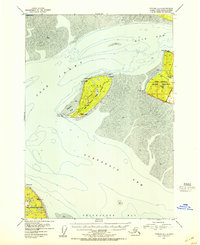 1952 Tyonek A-11954 Print · USGSThe upper Cook Inlet in the early fifties was a landscape of strategic military outposts and essential maritime lights. Genealogists and historians can trace mid-century infrastructure from the Point Campbell ACS Station to the Landing Strip on Fire Island.3 unique versions available
 - 1952 Map of Anchorage A-8, 1963 Print
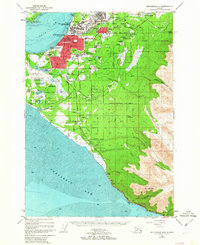 1952 Anchorage A-81963 Print · USGSAnchorage and its surrounding military hubs are shown here during a period of rapid mid-century expansion. Trace the early footprints of Spenard and Mountain View, or locate landmarks like the International Airport and the Alaska Railroad.4 unique versions available
 - 1953 Map of Anchorage A-8, 1954 Print
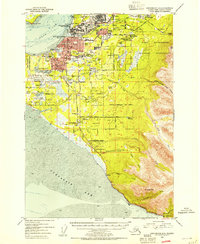 1953 Anchorage A-81954 Print · USGSAnchorage during the early 1950s reveals a city rapidly expanding around its military bases and new aviation hubs. Researchers can trace the development of early neighborhoods like Spenard, the operations of the Alaska Railroad, and local landmarks like the Prison Farm.2 unique versions available
 - 1958 Map of Tyonek, 1964 Print
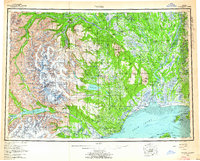 1958 Tyonek1964 Print · USGSUpper Cook Inlet and the Susitna River valley are shown in the late fifties, capturing a period of transition between coastal village life and inland development. Researchers can trace the Winter Trail and Tractor Trail paths to settlements like Alexander and Susitna.6 unique versions available
End of results
Showing maps 1-7 of 7
Frequently asked questions
- What are the different types of historical maps available for Tanana Valley?
- What is the oldest map of Tanana Valley?
- Where can I purchase historical maps of Tanana Valley for my home or office?
- Where can I download high-res historical maps of Tanana Valley?
- Are there historical topographic maps available for Tanana Valley?
- Is there historical aerial imagery available for Tanana Valley?
- Where are historical maps of Tanana Valley sourced from?