1950s Maps of Anderson, Alaska
Explore 7 historic maps of Anderson from the 1950s. These maps offer a rare glimpse into what life looked like during the 1950s — showing old roads, neighborhoods, homes, and landmarks that have changed or disappeared over time.
Whether you're researching your family's past, planning a metal detecting trip, or studying how Anderson's landscape evolved across the 1950s, these high-resolution maps are a powerful tool for exploring the history of this region.
- Focus on a specific era: All maps on this page are from the 1950s, giving you a focused view of this time period.
- See what’s changed: Compare century-old streets, trails, and buildings to today's modern landscape using overlays and satellite layers.
- Research with precision: Use these maps for genealogy, historical research, land use analysis, or educational projects.
- View, download, or print: Maps are fully viewable online in high resolution, and can be downloaded or printed for your own records.
Start exploring Anderson's history through authentic maps from the 1950s. This is your window into the past.
Anderson, AK maps
(7)- 1950 Map of Fairbanks, 1955 Print
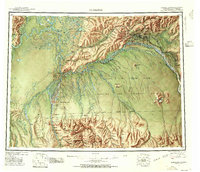 1950 Fairbanks1955 Print · USGSMid-century Interior Alaska centers on the growing hub of Fairbanks and the massive military infrastructure that reshaped the region. Trace the path of the Alaska Railroad past remote stops like Nenana and Dunbar, or locate early aviation and mining landmarks such as Weeks Field and various Placer Mine sites.2 unique versions available
 - 1950 Map of Fairbanks B-5, 1967 Print
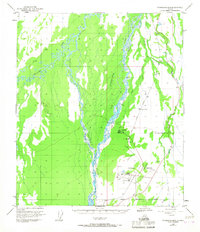 1950 Fairbanks B-51967 Print · USGSInterior Alaska's river systems and early rail infrastructure are documented here during the mid-century transition. Researchers can trace the Alaska Railroad past Anderson to find historic sites like Shores Landing and Squaw Pants Crossing.
 - 1951 Map of Fairbanks B-5
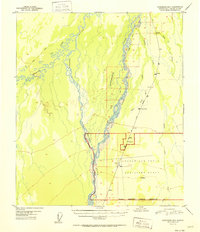 1951 Fairbanks B-51951 Print · USGSThe interior Alaskan wilderness near Fairbanks is captured here in the early fifties, showing the vital intersection of rail and river. You can trace the Alaska Railroad past the stations at Julius and Clear or follow the Sled Trail through the lowlands.2 unique versions available
 - 1951 Map of Fairbanks
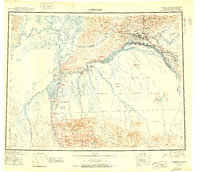 1951 Fairbanks1951 Print · USGSThe Interior of Alaska at the height of the mid-century military buildup shows a landscape of strategic airfields and remote river settlements. Researchers can trace the path of the Alaska Railroad and locate cold-war era sites like Ladd Air Force Base and Minto.2 unique versions available
 - 1952 Map of Fairbanks B-4
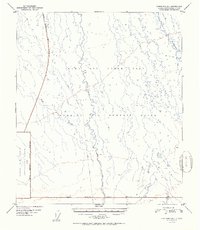 1952 Fairbanks B-41952 Print · USGSInterior Alaska in the early fifties shows a landscape shaped by military expansion and subarctic transit. Researchers can trace the sprawling Ladd Air Force Base Bombing and Gunnery Range and an old Sled Road.2 unique versions available
 - 1952 Map of Fairbanks, 1958 Print
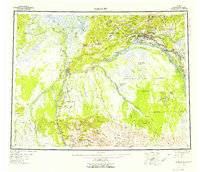 1952 Fairbanks1958 Print · USGSAlaska's interior undergoes a post-war transformation as military installations and rail lines expand across the Tanana Valley. Genealogists and historians can trace the early layout of North Pole, the operations at Ester, and the course of The Alaska Railroad.6 unique versions available
 - 1956 Map of Fairbanks, 1978 Print
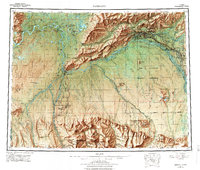 1956 Fairbanks1978 Print · USGSIn the mid-twentieth century, the Fairbanks region emerged as a critical Cold War interior hub. Researchers can trace the expansion of Fairbanks, the rail yards of The Alaska Railroad, and military landmarks like Eielson AFB.3 unique versions available
End of results
Showing maps 1-7 of 7
Top cities near Anderson
Frequently asked questions
- What are the different types of historical maps available for Anderson?
- What is the oldest map of Anderson?
- Where can I purchase historical maps of Anderson for my home or office?
- Where can I download high-res historical maps of Anderson?
- Are there historical topographic maps available for Anderson?
- Is there historical aerial imagery available for Anderson?
- Where are historical maps of Anderson sourced from?