Old Maps of Ponderosa Spring Subdivision, Arizona for Genealogy
Trace your family roots with 14 historic maps of Ponderosa Spring Subdivision. These high-res maps reveal old neighborhoods, homesites, landmarks, and streets — helping you uncover where your ancestors lived and how the area evolved over time.
- Explore historic neighborhoods: Identify where your relatives may have lived in the 1800s or 1900s.
- Compare maps over time: Trace the changes in streets, buildings, and landmarks for multi-generational research.
- Perfect for genealogy & ancestry research: Used by family historians and researchers to map out lineage and migration.
These maps are an incredible resource for exploring your personal connection to Ponderosa Spring Subdivision's past.
Ponderosa Spring Subdivision, AZ maps
(14)- 1886 Map of Holbrook
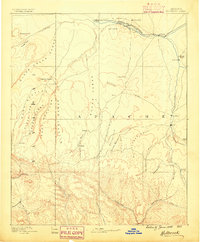 1886 Holbrook1886 Print · USGSArizona's high desert and the Mogollon Rim frontier are captured here in the late nineteenth century during the height of early pioneer settlement. Trace the growth of river towns like Holbrook and Snowflake or locate remote outposts such as Wilford, Adair, and Heber.
 - 1893 Map of Holbrook
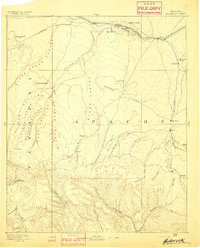 1893 Holbrook1893 Print · USGSNortheastern Arizona in the 1880s reveals a landscape of nascent ranching towns and deep canyon systems along the high plateau. Genealogists and historians can trace the early footprints of Holbrook, Snowflake, and Showlow as they appeared before the turn of the century.4 unique versions available
 - 1954 Map of Holbrook, 1966 Print
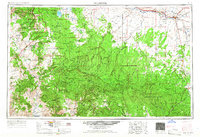 1954 Holbrook1966 Print · USGSNorth-central Arizona is seen here during the mid-fifties, from the high plateau of the Mogollon Rim to the Verde Valley. Researchers can trace the early growth of Holbrook, locate remote camps like Happy Jack, and explore the roads around Montezuma Castle National Monument.3 unique versions available
 - 1957 Map of Holbrook
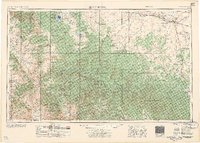 1957 Holbrook1957 Print · USGSNorthern Arizona in the mid-fifties is defined by the high-plateau timberlands and the bustling rail corridor of the Little Colorado River valley. Genealogists and historians can trace the route of U.S. 66 through Holbrook or locate more remote outposts like Zeniff and Aripine.
 - 1958 Map of Holbrook
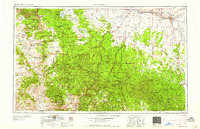 1958 Holbrook1958 Print · USGSNortheastern Arizona's high country is captured here during the mid-fifties, showing the growth of mountain towns and timber lands. Researchers can trace the Atchison Topeka & Santa Fe RR through Holbrook or find vanished spots like Zeniff.
 - 1960 Map of Holbrook
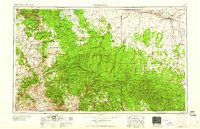 1960 Holbrook1960 Print · USGSNorthern Arizona is captured here just as modern highways began to reshape the cattle and timber country of the Colorado Plateau. Genealogists and historians can trace the early footprints of Snowflake, Sedona, and Payson, alongside the Atchison Topeka & Santa Fe RR rail line.
 - 1961 Map of Woods Canyon, 1963 Print
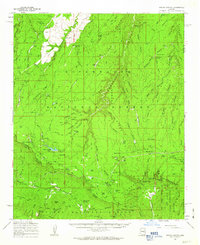 1961 Woods Canyon1963 Print · USGSThe high plateau meets the dramatic drop of the Mogollon Rim in the early sixties, a landscape of isolated ranching and forestry. Researchers can trace historic outposts like Dutch Joe Ranch and OW Ranch or locate the Rainbow Mines.3 unique versions available
 - 1981 Map of Show Low, 1982 Print
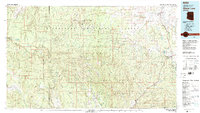 1981 Show Low1982 Print · USGSThe Mogollon Rim highlands in the early eighties were a landscape of forest service outposts and remote reservation settlements. Local historians can trace the foundations of Show Low and Snowflake, or locate family sites near Cibecue and Heber.2 unique versions available
 - 1990 Map of Woods Canyon, 1991 Print
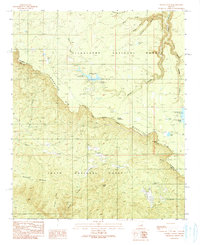 1990 Woods Canyon1991 Print · USGSArizona's high country is defined by the massive escarpment of the Mogollon Rim during the late twentieth century. Researchers can trace the developed recreation landscape of the era, from the Woods Canyon Dam and Willow Springs Lake to the rugged Military Sinkhole.2 unique versions available
 - 1998 Map of Woods Canyon, 2001 Print
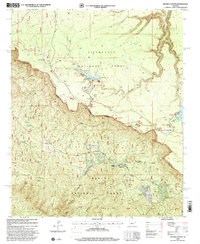 1998 Woods Canyon2001 Print · USGSThe Mogollon Rim forms a dramatic divide through the Arizona high country during the late twentieth century. Researchers can trace historic routes like the General George Crook Road and locate mountain communities at Colcord Estates or Ponderosa Estates.
 - 2011 Map of Woods Canyon, 2011 Print
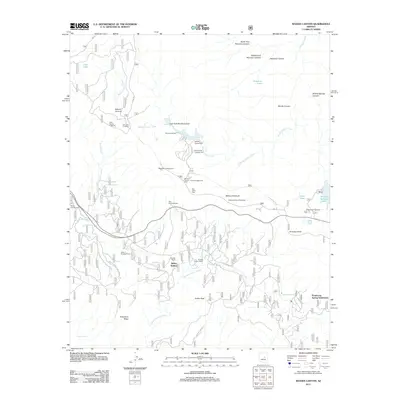 2011 Woods Canyon2011 Print · USGSHigh atop the Mogollon Rim in the early twenty-first century, this area balances quiet mountain subdivisions with forest recreation. Researchers can trace land tracts at Sleepy Hollow, locate the R Bar C Number Three, or find remote landmarks like Military Sinkhole.
 - 2014 Map of Woods Canyon, 2014 Print
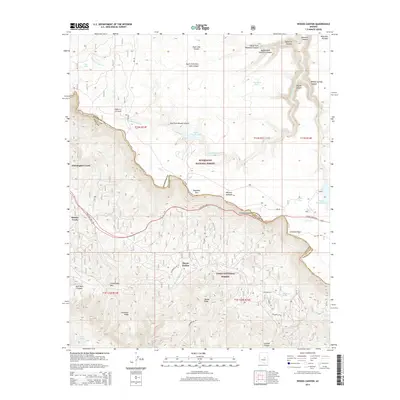 2014 Woods Canyon2014 Print · USGSThe Mogollon Rim defines this Arizona landscape at the meeting point of Coconino and Gila counties. Researchers can trace the development of mountain communities like Christopher Creek and Sleepy Hollow alongside natural landmarks such as Woods Canyon Lake and the Military Sinkhole.
 - 2018 Map of Woods Canyon, 2018 Print
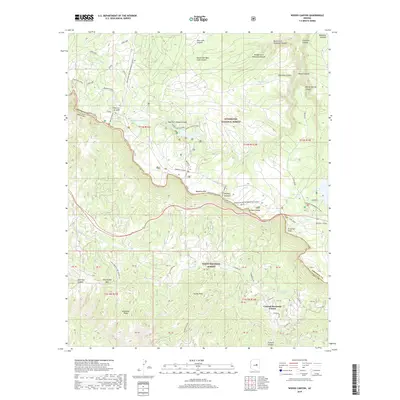 2018 Woods Canyon2018 Print · USGSThe high plateau meets the sheer drop of the Mogollon Rim in this forest survey from 2018. Researchers can trace the path of the General Crook trail or locate mountain landmarks such as Christopher Mtn and the remote Colcord Mountain Estates.
 - 2021 Map of Woods Canyon, 2021 Print
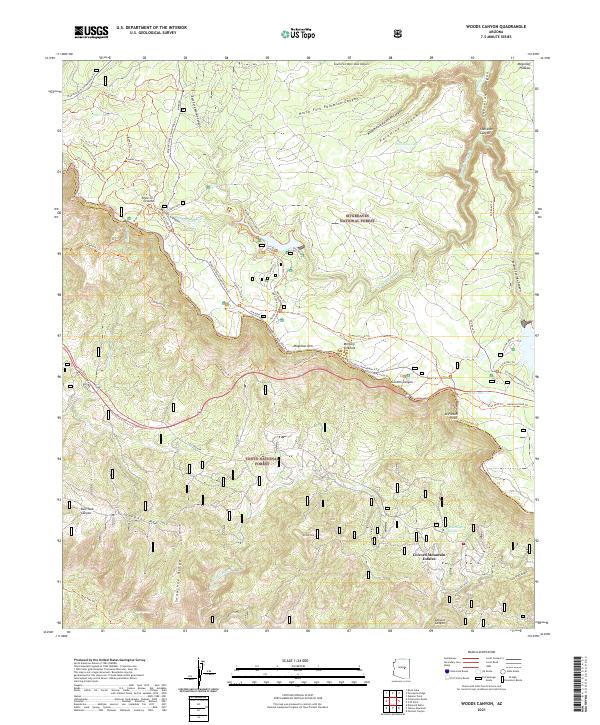 2021 Woods Canyon2021 Print · USGSThe high Mogollon Rim country of central Arizona is captured here in the early twenty-first century, showing the intersection of Gila and Coconino counties. Researchers can trace the winding General Crook Trl and find landmarks like Military Sinkhole and the isolated Colcord Mountain Estates.
End of results
Showing maps 1-14 of 14
Frequently asked questions
- What are the different types of historical maps available for Ponderosa Spring Subdivision?
- What is the oldest map of Ponderosa Spring Subdivision?
- Where can I purchase historical maps of Ponderosa Spring Subdivision for my home or office?
- Where can I download high-res historical maps of Ponderosa Spring Subdivision?
- Are there historical topographic maps available for Ponderosa Spring Subdivision?
- Is there historical aerial imagery available for Ponderosa Spring Subdivision?
- Where are historical maps of Ponderosa Spring Subdivision sourced from?