Old Maps of Furry, Arkansas for Academic Research
Study the evolution of Furry with 20 high-resolution historic maps. Whether you're teaching, researching, or modeling changes in land use, these maps provide essential visual documentation of urban, environmental, and geographic change.
- Analyze long-term change: Track patterns in development, transportation, and natural features.
- Ideal for environmental or urban studies: Support academic projects with primary historical map data.
- Use in the classroom or lab: Educators and researchers rely on these maps to bring historical context to life.
These maps are a powerful tool for teaching, research, and visualizing how Furry has changed over the decades.
Furry, AR maps
(20)- 1879 Map of Fort Smith
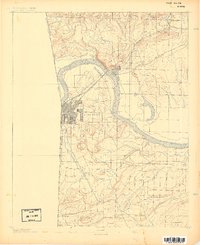 1879 Fort Smith1879 Print · USGSFort Smith and Van Buren stand at the edge of the frontier in the late eighteen-seventies, just as the railroads began to reshape the Arkansas River valley. Trace the early town plats and find rural community anchors like Zenobia P.O., Lillie, and the Ferry crossings.
 - 1887 Map of Van Buren
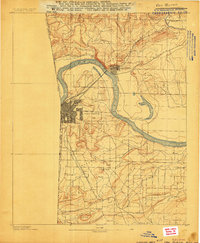 1887 Van Buren1887 Print · USGSThe Arkansas frontier meets the Indian Territory in the late nineteenth century, centered on the growing river hubs of Fort Smith and Van Buren. Genealogists and researchers can locate old post offices like Cavanaugh P.O. and trace the early routes of the Ft. Smith & Southern R. R.
 - 1890 Map of Fort Smith
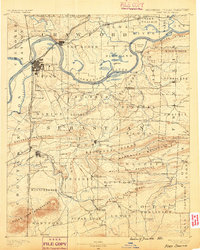 1890 Fort Smith1890 Print · USGSThe Arkansas-Indian Territory border was a landscape of rapid transition in the late nineteenth century. Genealogists and historians can trace early post offices like Jenny Lind P.O. and Oak Bower (Lavaca P.O.) or follow the path of the St. Louis and San Francisco Railroad.7 unique versions available
 - 1943 Map of Fort Smith
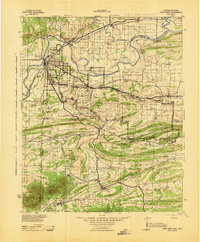 1943 Fort Smith1943 Print · USGSFort Smith and the Arkansas River valley are shown here during the height of the Second World War as the region became a major military hub. Genealogists and researchers can locate several rural schools and churches, such as St Marys School and Pleasant Ridge Church and Cem, alongside industrial sites like the Strip Mine and Smelter.
 - 1946 Map of Fort Smith
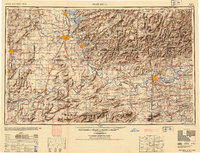 1946 Fort Smith1946 Print · USGSThe Arkansas-Oklahoma borderlands appear here in the mid-forties, as new reservoirs began to transform the river valleys. Genealogists and historians can trace rail-served towns from Muskogee to Fort Smith and locate landmarks like Camp Chaffee.
 - 1947 Map of Van Buren, 1954 Print
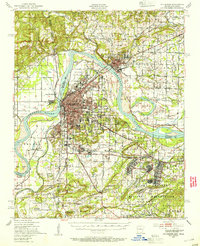 1947 Van Buren1954 Print · USGSThe riverfront cities of Fort Smith and Van Buren are shown in the late 1940s, just as the regional industrial footprint was expanding. Researchers can trace the rail lines of the Missouri Pacific or locate local landmarks like St Scholastica Academy and the Zinc Smelter.
 - 1947 Map of Van Buren, 1969 Print
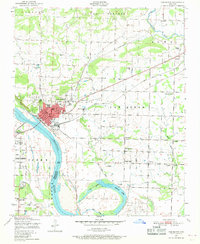 1947 Van Buren1969 Print · USGSVan Buren and the northern reaches of Fort Smith are shown in the late 1940s during a period of heavy industrial activity. Researchers can find numerous strip mines, the zinc smelter, and several country churches including Sunnyside Church.3 unique versions available
 - 1951 Map of Van Buren
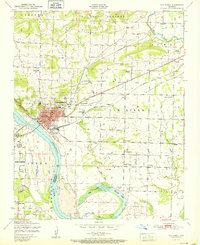 1951 Van Buren1951 Print · USGSCrawford County's river-front industry and rural settlements are captured in the late 1940s, just as the postwar era began to shape the Van Buren landscape. Genealogists and historians can locate family landmarks such as Fairview Cemetery, Wright Town, and the old Zinc smelter.2 unique versions available
 - 1965 Map of Fort Smith
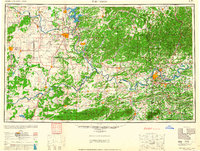 1965 Fort Smith1965 Print · USGSEastern Oklahoma and Western Arkansas are captured here during a period of massive post-war change as new reservoirs reshaped the river valleys. Genealogists and historians can trace the rail networks of the Midland Valley RR and find established communities like Stilwell, Sallisaw, and Stigler.
 - 1967 Map of Fort Smith
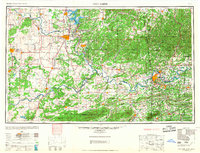 1967 Fort Smith1967 Print · USGSThe Arkansas River valley and the foothills of the Ozarks are captured here during a period of significant military and industrial activity. Researchers can trace the sprawling bounds of Camp Chaffee and Camp Gruber or locate vanished rail stops along the Midland Valley RR.
 - 1976 Map of Van Buren, 1978 Print
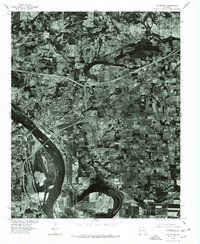 1976 Van Buren1978 Print · USGSThe Arkansas River valley in the mid-seventies shows a landscape of rapid change as interstate highways began to reshape the region. Local researchers can trace the urban interface between Van Buren and Fort Smith or locate the rural outpost of Concord.2 unique versions available
 - 1978 Map of Fort Smith, 1979 Print
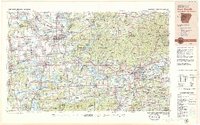 1978 Fort Smith1979 Print · USGSThe Arkansas-Oklahoma borderlands in the late seventies show a landscape shaped by massive river reservoirs and sprawling military reservations. Trace the historic rail lines of the Missouri Pacific RR and locate regional landmarks like Fort Gibson, Tenkiller Ferry Lake, and Barling.2 unique versions available
 - 1978 Map of Fort Smith, 1979 Print
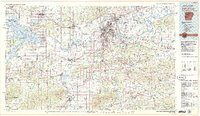 1978 Fort Smith1979 Print · USGSThe Arkansas-Oklahoma borderlands in the late seventies show a region defined by river navigation, coal mining, and military expansion. You can trace industrial footprints like the Strip Mines and the vast Fort Chaffee Military Reservation.2 unique versions available
 - 1987 Map of Van Buren, 1988 Print
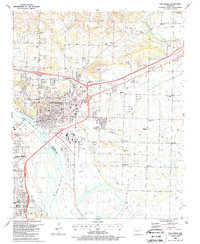 1987 Van Buren1988 Print · USGSVan Buren and northern Fort Smith are captured in the late 1980s as the riverfront and rail lines continued to shape local industry. Genealogists can locate family landmarks like Antioch Cem, Old Concord Cem, and the Westark Com College campus.2 unique versions available
 - 1997 Map of Van Buren, 1999 Print
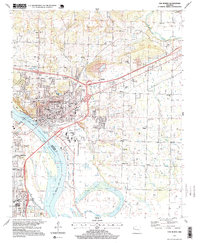 1997 Van Buren1999 Print · USGSVan Buren and the northern edge of Fort Smith appear here in the late nineties as a bustling river-and-rail corridor. Researchers can trace family history through sites like Antioch Cem or locate former community centers like Shibley and Wright Town.
 - 2011 Map of Van Buren, 2011 Print
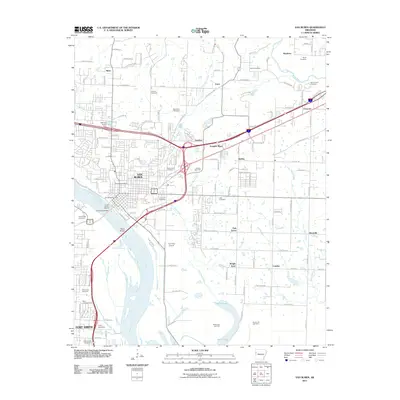 2011 Van Buren2011 Print · USGSThe Arkansas River corridor near the Oklahoma border is shown here during a period of modern expansion. Researchers can trace family history through numerous sites like Old Concord Cemetery or locate the Shibley Gas Field and Twin City Airport.
 - 2014 Map of Van Buren, 2014 Print
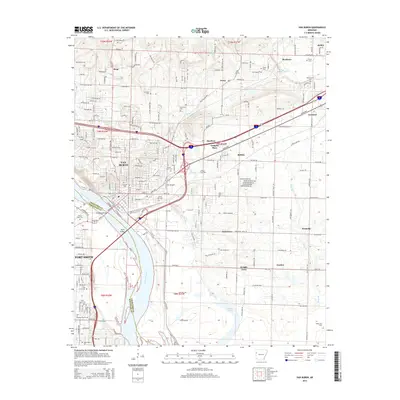 2014 Van Buren2014 Print · USGSThe riverfront communities of Van Buren and Fort Smith are shown in detail during their recent period of expansion. Genealogists can trace family sites at Fairview Cem and Rose Lawn Cem, while local historians can locate the Shibley Gas Field.
 - 2017 Map of Van Buren, 2017 Print
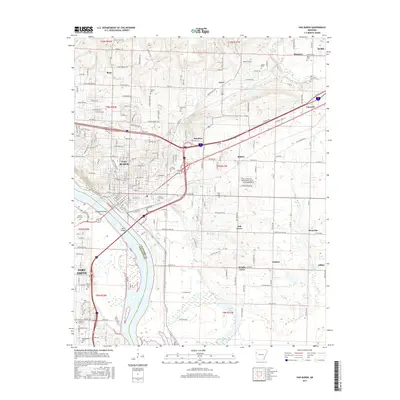 2017 Van Buren2017 Print · USGSThe riverfront communities of Crawford and Sebastian Counties are shown here during a period of modern expansion. Researchers can trace historic cemeteries and neighborhoods, from Stevenson Cem in the north to the industrial corridors near Kibler and Catcher.
 - 2020 Map of Van Buren, 2020 Print
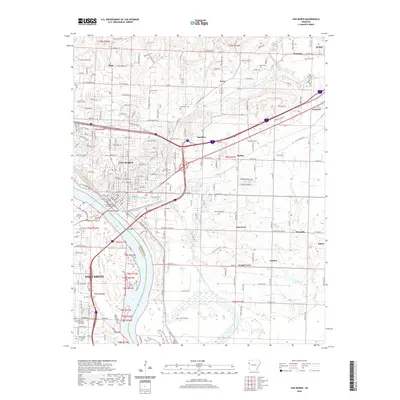 2020 Van Buren2020 Print · USGSThe Arkansas River valley comes into sharp focus here at the start of the 2020s, showing the growth of Van Buren and Fort Smith. Researchers can trace family history through numerous sites like Antioch Cem, Stevenson Cem, and the Crawford County Courthouse.
 - 2024 Map of Van Buren, 2024 Print
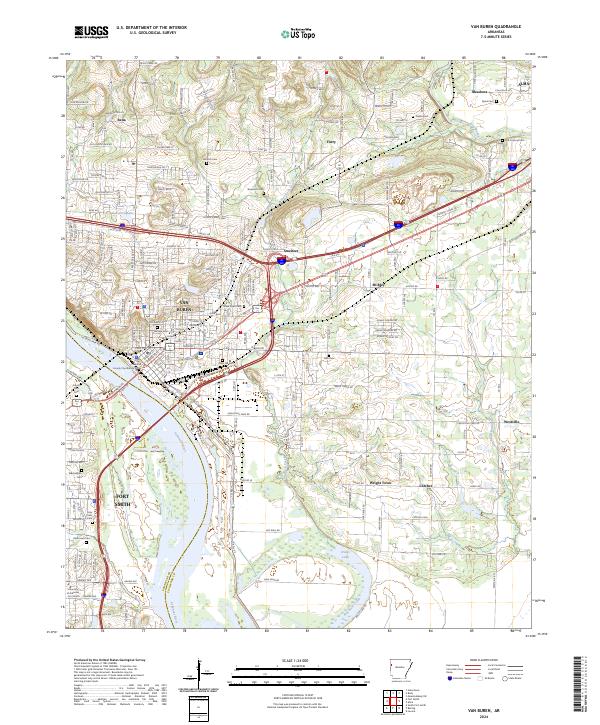 2024 Van Buren2024 Print · USGSVan Buren and Fort Smith meet along the banks of the Arkansas River in this detailed modern survey of the river valley. Genealogists and local historians can locate numerous family burial sites, including Antioch Cem, Stevenson Cem, and Old Concord Cem.
End of results
Showing maps 1-20 of 20
Top cities near Furry
- Fort Smith historical maps
- Van Buren historical maps
- Alma historical maps
- Barling historical maps
- Pocola historical maps
- Roland historical maps
See more
Frequently asked questions
- What are the different types of historical maps available for Furry?
- What is the oldest map of Furry?
- Where can I purchase historical maps of Furry for my home or office?
- Where can I download high-res historical maps of Furry?
- Are there historical topographic maps available for Furry?
- Is there historical aerial imagery available for Furry?
- Where are historical maps of Furry sourced from?