Old Maps of Garland County, Arkansas for Hiking & Exploration
Hike through history with 141 historic maps of Garland County. Explore old trails, ghost towns, and forgotten backroads — perfect for outdoor adventurers and local explorers.
- Rediscover forgotten places: Map out old mining camps, roads, and footpaths that no longer exist on modern maps.
- Layer with modern tools: Combine with LiDAR or satellite views to plan hikes through historical terrain.
- Made for exploration: Popular among hikers, overlanders, and local history lovers.
Use these maps to find adventure and explore the hidden past of Garland County.
Garland County, AR maps
(141)- 1890 Map of Benton
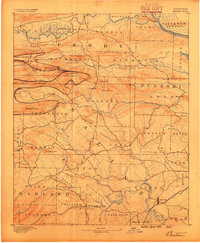 1890 Benton1890 Print · USGSSaline and Pulaski counties are shown here in the late nineteenth century as the rail network began to reshape the river-valley economy. Genealogists and researchers can trace family roots through old settlements like Brazils and Avilla or locate landmarks like Goosepond Mt and Aplin.
 - 1890 Map of Hot Springs
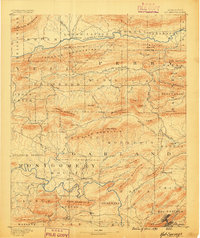 1890 Hot Springs1890 Print · USGSThe Ouachita and Fourche La Fave river valleys are mapped here in the late nineteenth century, showing a landscape of isolated mountain settlements. Researchers can trace early family sites near Buckville, Cedar Glades, and the nascent streets of Hot Springs.
 - 1894 Map of Hot Springs
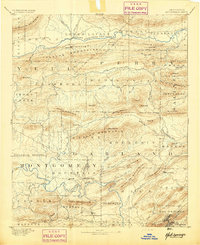 1894 Hot Springs1894 Print · USGSThe thermal waters of Hot Springs and the surrounding Ouachita wilderness appear here in the decade before the region’s twentieth-century expansion. Genealogists can trace early homesteading locations and vanished rural hubs like Buckville, Cedar Glades, and Wards Crossing.5 unique versions available
 - 1894 Map of Benton
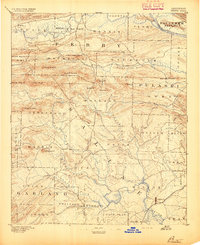 1894 Benton1894 Print · USGSCentral Arkansas in the late nineteenth century was a landscape of steep ridges and critical river crossings. Genealogists and researchers can trace the early rail corridor of the St. Louis Iron Mountain and Southern R. R. near Benton or locate family roots in Avilla and Brazils.5 unique versions available
 - 1948 Map of Malvern, 1957 Print
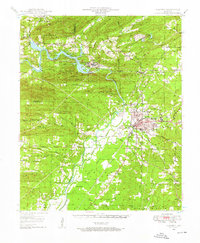 1948 Malvern1957 Print · USGSHot Spring County and the Ouachita River valley are captured here just after the war, showing the industrial growth and rural character of the region. Researchers can trace the development of Malvern and find vanished landmarks like Antioch Sch, Jones Mills, and the Rockport Cem.3 unique versions available
 - 1949 Map of Malvern
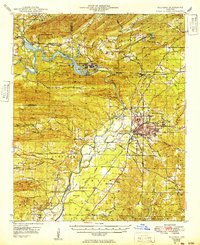 1949 Malvern1949 Print · USGSMalvern and the Ouachita River valley are shown here in the late 1940s, as industrial sites and new reservoirs began to reshape the Hot Spring County landscape. Genealogists and local historians can locate many rural landmarks, including Potash Sulphur Springs, Taylor Chapel, and the Price Cem.
 - 1955 Map of Little Rock, 1978 Print
 1955 Little Rock1978 Print · USGSCentral Arkansas in the mid-fifties exhibits a landscape of growing cities, massive military installations, and mountain reservoirs. Genealogists and historians can trace the industrial Bauxite Mines, regional rail lines, and local landmarks like Antioch Church.
 - 1956 Map of Little Rock
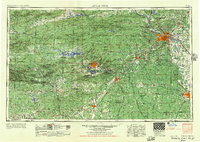 1956 Little Rock1956 Print · USGSCentral Arkansas in the mid-fifties shows a landscape defined by burgeoning military bases and the timber-and-mineral wealth of the Ouachitas. Genealogists and researchers can trace old rail lines like the Missouri Pacific and find established communities such as Bauxite, Sheridan, and Mabelvale.
 - 1960 Map of Little Rock
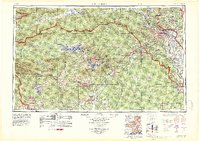 1960 Little Rock1960 Print · USGSCentral Arkansas in the late fifties shows a landscape of growing military bases and massive new reservoirs. Local historians can trace the mid-century expansion of Little Rock and Hot Springs alongside the industrial works at Bauxite and the Pine Bluff Arsenal.
 - 1962 Map of Crystal Springs, 1963 Print
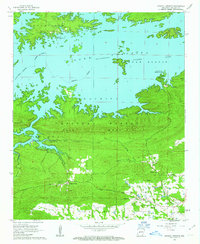 1962 Crystal Springs1963 Print · USGSGarland County in the early 1960s reveals a landscape defined by the deep waters of Lake Ouachita and the surrounding timberlands. Researchers can trace local heritage through sites like Buckville Cem, the settlement of Bear, and the Valley Sch.4 unique versions available
 - 1962 Map of Avant, 1963 Print
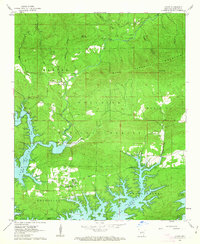 1962 Avant1963 Print · USGSGarland County's interior is seen here in the early sixties as the waters of Lake Ouachita reshaped the local landscape. Genealogists can trace family roots at Avant (Buckville PO) and find cemetery sites like Caldwell Cem and Mount Tabor Cem.3 unique versions available
 - 1962 Map of Fannie, 1963 Print
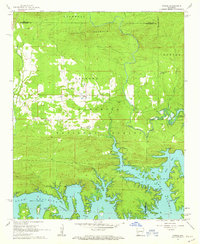 1962 Fannie1963 Print · USGSThe northern shores of Lake Ouachita and the surrounding national forest are captured here in the early sixties. Researchers can locate family landmarks such as Breashears Cem, Mt Zion Ch, and the small settlement of Fannie.3 unique versions available
 - 1962 Map of Mc Graw Mountain, 1963 Print
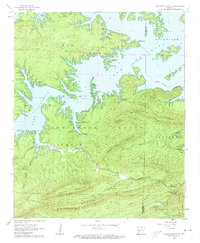 1962 Mc Graw Mountain1963 Print · USGSThe northern reaches of Montgomery County are defined here by the winding shoreline of Lake Ouachita in the early sixties. Genealogists and local historians can locate Murphy Cem, the Hickorynut Lookout Tower, and early sites like Camp Clearfork.3 unique versions available
 - 1963 Map of Paron SW, 1964 Print
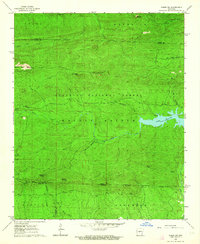 1963 Paron SW1964 Print · USGSThe interior of the Ouachita National Forest comes into sharp focus during the early sixties, showing a landscape defined by the Alum Fork and North Fork Saline River. Researchers can trace the rugged drainage patterns of Stillhouse Creek and find landmarks like Flatside Pinnacle and Walnut Bottom.5 unique versions available
 - 1964 Map of Little Rock
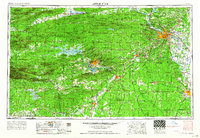 1964 Little Rock1964 Print · USGSCentral Arkansas in the mid-sixties is a landscape of mountain ridges, industrial rail lines, and growing military hubs. Researchers can trace the development of Bauxite and Hot Springs or locate rural landmarks like Sparkman and the Pine Bluff Arsenal.
 - 1966 Map of Pearcy, 1967 Print
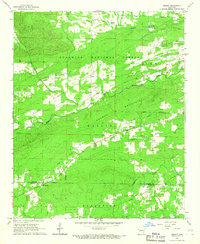 1966 Pearcy1967 Print · USGSThe Ouachita foothills in the mid-sixties are captured here, showing the rural communities along the Garland and Hot Spring county line. Researchers can trace family sites near Bethlehem Ch, the Cross Roads Cem, or the old Railroad Grade near Pearcy.2 unique versions available
 - 1966 Map of Hot Springs North, 1967 Print
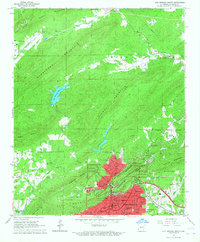 1966 Hot Springs North1967 Print · USGSHot Springs and the surrounding Ouachita foothills are captured here in the mid-1960s, showing the city's urban expansion against the federal park boundaries. Genealogists can trace family landmarks like Robbins Cem, New Bethel Ch, and the historic Big Chalybeate Springhouse.4 unique versions available
 - 1966 Map of Hempwallace, 1967 Print
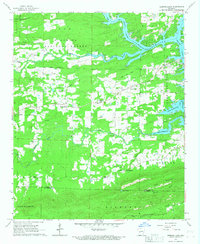 1966 Hempwallace1967 Print · USGSGarland and Hot Spring counties are shown during a period of transition in the late sixties as recreation grew around the river. Researchers can locate family landmarks like Oak Grove Cem and Aldrich Cem or trace the path of the Old Railroad Grade.2 unique versions available
 - 1966 Map of Bonnerdale, 1967 Print
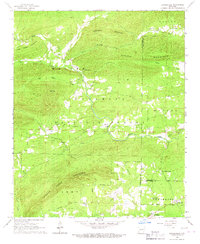 1966 Bonnerdale1967 Print · USGSThe Ouachita foothills in the 1960s reveal a landscape of family-named cemeteries and decommissioned timber routes. Genealogists and historians can trace the Old Railroad Grade and locate historic community centers like Alamo, Old Bonnerdale, and Grants Chapel.
 - 1966 Map of Mountain Pine, 1967 Print
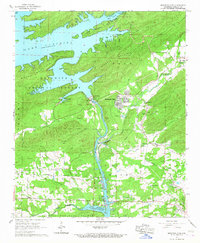 1966 Mountain Pine1967 Print · USGSMid-century Garland County centers on the massive engineering of the Blakely Mountain Dam and the emerging shores of Lake Ouachita. Genealogists can trace family names at Cunningham Cem, Godwin Cem, and Cedar Glades Ch.2 unique versions available
 - 1966 Map of Hot Springs South, 1967 Print
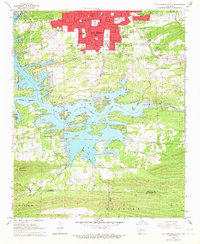 1966 Hot Springs South1967 Print · USGSHot Springs and the surrounding Arkansas lakelands are captured here in the mid-sixties, showing the growth of Lake Hamilton and the southern city limits. Researchers can trace historical landmarks including the Oaklawn Racetrack, the Fish Hatchery, and numerous local sites like New Hope Ch.5 unique versions available
 - 1968 Map of Nimrod SE
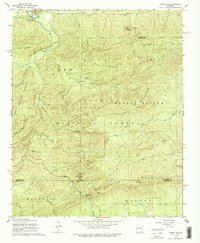 1968 Nimrod SE1968 Print · USGSThe northern reaches of the Ouachita Mountains are captured here in the late sixties, where the timberlands of Perry and Saline counties converge. Genealogists and hikers can locate the Goat Bluff Cem, trace the waters of the Middle Fork Saline River, and identify landmarks like Smith Pinnacle.4 unique versions available
 - 1968 Map of Onyx, 1970 Print
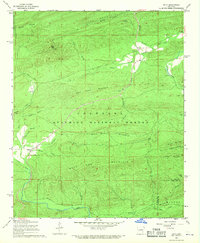 1968 Onyx1970 Print · USGSIn the late sixties, the timbered ridges and river valleys of Yell and Garland counties remained a terrain of remote settlements and forest lookouts. Researchers can trace the family sites at Ballew Cem, follow the Onyx Trail, or locate the rural communities of Onyx and Aly.2 unique versions available
 - 1968 Map of Nimrod SW, 1970 Print
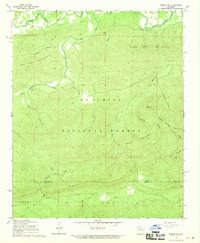 1968 Nimrod SW1970 Print · USGSThe northern Ouachita mountains in the late sixties are captured here, from the valley of the South Fork La Fave River to the Garland County line. Researchers can locate the mountain settlement at Ava, the Hawks Cem, and the high peak of Joe Point.2 unique versions available
 - 1968 Map of Steve, 1970 Print
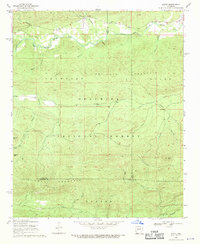 1968 Steve1970 Print · USGSThe northern Arkansas wilderness of the late sixties is documented here as the Ouachita National Forest meets the Fourche River valley. Local researchers can trace family landmarks like Shed Cem, Steve Ch, and the small community at Steve.
Showing maps 1-25 of 141
Top cities of Garland County
- Hot Springs historical maps
- Hot Springs Village historical maps
- Mountain Pine historical maps
- Fountain Lake historical maps
- Fountain Lake historical maps
- Lonsdale historical maps
Frequently asked questions
- What are the different types of historical maps available for Garland County?
- What is the oldest map of Garland County?
- Where can I purchase historical maps of Garland County for my home or office?
- Where can I download high-res historical maps of Garland County?
- Are there historical topographic maps available for Garland County?
- Is there historical aerial imagery available for Garland County?
- Where are historical maps of Garland County sourced from?