Old Maps of Amagon, Arkansas for Academic Research
Study the evolution of Amagon with 11 high-resolution historic maps. Whether you're teaching, researching, or modeling changes in land use, these maps provide essential visual documentation of urban, environmental, and geographic change.
- Analyze long-term change: Track patterns in development, transportation, and natural features.
- Ideal for environmental or urban studies: Support academic projects with primary historical map data.
- Use in the classroom or lab: Educators and researchers rely on these maps to bring historical context to life.
These maps are a powerful tool for teaching, research, and visualizing how Amagon has changed over the decades.
Amagon, AR maps
(11)- 1935 Map of Tuckerman, 1946 Print
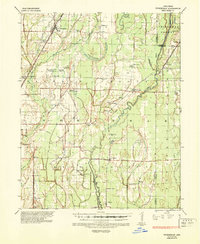 1935 Tuckerman1946 Print · USGSNortheast Arkansas in the mid-thirties was a landscape shaped by the Cache River and a dense network of drainage ditches. Family historians can trace rural roots through numerous combined sites like Antioch Ch & Cem and Green Haw Sch & Cem.2 unique versions available
 - 1953 Map of Memphis, 1966 Print
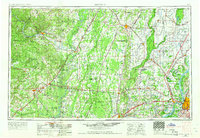 1953 Memphis1966 Print · USGSEastern Arkansas and the Memphis riverfront are shown here during the mid-century period of regional growth and river management. Local historians can trace the paths of the Chicago Rock Island & Pacific RR through Forrest City or locate river landmarks like President's Island.3 unique versions available
 - 1956 Map of Memphis
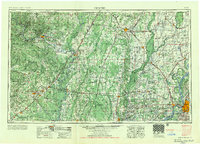 1956 Memphis1956 Print · USGSThe Mississippi Delta and the bluffs of West Tennessee meet in the mid-fifties, showing a landscape defined by massive river systems and rail hubs. Researchers can trace the path of Crowleys Ridge or locate vanished river landings near Centennial Island and Island No 35.
 - 1965 Map of Amagon, 1966 Print
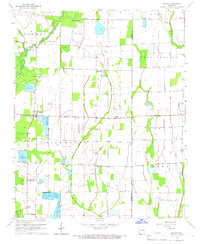 1965 Amagon1966 Print · USGSNortheast Arkansas in the mid-sixties is captured here as a landscape of managed wetlands and small rural communities. Genealogists can locate family burial sites at Carter Cem and Johnson Cem or trace the early industrial footprint of Stringers Mill.
 - 1967 Map of Tuckerman
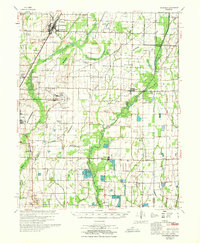 1967 Tuckerman1967 Print · USGSThe Jackson County lowlands are captured here in the mid-sixties, showing a landscape defined by the Cache River and its sloughs. Trace family history at Gracelawn Cem, find old school sites like Eastside Sch, and locate industrial landmarks like Stringers Mill.
 - 1986 Map of Batesville
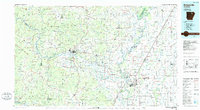 1986 Batesville1986 Print · USGSNorth-central Arkansas in the mid-eighties shows a landscape of river-bend towns and Ozark foothills during a period of steady growth. You can trace family roots through numerous upland sites like Hickory Valley School, Sandtown Hill Cem, and the riverfront at Oil Trough.2 unique versions available
 - 2011 Map of Amagon, 2011 Print
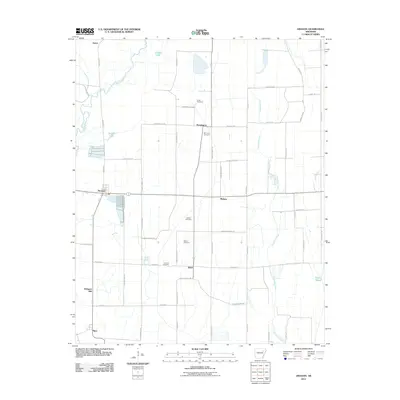 2011 Amagon2011 Print · USGSThe alluvial plains of Jackson County are shown in great detail during the early 2010s. Researchers can locate several rural burial grounds like Carter Cemetery and Martin Cemetery, or trace local industry at Stringers Mill near the town of Algoa.
 - 2014 Map of Amagon, 2014 Print
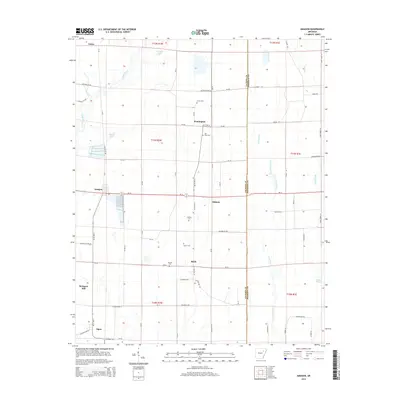 2014 Amagon2014 Print · USGSThe Arkansas Delta comes into focus in this 2014 survey, where the Cache River and Mink Slough shape the rural landscape. Genealogists can locate several family burial sites, including Johnson Cem and 'Bill' Ford Cem, alongside settlements like Amagon and Algoa.
 - 2017 Map of Amagon, 2017 Print
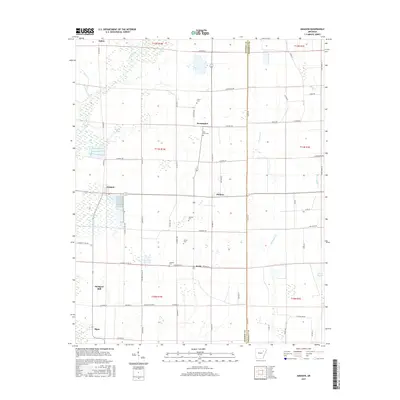 2017 Amagon2017 Print · USGSJackson County agricultural life is captured here in the late twenty-tens, showing the rural communities between the Cache River and the Poinsett County line. Researchers can locate several family burial grounds like Jackson Cem and Johnson Cem or trace the early foundations of Amagon and Stringers Mill.
 - 2020 Map of Amagon, 2020 Print
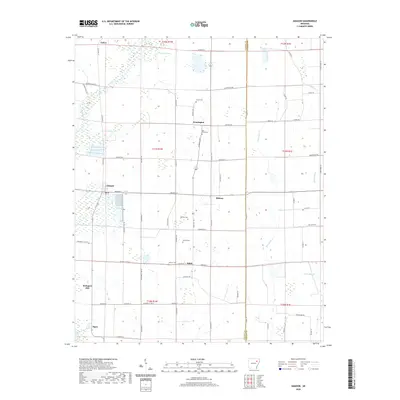 2020 Amagon2020 Print · USGSJackson County's agricultural heartland is documented here in the early twenty-first century, showing the small communities and family farms of the Arkansas delta. Genealogists can locate several family burial grounds, including Carter Cem and 'Bill' Ford Cem, or trace the legacy of Stringers Mill.
 - 2024 Map of Amagon, 2024 Print
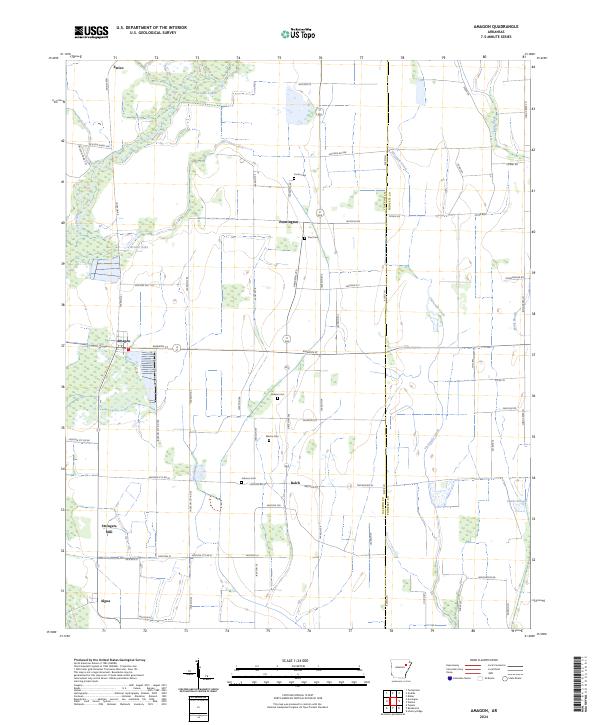 2024 Amagon2024 Print · USGSEastern Jackson County comes to life in this modern survey of the agricultural plains and the Cache River bottomlands. Genealogists and local historians can locate rural family landmarks like Stringers Mill, Carter Cem, and the small community of Balch.
End of results
Showing maps 1-11 of 11
Top cities near Amagon
- Newport historical maps
- Tuckerman historical maps
- Diaz historical maps
- Weiner historical maps
- Grubbs historical maps
- Campbell Station historical maps
See more
Frequently asked questions
- What are the different types of historical maps available for Amagon?
- What is the oldest map of Amagon?
- Where can I purchase historical maps of Amagon for my home or office?
- Where can I download high-res historical maps of Amagon?
- Are there historical topographic maps available for Amagon?
- Is there historical aerial imagery available for Amagon?
- Where are historical maps of Amagon sourced from?