Old Maps of Oak Park, Fort Smith for Academic Research
Study the evolution of Oak Park with 20 high-resolution historic maps. Whether you're teaching, researching, or modeling changes in land use, these maps provide essential visual documentation of urban, environmental, and geographic change.
- Analyze long-term change: Track patterns in development, transportation, and natural features.
- Ideal for environmental or urban studies: Support academic projects with primary historical map data.
- Use in the classroom or lab: Educators and researchers rely on these maps to bring historical context to life.
These maps are a powerful tool for teaching, research, and visualizing how Oak Park has changed over the decades.
Oak Park, Fort Smith maps
(20)- 1879 Map of Fort Smith
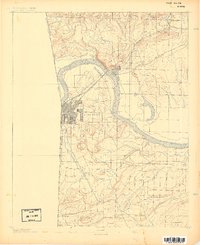 1879 Fort Smith1879 Print · USGSFort Smith and Van Buren stand at the edge of the frontier in the late eighteen-seventies, just as the railroads began to reshape the Arkansas River valley. Trace the early town plats and find rural community anchors like Zenobia P.O., Lillie, and the Ferry crossings.
 - 1887 Map of Van Buren
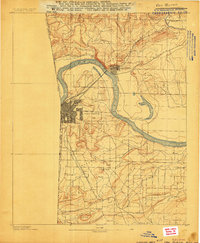 1887 Van Buren1887 Print · USGSThe Arkansas frontier meets the Indian Territory in the late nineteenth century, centered on the growing river hubs of Fort Smith and Van Buren. Genealogists and researchers can locate old post offices like Cavanaugh P.O. and trace the early routes of the Ft. Smith & Southern R. R.
 - 1890 Map of Fort Smith
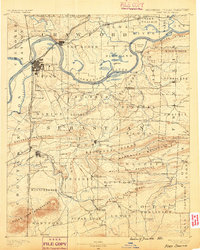 1890 Fort Smith1890 Print · USGSThe Arkansas-Indian Territory border was a landscape of rapid transition in the late nineteenth century. Genealogists and historians can trace early post offices like Jenny Lind P.O. and Oak Bower (Lavaca P.O.) or follow the path of the St. Louis and San Francisco Railroad.7 unique versions available
 - 1943 Map of Fort Smith
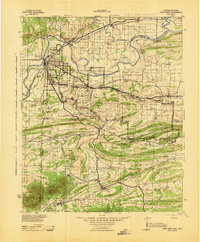 1943 Fort Smith1943 Print · USGSFort Smith and the Arkansas River valley are shown here during the height of the Second World War as the region became a major military hub. Genealogists and researchers can locate several rural schools and churches, such as St Marys School and Pleasant Ridge Church and Cem, alongside industrial sites like the Strip Mine and Smelter.
 - 1946 Map of Fort Smith
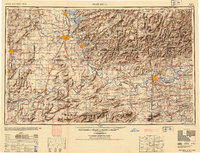 1946 Fort Smith1946 Print · USGSThe Arkansas-Oklahoma borderlands appear here in the mid-forties, as new reservoirs began to transform the river valleys. Genealogists and historians can trace rail-served towns from Muskogee to Fort Smith and locate landmarks like Camp Chaffee.
 - 1947 Map of Van Buren, 1954 Print
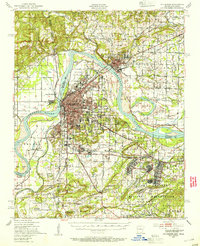 1947 Van Buren1954 Print · USGSThe riverfront cities of Fort Smith and Van Buren are shown in the late 1940s, just as the regional industrial footprint was expanding. Researchers can trace the rail lines of the Missouri Pacific or locate local landmarks like St Scholastica Academy and the Zinc Smelter.
 - 1947 Map of Fort Smith, 1966 Print
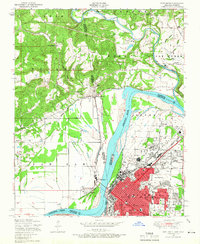 1947 Fort Smith1966 Print · USGSPost-war Arkansas and Oklahoma meet at the river bend during this era of urban expansion and rail dominance. Researchers can trace the development of FORT SMITH neighborhoods and identify local landmarks like St Boniface Church and School and Twin City Hospital.4 unique versions available
 - 1951 Map of Fort Smith
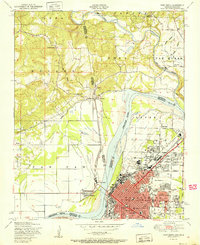 1951 Fort Smith1951 Print · USGSFort Smith and its neighboring Oklahoma borderlands are captured here during a period of significant mid-century growth and industrial connectivity. Researchers can trace the development of urban neighborhoods and rural outposts like Moffett, Dora, and Bluemouse School.2 unique versions available
 - 1965 Map of Fort Smith
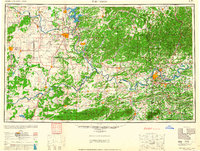 1965 Fort Smith1965 Print · USGSEastern Oklahoma and Western Arkansas are captured here during a period of massive post-war change as new reservoirs reshaped the river valleys. Genealogists and historians can trace the rail networks of the Midland Valley RR and find established communities like Stilwell, Sallisaw, and Stigler.
 - 1967 Map of Fort Smith
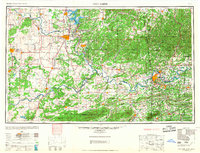 1967 Fort Smith1967 Print · USGSThe Arkansas River valley and the foothills of the Ozarks are captured here during a period of significant military and industrial activity. Researchers can trace the sprawling bounds of Camp Chaffee and Camp Gruber or locate vanished rail stops along the Midland Valley RR.
 - 1976 Map of Fort Smith, 1978 Print
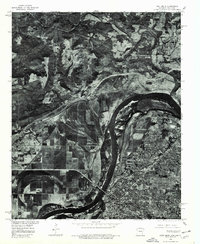 1976 Fort Smith1978 Print · USGSFort Smith and the Oklahoma borderlands are captured in high-contrast detail in the mid-seventies, showing the region's transition from urban center to rural floodplain. Researchers can trace the layout of the city near Moffett or study the agricultural plots and timberlines surrounding Roland and Dora.
 - 1978 Map of Fort Smith, 1979 Print
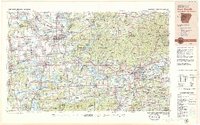 1978 Fort Smith1979 Print · USGSThe Arkansas-Oklahoma borderlands in the late seventies show a landscape shaped by massive river reservoirs and sprawling military reservations. Trace the historic rail lines of the Missouri Pacific RR and locate regional landmarks like Fort Gibson, Tenkiller Ferry Lake, and Barling.2 unique versions available
 - 1978 Map of Fort Smith, 1979 Print
 1978 Fort Smith1979 Print · USGSThe Arkansas-Oklahoma borderlands in the late seventies show a region defined by river navigation, coal mining, and military expansion. You can trace industrial footprints like the Strip Mines and the vast Fort Chaffee Military Reservation.2 unique versions available
 - 1987 Map of Fort Smith, 1988 Print
 1987 Fort Smith1988 Print · USGSThe riverfront communities of Arkansas and Oklahoma meet in the late eighties as urban growth expands across the valley. Researchers can trace historic church sites like Wyatt Mem Ch, legacy schools, and the industry of the Moffett Bottom gas fields.2 unique versions available
 - 1997 Map of Fort Smith, 1999 Print
 1997 Fort Smith1999 Print · USGSFort Smith and the surrounding borderlands of Oklahoma and Arkansas are captured here during the late nineties, showing the city's expansion toward the river. Genealogists can trace family footprints at the National Cemetery or locate old neighborhood landmarks like Spradling School and Alexander Memorial Church.2 unique versions available
 - 2011 Map of Fort Smith, 2011 Print
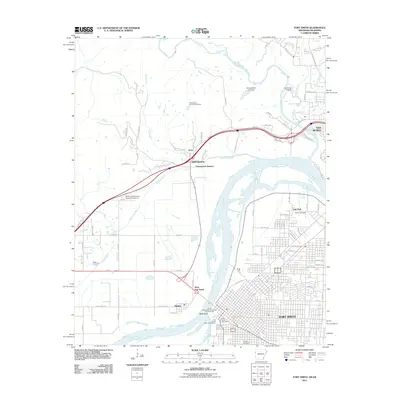 2011 Fort Smith2011 Print · USGSFort Smith and its neighboring river towns are captured in the early 2010s at the historic confluence of the Arkansas and Poteau rivers. Genealogists and local historians can locate family sites at Peevyhouse Cemetery, trace the Trail of Tears National Historic Trail Overlook, or study the layout of Moffett.
 - 2014 Map of Fort Smith, 2014 Print
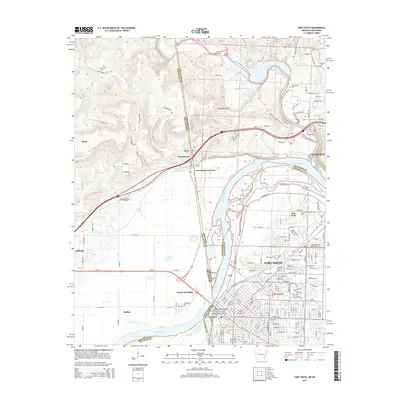 2014 Fort Smith2014 Print · USGSThe Arkansas-Oklahoma borderlands come alive in this early 21st-century survey of the river confluence. Researchers can trace historic sites like Fort Smith National Historic Site, the grounds of Oak Cem, and the waters of Lee Creek Reservoir.
 - 2017 Map of Fort Smith, 2017 Print
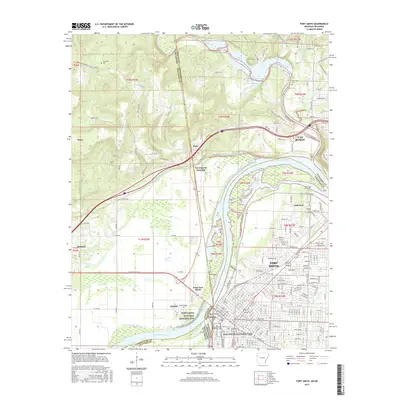 2017 Fort Smith2017 Print · USGSThe borderlands of the Arkansas-Oklahoma line are captured here in recent detail, centered on the confluence of the Arkansas River and Lee Creek. Historians can trace the grounds of the Fort Smith National Historic Site and locate local landmarks like Belle Point and the Newlon Cem.
 - 2020 Map of Fort Smith, 2020 Print
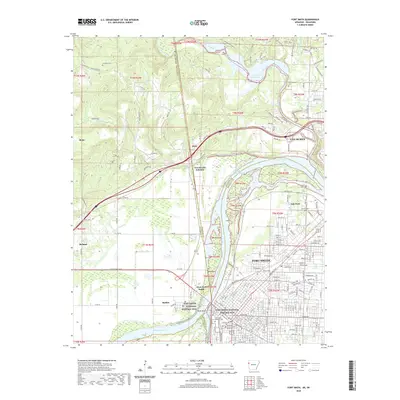 2020 Fort Smith2020 Print · USGSThe Arkansas-Oklahoma borderlands come into focus in this contemporary survey of the river valley's historic crossing. Researchers can trace ancestral sites from the Fort Smith National Historic Site to local landmarks like Belle Point and Newlon Cem.
 - 2024 Map of Fort Smith, 2024 Print
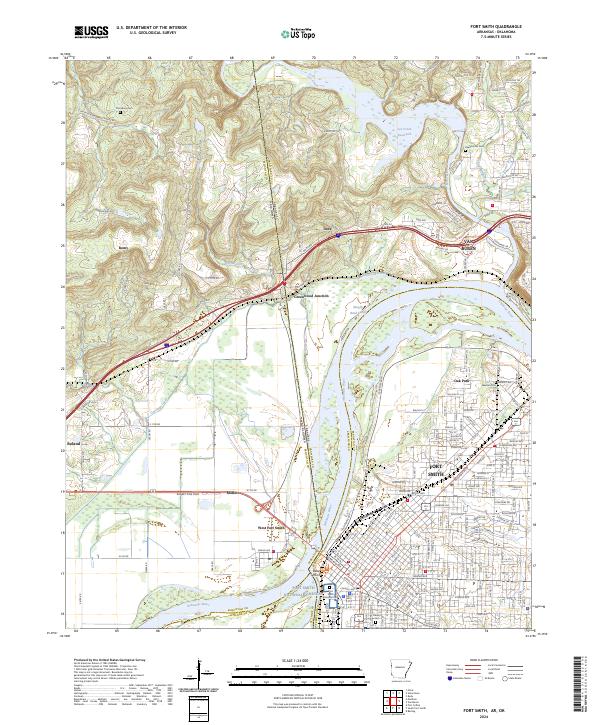 2024 Fort Smith2024 Print · USGSThe Arkansas-Oklahoma borderlands come alive in this recent survey of the river valley. Researchers can trace the layout of the Fort Smith National Historic Site, locate family plots at National Cem or Newlon Cem, and follow the path of the Arkansas River.
End of results
Showing maps 1-20 of 20
Top cities near Oak Park
- Fort Smith historical maps
- Van Buren historical maps
- Greenwood historical maps
- Alma historical maps
- Barling historical maps
- Pocola historical maps
See more
Frequently asked questions
- What are the different types of historical maps available for Oak Park?
- What is the oldest map of Oak Park?
- Where can I purchase historical maps of Oak Park for my home or office?
- Where can I download high-res historical maps of Oak Park?
- Are there historical topographic maps available for Oak Park?
- Is there historical aerial imagery available for Oak Park?
- Where are historical maps of Oak Park sourced from?