Old Maps of Van Buren County, Arkansas for Academic Research
Study the evolution of Van Buren County with 172 high-resolution historic maps. Whether you're teaching, researching, or modeling changes in land use, these maps provide essential visual documentation of urban, environmental, and geographic change.
- Analyze long-term change: Track patterns in development, transportation, and natural features.
- Ideal for environmental or urban studies: Support academic projects with primary historical map data.
- Use in the classroom or lab: Educators and researchers rely on these maps to bring historical context to life.
These maps are a powerful tool for teaching, research, and visualizing how Van Buren County has changed over the decades.
Van Buren County, AR maps
(172)- 1879 Map of Washington
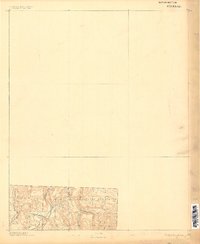 1879 Washington1879 Print · USGSThe Arkansas backcountry in the late 1870s is captured in this focused survey of the Ozark foothills. Researchers can trace the rugged headwaters of Illinois Creek and identify landmarks like Grapevine Mountain and Longs Spr.
 - 1887 Map of Smyrna
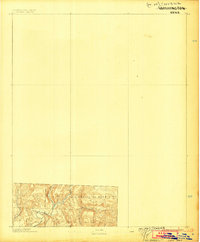 1887 Smyrna1887 Print · USGSIn the late 1880s, the Smyrna area of Pope County was a landscape of steep Ozark elevations and winding waterways. Genealogists and hikers can trace the original paths of Illinois Creek and Hurricane Cr as they flow around the base of Grapevine Mountain.
 - 1889 Map of Marshall #3
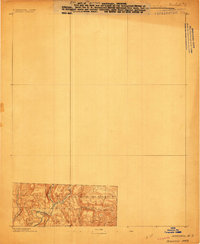 1889 Marshall #31889 Print · USGSThe Arkansas Ozarks come into focus in the late nineteenth century as early surveyors mapped the headwaters of the Illinois Bayou. Researchers can trace the steep elevations of Grapevine Mountain and locate early landmarks like Longs Spr and the East Fork.
 - 1892 Map of Marshall
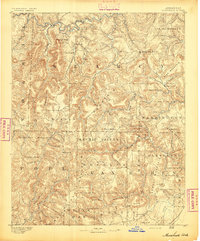 1892 Marshall1892 Print · USGSThe Ozark highlands of Searcy and Van Buren Counties appear here in the early 1890s, characterized by isolated mountain settlements and complex river headwaters. Genealogists can trace early homesteads and family-named landmarks such as Wileys Cove, Hendersons Knob, and Witts Springs.
 - 1892 Map of Mountain View
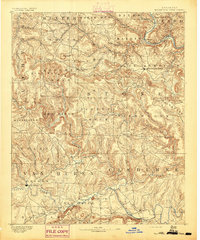 1892 Mountain View1892 Print · USGSThe Arkansas Ozarks are mapped here in the late nineteenth century, a time when river ferries and fords were the primary connections between isolated mountain towns. Trace the early streets of Mountain View and Clinton, or locate old crossings at Upper Fy. and Wilsons Fd.
 - 1892 Map of Morrillton
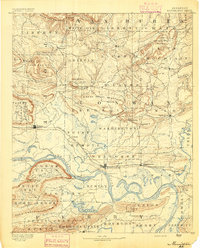 1892 Morrillton1892 Print · USGSThe Arkansas River valley at the end of the nineteenth century was a landscape of vital ferry crossings and early rail expansion. Genealogists and historians can trace the foundations of Morrillton and Perryville or locate river landmarks like Galla Rock Fy. and Stouts Ldg.
 - 1894 Map of Mountain View
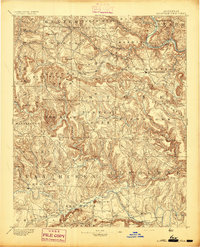 1894 Mountain View1894 Print · USGSThe Arkansas Ozark foothills and river valleys are shown in the 1890s as a network of isolated homesteads and river landings. Genealogists can trace early families near Mountain View, Clinton, and river crossings like Upper Fy. or Goffs Cove.5 unique versions available
 - 1894 Map of Morrillton
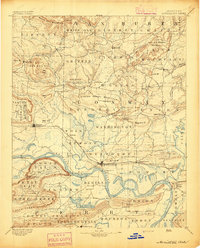 1894 Morrillton1894 Print · USGSThe Arkansas River valley and the Ouachita foothills meet in the 1890s, where river traffic and the rail line define the local economy. Genealogists can trace early homesteads and crossings near Morrillton, Burnetts Ford, and the rugged heights of Cedar Falls Mt.5 unique versions available
 - 1894 Map of Marshall
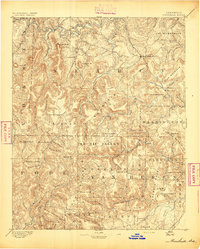 1894 Marshall1894 Print · USGSThe Ozark plateau in the 1890s reveals a sparse network of mountain settlements and family landmarks. Genealogists can locate early community centers like Snow Ball and Witts Springs or trace ancestral lands near Point Peter and Hendersons Knob.
 - 1901 Map of Marshall
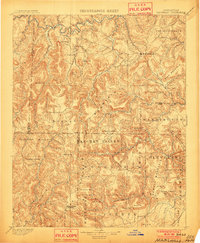 1901 Marshall1901 Print · USGSThe Ozark plateau in the 1890s reveals a rugged network of high ridges and river forks where isolation defined early settlement. Genealogists can trace family roots through upland communities like Snowball, Witts Springs, and Wileys Cove before modern infrastructure reached the Boston Mountain range.4 unique versions available
 - 1940 Map of Smyrna, 1961 Print
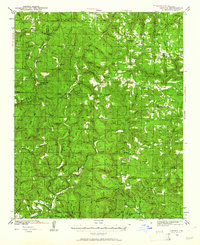 1940 Smyrna1961 Print · USGSThe Arkansas Ozarks around the Pope and Searcy county lines are shown here at a time when small mountain schools and isolated settlements were the heart of the community. Researchers can trace family roots at Old Smyrna Cem or find the sites of vanished homesteads near Lost Corner and Nogo Sch.2 unique versions available
 - 1943 Map of Smyrna
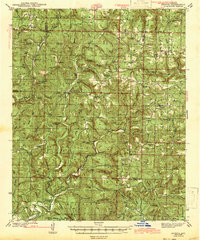 1943 Smyrna1943 Print · USGSThe Boston Mountains of Pope and Van Buren counties appear in the early 1940s as a landscape of isolated ridges and headwater creeks. Genealogists and historians can trace the foundations of rural life at Old Smyrna Cem, Union Hill Sch, and the remote settlement of Nogo.
 - 1956 Map of Russellville
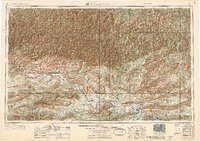 1956 Russellville1956 Print · USGSThe Arkansas River valley and the surrounding Boston Mountains are captured here in the mid-fifties, showing a landscape of small timber towns and new reservoirs. Genealogists can trace family roots through upland settlements like Pelsor and Witts Springs or locate the campus of Arkansas Polytechnic College.2 unique versions available
 - 1961 Map of Bee Branch, 1963 Print
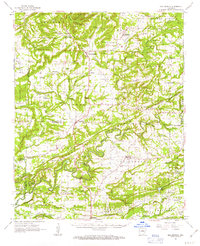 1961 Bee Branch1963 Print · USGSCentral Arkansas settlements and highland ridges are mapped in the early sixties, showing the rural network of the Van Buren and Faulkner county lines. Researchers can find numerous family landmarks such as Quattlebaum Cem, Pinnacle Springs Tabernacle, and the Solomon Grove Sch.2 unique versions available
 - 1961 Map of Bee Branch, 1966 Print
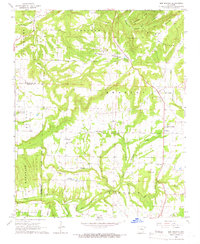 1961 Bee Branch1966 Print · USGSBee Branch and the surrounding Ozark foothills are captured here in the early sixties as a network of ridge-top settlements and creek-side farms. Researchers can locate numerous local landmarks including Quattlebaum Cem, Catholic Point, and Southside Schools.2 unique versions available
 - 1961 Map of Morganton, 1966 Print
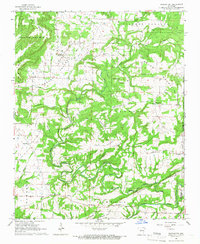 1961 Morganton1966 Print · USGSVan Buren County and the Cleburne County line are shown here in the early sixties, a landscape of winding creek valleys and isolated ridge settlements. Genealogists can trace family connections through local landmarks like Morganton, Hardin Cem, and Mount Zion Ch.2 unique versions available
 - 1961 Map of Damascus, 1966 Print
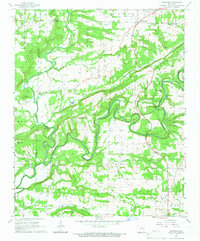 1961 Damascus1966 Print · USGSThe borderlands of Van Buren and Faulkner counties are captured here in the early sixties, showing a rural landscape defined by creek valleys and high ridges. Genealogists and local historians can locate community anchors like Solomon Grove School, Martinville Cem, and the historic TREATY BOUNDARY.3 unique versions available
 - 1961 Map of Guy, 1966 Print
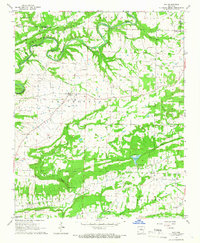 1961 Guy1966 Print · USGSThe hills and valleys of Faulkner County are captured here in the early sixties as rural life centered around the town of Guy. Researchers can locate family landmarks like the Copperas Springs Cem, New Home Sch, and Bennett Lake.2 unique versions available
 - 1962 Map of Jerusalem, 1963 Print
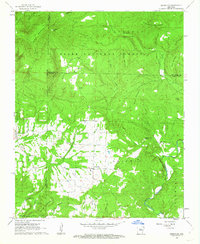 1962 Jerusalem1963 Print · USGSThe rural Arkansas Ozarks come into focus in the early sixties, showing a landscape of mountain settlements and forest ridges. Genealogists can trace family landmarks like Thompson Cem, Mt Zion Ch, and the high-elevation hamlet of Stumptoe.4 unique versions available
 - 1962 Map of Cleveland, 1963 Print
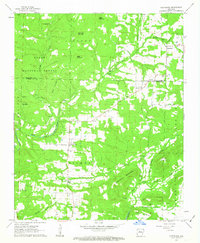 1962 Cleveland1963 Print · USGSThe hills of Conway County were a land of small farms and remote hollows in the early sixties. Genealogists and historians can trace family ties through numerous rural burial sites and churches like Old Liberty Cemetery, Sunnyside, and Moores Chapel.2 unique versions available
 - 1962 Map of Formosa, 1963 Print
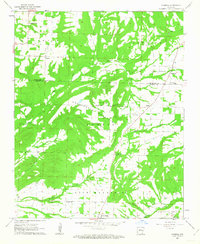 1962 Formosa1963 Print · USGSThe Van Buren and Conway County line comes alive in the early sixties, showing a landscape defined by high ridges and rural homesteads. Genealogists can trace family footprints at Woolverton Mountain Cem, Sweet Home Ch, and the community of Formosa.2 unique versions available
 - 1962 Map of Canaan, 1964 Print
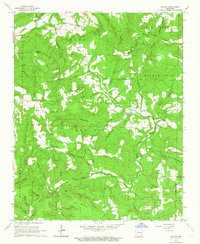 1962 Canaan1964 Print · USGSThe highland ridges and river forks of the Ozarks are captured here in the early sixties, showing the rural communities of Searcy and Van Buren counties. Genealogists and local historians can locate legacy sites like Canaan, Rambo Ch, and Thompson Cem among the steep hollows and mountains.3 unique versions available
 - 1963 Map of Quitman, 1964 Print
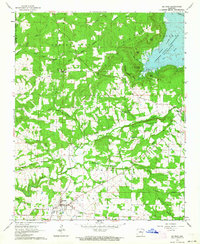 1963 Quitman1964 Print · USGSThe Cleburne County hills meet the rising waters of the new reservoir in the early sixties. Researchers can trace family sites near Quitman and Pearson or locate rural landmarks like Wesley Chapel and the Aldridge Cem.3 unique versions available
 - 1963 Map of Leslie, 1964 Print
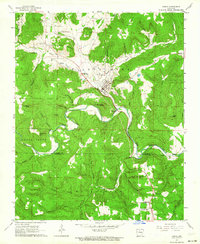 1963 Leslie1964 Print · USGSSearcy and Van Buren counties appear here in the early sixties, centered on the river valley and the town of Leslie. Researchers can trace the path of the Old Railroad Grade or locate family sites like Sulphur Springs Cem and Dennard Ch.2 unique versions available
 - 1964 Map of Russellville
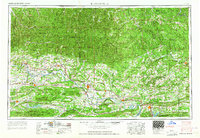 1964 Russellville1964 Print · USGSMid-century Central Arkansas is defined here by the river-valley towns and the surrounding mountain ranges before the full expansion of the interstate system. Genealogists and historians can trace rail-town development along the Missouri Pacific Railroad and locate landmarks like Arkansas Polytechnic College or Petit Jean State Park.
Showing maps 1-25 of 172
Top cities of Van Buren County
Frequently asked questions
- What are the different types of historical maps available for Van Buren County?
- What is the oldest map of Van Buren County?
- Where can I purchase historical maps of Van Buren County for my home or office?
- Where can I download high-res historical maps of Van Buren County?
- Are there historical topographic maps available for Van Buren County?
- Is there historical aerial imagery available for Van Buren County?
- Where are historical maps of Van Buren County sourced from?