1900s (20th Century) Maps of North Wawona, California
Explore 11 historic maps of North Wawona from the 1900s (20th Century). These maps offer a rare glimpse into what life looked like during the 1900s — showing old roads, neighborhoods, homes, and landmarks that have changed or disappeared over time.
Whether you're researching your family's past, planning a metal detecting trip, or studying how North Wawona's landscape evolved across the 1900s, these high-resolution maps are a powerful tool for exploring the history of this region.
- Focus on a specific era: All maps on this page are from the 1900s, giving you a focused view of this time period.
- See what’s changed: Compare century-old streets, trails, and buildings to today's modern landscape using overlays and satellite layers.
- Research with precision: Use these maps for genealogy, historical research, land use analysis, or educational projects.
- View, download, or print: Maps are fully viewable online in high resolution, and can be downloaded or printed for your own records.
Start exploring North Wawona's history through authentic maps from the 1900s. This is your window into the past.
North Wawona, CA maps
(11)- 1900 Map of Yosemite
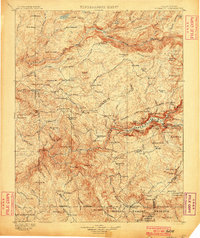 1900 Yosemite1900 Print · USGSThe central Sierra Nevada appears here in the late nineteenth century, prior to the major damming projects that reshaped the river valleys. Genealogists and historians can trace pioneer outposts like Harden Ranch and Hite Cove, or the early tourism hub at Yosemite.
 - 1903 Map of Yosemite
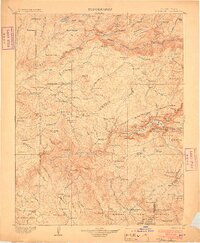 1903 Yosemite1903 Print · USGSThe High Sierra and foothills of Mariposa County appear here in the early 1900s, documenting the early ranching and travel networks of the region. Local historians and genealogists can trace family holdings at Harden Ranch, the mining hub of Hite Cove, and the isolated Stage Station.2 unique versions available
 - 1909 Map of Yosemite
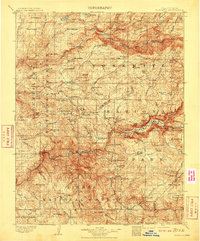 1909 Yosemite1909 Print · USGSMariposa and Tuolumne counties are shown here at the turn of the century, prior to the damming of the Tuolumne River. Researchers can trace early ranching and mining sites like Hog Ranch, Hite Cove, and the historic Stage Station.7 unique versions available
 - 1947 Map of Mariposa, 1948 Print
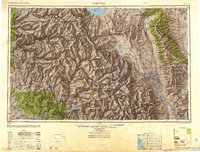 1947 Mariposa1948 Print · USGSThe High Sierra and Owens Valley transition is captured here in the late 1940s, just as the region’s hydroelectric and tourism infrastructure was maturing. Genealogists and historians can trace old ranger stations, the Casa Diablo Mine, and rail stops along the Southern Pacific like Benton Station and Zurich.2 unique versions available
 - 1948 Map of Mariposa, 1951 Print
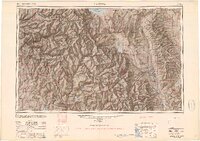 1948 Mariposa1951 Print · USGSThe High Sierra and Mariposa foothills are shown here in the late 1940s as the post-war tourism and water infrastructure expanded. Genealogists and historians can locate vanished waypoints like Mormon Bar, the Glacier Point Hotel, and the granite quarries of Knowles.
 - 1956 Map of Yosemite, 1961 Print
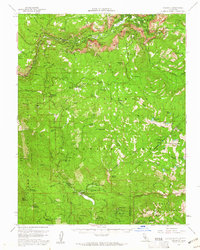 1956 Yosemite1961 Print · USGSThe high Sierra landscape in the mid-fifties shows the development of recreation and park management. You can trace the trails around Half Dome, locate the Badger Pass Ski Area, or find old settlements like Foresta and Wawona.4 unique versions available
 - 1957 Map of Mariposa, 1966 Print
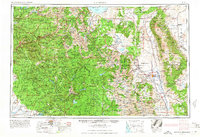 1957 Mariposa1966 Print · USGSThe High Sierra and Owens Valley appear in the mid-fifties, showing the intersection of conservation, hydroelectric power, and mountain industry. Genealogists and researchers can trace local landmarks like Yosemite Cemetery, the remote Kinsley Station, and the Pine Creek Mine.4 unique versions available
 - 1963 Map of Mariposa
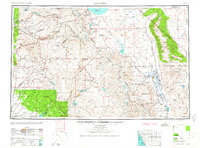 1963 Mariposa1963 Print · USGSThe High Sierra and Owens Valley meet in the early sixties, showing a landscape defined by gold-rush history and massive post-war water projects. Genealogists and researchers can trace old mining routes near Mariposa, locate the Glacier Point Hotel, and find small settlements like Coarse Gold or Knowles Junction.
 - 1976 Map of Yosemite Valley, 1994 Print
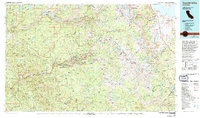 1976 Yosemite Valley1994 Print · USGSThe High Sierra and the iconic Yosemite Valley are captured here during the 1970s, showing the primary road networks and backcountry trails of the day. Researchers can trace the layout of Yosemite Village or locate historic mining sites like Schroeder Mine and Buffalo Mine.2 unique versions available
 - 1990 Map of Wawona
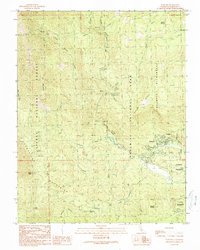 1990 Wawona1990 Print · USGSWawona and the southern reaches of Yosemite are captured in the late 1980s, documenting the intersection of protected wilderness and local community. Genealogists and historians can locate the Wawona School, the landmark Covered Bridge, and various campsites along the South Fork Merced River.
 - 1992 Map of Wawona, 1995 Print
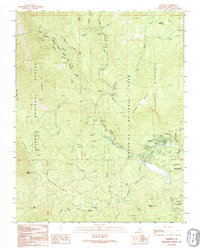 1992 Wawona1995 Print · USGSYosemite's southern gateway comes into focus in the early nineties, centered on the historic mountain community of Wawona. Researchers can trace local infrastructure from the Wawona Sch and Covered Bridge to the remote sites of Stovepipe Campground and Summit Campground.
End of results
Showing maps 1-11 of 11
Top cities near North Wawona
Frequently asked questions
- What are the different types of historical maps available for North Wawona?
- What is the oldest map of North Wawona?
- Where can I purchase historical maps of North Wawona for my home or office?
- Where can I download high-res historical maps of North Wawona?
- Are there historical topographic maps available for North Wawona?
- Is there historical aerial imagery available for North Wawona?
- Where are historical maps of North Wawona sourced from?