Old Maps of Hemet, California for Metal Detecting
Plan your next treasure hunt with 46 historic maps of Hemet. Find old homesites, ghost towns, trails, and gathering spots that may be lost to time — perfect for identifying promising metal detecting locations.
- Locate forgotten sites: Uncover places like long-lost settlements, abandoned rail lines, or gathering spots.
- Plan better hunts: Use map overlays combined with LiDAR or satellite views to narrow in on historically rich areas.
- Made for detectorists: Thousands of hobbyists use these maps to discover relics, coins, and hidden history.
Use these historic maps to boost your research and find new opportunities beneath the surface of Hemet.
Hemet, CA maps
(46)- 1901 Map of Southern California Sheet No. 1
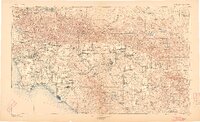 1901 Southern California Sheet No. 11901 Print · USGSGreater Los Angeles at the dawn of the twentieth century is a landscape of growing citrus towns and a burgeoning rail network. Genealogists and historians can trace the early gridded streets of Hollywood and Pasadena or locate landmarks like Bear Lake and the Cahuilla Indian Reservation.6 unique versions available
 - 1901 Map of San Jacinto
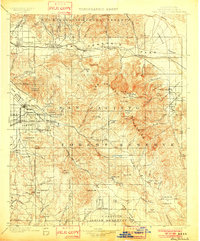 1901 San Jacinto1901 Print · USGSRiverside County at the dawn of the twentieth century shows a landscape transitioning from tribal lands and mountain reserves to citrus and rail hubs. Genealogists can trace early homesteads and rail stops like Palm Springs Sta. and the grid of Florida or the secluded Kenworthy.9 unique versions available
 - 1901 Map of Elsinore
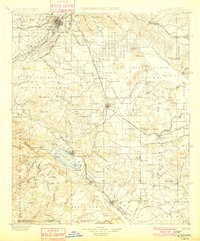 1901 Elsinore1901 Print · USGSRiverside and the Alessandro Valley are shown here during a peak of early mining and rail expansion. Genealogists and historians can trace the Southern California RR through Perris or locate the Alberhill Coal Mine and Indian School.8 unique versions available
 - 1904 Map of Southern California Sheet No. 1, 1905 Print
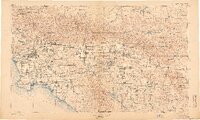 1904 Southern California Sheet No. 11905 Print · USGSSouthern California at the dawn of the twentieth century shows a landscape of citrus groves and coastal towns connected by rail. Genealogists and historians can trace early settlements like San Juan Capistrano, find remote sites like the Rose Mine, and study the original water systems of the Santa Ana River.2 unique versions available
 - 1942 Map of Banning, 1943 Print
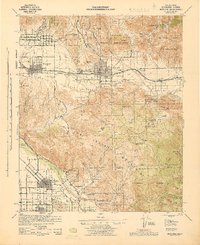 1942 Banning1943 Print · USGSRiverside County at the start of the 1940s centers on the critical rail and road artery through the San Gorgonio Pass. Genealogists and historians can locate family holdings like Browns Ranch or trace local landmarks such as Gilman Hot Springs and the St Boniface Indian Sch.2 unique versions available
 - 1942 Map of Hemet, 1952 Print
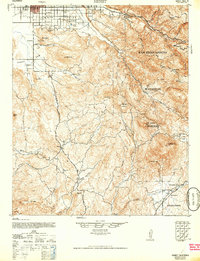 1942 Hemet1952 Print · USGSRiverside County during the early 1940s shows the growth of Hemet alongside the high-country ranching and mining of the Coahuila Indian Reservation. Researchers can trace old mountain routes like Gibbel Road and find remote sites such as the San Ignacio Sch.2 unique versions available
 - 1942 Map of Murrieta, 1958 Print
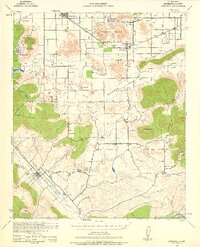 1942 Murrieta1958 Print · USGSRiverside County at the dawn of the 1940s reveals a patchwork of ranching valleys and early railway hubs. Researchers can locate long-standing rural schools like Alamos Sch, the historic Murrieta Hot Springs, and the workings of the Leon Mine.2 unique versions available
 - 1942 Map of Perris, 1963 Print
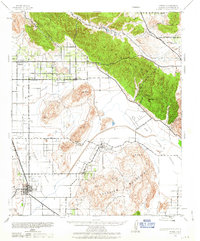 1942 Perris1963 Print · USGSRiverside County at the start of the 1940s was a landscape of rail-connected valley towns and thermal springs. Researchers can trace the early grids of Sunnymead and Moreno or locate historic rural landmarks like Bernasconi Hot Springs and Midland Sch.2 unique versions available
 - 1943 Map of Perris
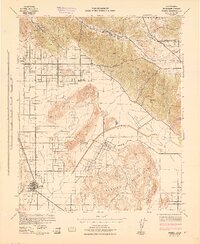 1943 Perris1943 Print · USGSWestern Riverside County comes alive in the 1940s, showing the early rail-and-ranch life of the Inland Empire. Trace local heritage through rural schools like Midland Sch and the natural thermal waters at Bernasconi Hot Springs.
 - 1943 Map of Hemet
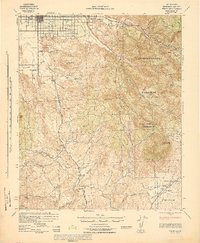 1943 Hemet1943 Print · USGSThe San Jacinto Valley and surrounding peaks appear here during the Second World War as a blend of valley agriculture and mountain forest. Researchers can trace early school sites like Little Lake Sch, the Coahuila Indian Reservation, and the Williamson Mine.
 - 1943 Map of Murrieta
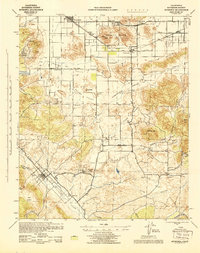 1943 Murrieta1943 Print · USGSRiverside County at the height of the Second World War shows a landscape of rail-connected farming towns and quiet interior valleys. Researchers can locate vanished rural landmarks like the Leon Mine, the Menifee Sch, and the original rail siding at Winchester.
 - 1943 Map of Banning, 1952 Print
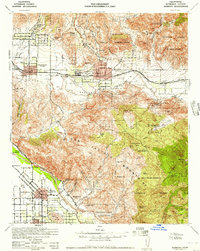 1943 Banning1952 Print · USGSRiverside County at the height of the Second World War shows the critical transportation and resort corridor through the San Gorgonio Pass. Researchers can trace the legacy of the St Boniface Indian Sch and the development of Highland Springs Resort alongside the Southern Pacific rail line.
 - 1947 Map of Santa Ana, 1949 Print
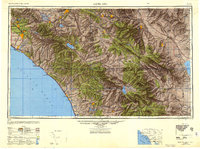 1947 Santa Ana1949 Print · USGSSouthern California is depicted here in the late forties, showing the expansion of the Inland Empire and the Orange County coast. Researchers can trace the early layout of Palm Springs or locate long-standing tribal lands like the Pala Indian Reservation and Rincon Indian Res.
 - 1949 Map of Santa Ana
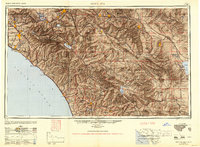 1949 Santa Ana1949 Print · USGSSouthern California underwent a profound transformation in the late 1940s as military installations and citrus groves shared the landscape. Researchers can trace early coastal growth at Laguna Beach, military history at Camp Pendleton, and the rail corridors of the Pacific Electric.
 - 1953 Map of Winchester, 1954 Print
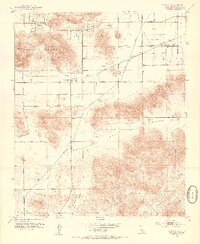 1953 Winchester1954 Print · USGSWinchester and the surrounding San Jacinto Valley are shown in the early 1950s as the regional infrastructure began to modernize. Researchers can trace the path of the Atchison Topeka and Santa Fe railroad or locate landmarks like Ryan Field and the local Cem.7 unique versions available
 - 1953 Map of San Jacinto, 1954 Print
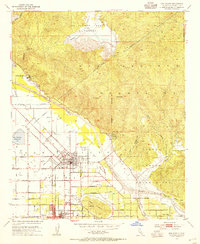 1953 San Jacinto1954 Print · USGSThe San Jacinto Valley was a vital corridor of water engineering and rail transport in the early fifties. Genealogists and local historians can trace the foundations of San Jacinto and Hemet, along with the Soboba Indian Reservation and Gilman Hot Springs.4 unique versions available
 - 1953 Map of Lakeview, 1955 Print
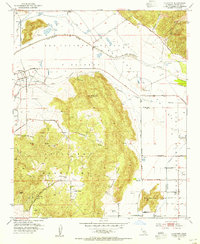 1953 Lakeview1955 Print · USGSThe San Jacinto River valley was a landscape of ranches and massive water works in the early fifties. Genealogists and researchers can trace the Colorado River Aqueduct as it passes near Lakeview, the Bar V Ranch, and Juniper Springs.3 unique versions available
 - 1953 Map of Hemet, 1955 Print
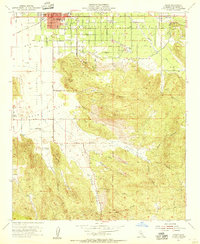 1953 Hemet1955 Print · USGSThe San Jacinto Valley thrives in the mid-fifties, showing a region defined by its citrus groves and high desert ranching. Genealogists and local historians can trace the early footprints of Hemet and Valle Vista or locate the site of the Mission Ranch at the base of the hills.6 unique versions available
 - 1956 Map of Santa Ana
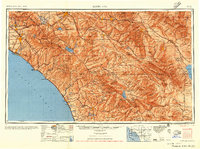 1956 Santa Ana1956 Print · USGSSouthern California underwent massive mid-century transformation as suburban growth met major military and water projects. Trace the postwar expansion of Santa Ana and Riverside, the layout of Camp Pendleton, and the path of the Colorado River Aqueduct.
 - 1956 Map of Banning, 1961 Print
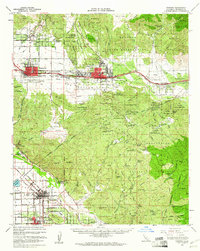 1956 Banning1961 Print · USGSRiverside County towns and mountain passes are captured here during the mid-1950s. Genealogists and historians can trace the development of Banning, San Jacinto, and Beaumont while locating landmarks like St Boniface Sch and Sunnyslope Cem.2 unique versions available
 - 1957 Map of Hemet, 1960 Print
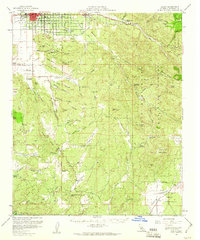 1957 Hemet1960 Print · USGSRiverside County at mid-century reveals a landscape of growing valley towns like Hemet and agricultural ranches bordering the national forest. Researchers can trace rural life through the San Ignacio School, the Williamson Mine, and the Atchison Topeka and Santa Fe rail line.3 unique versions available
 - 1959 Map of Santa Ana, 1971 Print
 1959 Santa Ana1971 Print · USGSSouthern California is captured in a decade of transformation, from the Orange County coast to the desert floor. Researchers can trace the mid-century footprints of Camp Pendleton, March Air Force Base, and the original Ortega Highway.3 unique versions available
 - 1960 Map of Santa Ana
 1960 Santa Ana1960 Print · USGSSouthern California's coastal plains and inland deserts meet in this mid-century survey of the burgeoning Orange and Riverside county corridors. Researchers can trace the layout of early freeway systems, find tribal lands like the Soboba Indian Reservation, and locate military landmarks such as March Field.2 unique versions available
 - 1965 Map of Santa Ana
 1965 Santa Ana1965 Print · USGSSouthern California is captured in a decade of rapid growth, showing the coastal expansion from Santa Ana down to Oceanside. Genealogists and historians can trace the mid-century development of places like Garden Grove or the rural reaches of Escondido and the Palomar Observatory.
 - 1967 Map of Lakeview, 1968 Print
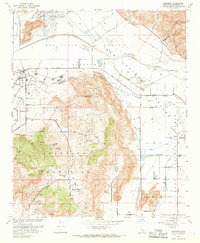 1967 Lakeview1968 Print · USGSLakeview and the surrounding Riverside County foothills are captured here during a period of expanding water infrastructure in the late sixties. Researchers can trace the Colorado River Aqueduct, find the Maze Stone Historical Marker, and locate the Bar V Ranch.4 unique versions available
Showing maps 1-25 of 46
Top cities near Hemet
- Moreno Valley historical maps
- Murrieta historical maps
- Temecula historical maps
- Menifee historical maps
- Perris historical maps
- San Jacinto historical maps
See more
Top neighborhoods of Hemet
Frequently asked questions
- What are the different types of historical maps available for Hemet?
- What is the oldest map of Hemet?
- Where can I purchase historical maps of Hemet for my home or office?
- Where can I download high-res historical maps of Hemet?
- Are there historical topographic maps available for Hemet?
- Is there historical aerial imagery available for Hemet?
- Where are historical maps of Hemet sourced from?