Old Maps of Stuart, Marine Corps Base Camp Pendleton
Explore 20 old maps of Stuart, spanning from 1901 to today. These high-resolution historic maps reveal how streets, neighborhoods, landmarks, and natural features evolved over time — perfect for genealogy, metal detecting, research, and local history exploration.
What you can do with these maps:
- See how Stuart changed over time: Compare historical maps to modern-day views to trace roads, homesites, rail lines & more.
- View detailed metadata: Each map includes creators, publishers, year, scale, and archive source.
- Overlay maps with satellite & LiDAR: Visualize the past alongside modern tools to explore terrain & human change.
- Trusted historical sources: Maps sourced from the USGS, Library of Congress, and other archives.
- Access maps your way: View online, download high-res files, or order prints for personal or research use.
Start exploring old maps of Stuart to uncover forgotten places, hidden landmarks, and the deep history beneath your feet.
Stuart, Marine Corps Base Camp Pendleton maps
(20)- 1901 Map of San Luis Rey
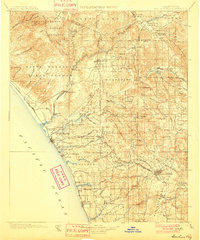 1901 San Luis Rey1901 Print · USGSNorthern San Diego County is shown at the turn of the century as a landscape of sprawling ranchos, early coastal railroads, and secluded mountain valleys. Researchers can trace the routes of the California Southern RR or locate early settlements like De Luz, Pala, and the Temecula Indian Res.8 unique versions available
 - 1904 Map of Southern California Sheet No. 2
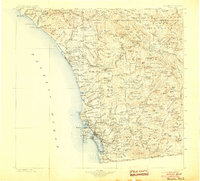 1904 Southern California Sheet No. 21904 Print · USGSSouthern California during the early 1900s shows the transition from vast ranchos to coastal rail towns. Genealogists and researchers can trace the Southern California R.R. through Oceanside, explore old land grants like Mission Viejo, and locate early settlements from Fallbrook to Julian.5 unique versions available
 - 1941 Map of Margarita Peak, 1961 Print
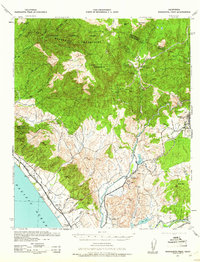 1941 Margarita Peak1961 Print · USGSSan Diego's coastal ranch lands and backcountry peaks are captured here in the early forties, just before the landscape shifted toward major military use. Researchers can trace historic family estates like Rancho Santa Margarita and old rail stops along the AT&SF RR near De Luz Station.
 - 1942 Map of Margarita Peak
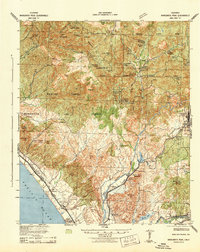 1942 Margarita Peak1942 Print · USGSDuring the early years of World War II, this region of San Diego County remained a landscape of vast ranchos and scattered citrus groves. Genealogists can trace family holdings like Doville Ranch and community hubs including Deluz PO and the Horno Canyon CCC Camp.
 - 1944 Map of Margarita Peak
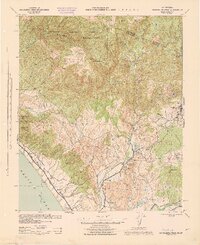 1944 Margarita Peak1944 Print · USGSThe northern reaches of San Diego County are documented here during the mid-1940s, highlighting the vast ranching estates and mountain canyons. Trace the path of the Atchison Topeka and Santa Fe railroad or locate legacy holdings like Rancho Santa Margarita and Doville Ranch.
 - 1947 Map of Santa Ana, 1949 Print
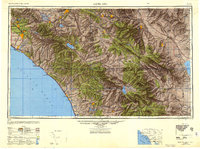 1947 Santa Ana1949 Print · USGSSouthern California is depicted here in the late forties, showing the expansion of the Inland Empire and the Orange County coast. Researchers can trace the early layout of Palm Springs or locate long-standing tribal lands like the Pala Indian Reservation and Rincon Indian Res.
 - 1948 Map of Las Pulgas Canyon, 1959 Print
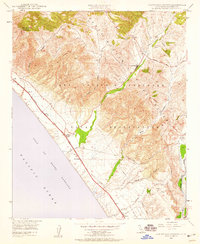 1948 Las Pulgas Canyon1959 Print · USGSThe San Diego coast in the late 1940s reveals the expansion of Marine Corps training grounds over traditional rancho lands. Genealogists and historians can trace rail stops like Don and Cocklebur or find the Las Flores Mission Ruins near the Santa Margarita River.2 unique versions available
 - 1949 Map of Las Pulgas Canyon
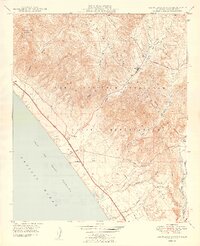 1949 Las Pulgas Canyon1949 Print · USGSCoastal San Diego County is captured here in the late Forties as the historic Santa Margarita Ranch lands were fully adapting to military life. You can trace the Atchison Topeka and Santa Fe Coast Highway past the Las Flores Mission Ruins and early outposts like Agra and Camp Pulgas.2 unique versions available
 - 1949 Map of Santa Ana
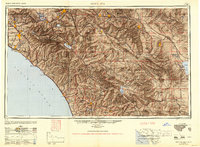 1949 Santa Ana1949 Print · USGSSouthern California underwent a profound transformation in the late 1940s as military installations and citrus groves shared the landscape. Researchers can trace early coastal growth at Laguna Beach, military history at Camp Pendleton, and the rail corridors of the Pacific Electric.
 - 1954 Map of Margarita Peak, 1964 Print
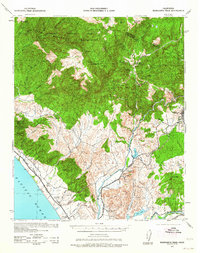 1954 Margarita Peak1964 Print · USGSCoastal San Diego and Riverside counties appear here in the early 1940s as military and ranching interests shaped the landscape. Genealogists and researchers can trace family-named sites like Johnson Ranch, De Luz School, and the Atchison Topeka and Santa Fe rail line.
 - 1956 Map of Santa Ana
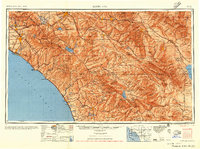 1956 Santa Ana1956 Print · USGSSouthern California underwent massive mid-century transformation as suburban growth met major military and water projects. Trace the postwar expansion of Santa Ana and Riverside, the layout of Camp Pendleton, and the path of the Colorado River Aqueduct.
 - 1959 Map of Santa Ana, 1971 Print
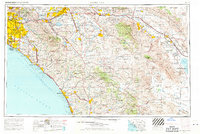 1959 Santa Ana1971 Print · USGSSouthern California is captured in a decade of transformation, from the Orange County coast to the desert floor. Researchers can trace the mid-century footprints of Camp Pendleton, March Air Force Base, and the original Ortega Highway.3 unique versions available
 - 1960 Map of Santa Ana
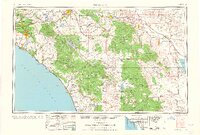 1960 Santa Ana1960 Print · USGSSouthern California's coastal plains and inland deserts meet in this mid-century survey of the burgeoning Orange and Riverside county corridors. Researchers can trace the layout of early freeway systems, find tribal lands like the Soboba Indian Reservation, and locate military landmarks such as March Field.2 unique versions available
 - 1965 Map of Santa Ana
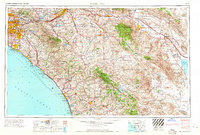 1965 Santa Ana1965 Print · USGSSouthern California is captured in a decade of rapid growth, showing the coastal expansion from Santa Ana down to Oceanside. Genealogists and historians can trace the mid-century development of places like Garden Grove or the rural reaches of Escondido and the Palomar Observatory.
 - 1968 Map of Las Pulgas Canyon, 1970 Print
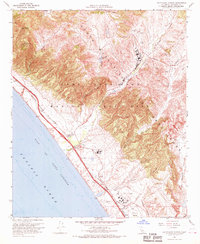 1968 Las Pulgas Canyon1970 Print · USGSThe San Diego coast at Camp Pendleton in the late sixties shows a landscape where military training meets historic California. Trace the coastal rail line through Agra and Las Flores, or locate the ruins of the Asistencia de Las Flores.3 unique versions available
 - 1982 Map of Oceanside, 1983 Print
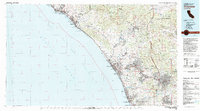 1982 Oceanside1983 Print · USGSCoastal San Diego and Orange counties are captured here in the early eighties, showing the transition from mid-century beach towns to modern suburban hubs. Genealogists and local historians can trace the Atchison Topeka and Santa Fe rail line through Cardiff-by-the-Sea or locate early developments near Lake Hodges.2 unique versions available
 - 2012 Map of Las Pulgas Canyon, 2012 Print
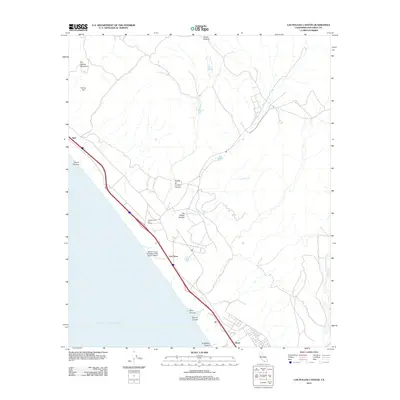 2012 Las Pulgas Canyon2012 Print · USGSThe northern San Diego County coastline is captured here just over a decade ago, showcasing the intersection of military operations and historic land grants. Genealogists and researchers can trace the coastal corridor from Agra to Stuart, locating the landmark Asistencia de Las Flores.
 - 2015 Map of Las Pulgas Canyon, 2015 Print
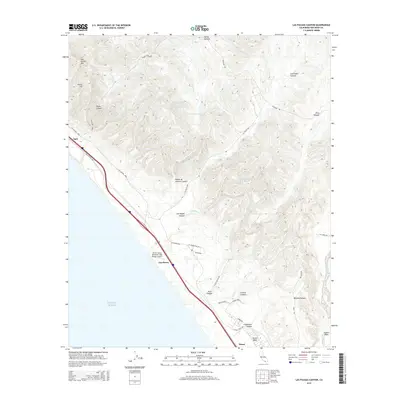 2015 Las Pulgas Canyon2015 Print · USGSThe northern San Diego coast in 2015 showcases the complex geography of Camp Pendleton, where military infrastructure meets historical trails. Genealogists and researchers can trace the coastal route of El Camino Real near Las Flores or locate landmarks like Stuart Mesa and San Onofre Mtn.
 - 2018 Map of Las Pulgas Canyon, 2018 Print
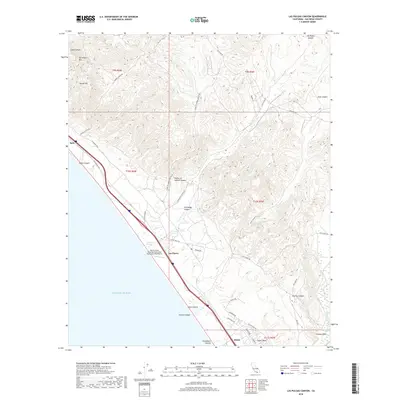 2018 Las Pulgas Canyon2018 Print · USGSThe coastal training grounds of Camp Pendleton are captured here in the late twenty-teens, showing the intersection of military operations and Pacific shoreline geography. Researchers can trace the modern layout of Las Flores and find landmarks like San Onofre Mtn and the Las Flores Marsh.
 - 2022 Map of Las Pulgas Canyon, 2022 Print
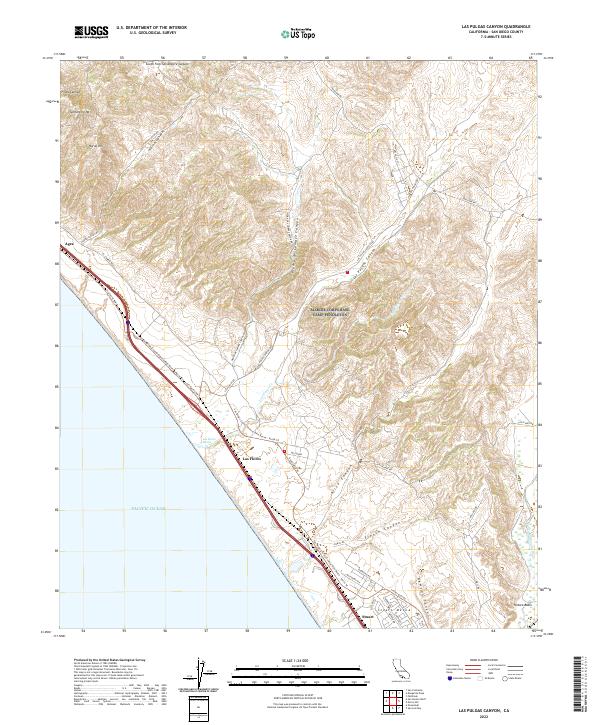 2022 Las Pulgas Canyon2022 Print · USGSThe northern San Diego coast comes into sharp focus here during the early twenty-first century, showing the intersection of historic transit routes and coastal canyons. Researchers can trace the paths of El Camino Real and the Old Pacific Hwy as they pass Las Flores and the Las Flores Marsh.
End of results
Showing maps 1-20 of 20
Frequently asked questions
- What are the different types of historical maps available for Stuart?
- What is the oldest map of Stuart?
- Where can I purchase historical maps of Stuart for my home or office?
- Where can I download high-res historical maps of Stuart?
- Are there historical topographic maps available for Stuart?
- Is there historical aerial imagery available for Stuart?
- Where are historical maps of Stuart sourced from?