1950s Maps of Fort Boettcher, Colorado
Explore 5 historic maps of Fort Boettcher from the 1950s. These maps offer a rare glimpse into what life looked like during the 1950s — showing old roads, neighborhoods, homes, and landmarks that have changed or disappeared over time.
Whether you're researching your family's past, planning a metal detecting trip, or studying how Fort Boettcher's landscape evolved across the 1950s, these high-resolution maps are a powerful tool for exploring the history of this region.
- Focus on a specific era: All maps on this page are from the 1950s, giving you a focused view of this time period.
- See what’s changed: Compare century-old streets, trails, and buildings to today's modern landscape using overlays and satellite layers.
- Research with precision: Use these maps for genealogy, historical research, land use analysis, or educational projects.
- View, download, or print: Maps are fully viewable online in high resolution, and can be downloaded or printed for your own records.
Start exploring Fort Boettcher's history through authentic maps from the 1950s. This is your window into the past.
Fort Boettcher, CO maps
(5)- 1954 Map of Craig, 1973 Print
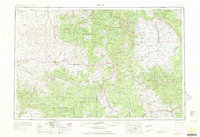 1954 Craig1973 Print · USGSNorthwest Colorado and the high mountain parks are captured in the mid-fifties, showing the region's ranching, mining, and timber centers. Genealogists and historians can trace rail corridors like the Denver and Rio Grande Western and old towns such as Axial, Milner, and Coalmont.3 unique versions available
 - 1956 Map of Boettcher Lake, 1957 Print
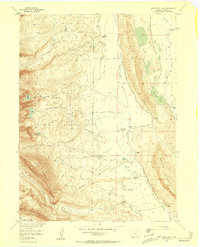 1956 Boettcher Lake1957 Print · USGSJackson County ranching and water history come alive in this mid-century study of the North Park high country. Genealogists and researchers can locate specific family holdings like the Fliniau Ranch, the Monahan Homestead, and the Monahan Coal Mine (Aband).8 unique versions available
 - 1956 Map of Pearl, 1969 Print
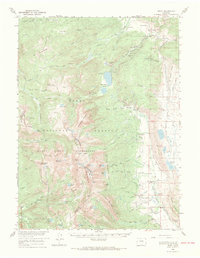 1956 Pearl1969 Print · USGSThe Colorado high country in the mid-fifties comes alive through this survey of the northern wilderness and ranchlands. Genealogists and historians can trace legacy landholdings and industry from the Smelter Stack at Pearl to isolated sites like Fort Boettcher and the Swede Group Mines.2 unique versions available
 - 1957 Map of Craig
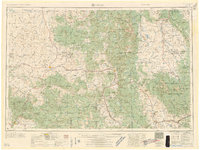 1957 Craig1957 Print · USGSNorthwest Colorado in the mid-fifties is a landscape of mountain ranching and rail-dependent river towns. Researchers can trace historic coal mining at the Sudduth Mine, follow the Denver and Rio Grande Western tracks, and locate vanished settlements like Pearl.
 - 1958 Map of Craig
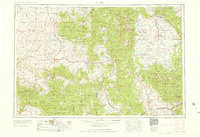 1958 Craig1958 Print · USGSNorthwest Colorado and the High Rockies are captured here in the mid-fifties, showing a landscape of burgeoning water projects and mountain ranching. Genealogists and historians can trace old homesteads and mountain outposts from Grand Lake to Meeker, alongside industrial landmarks like Uranium Mines and the Denver and Rio Grande Western railroad.
End of results
Showing maps 1-5 of 5
Frequently asked questions
- What are the different types of historical maps available for Fort Boettcher?
- What is the oldest map of Fort Boettcher?
- Where can I purchase historical maps of Fort Boettcher for my home or office?
- Where can I download high-res historical maps of Fort Boettcher?
- Are there historical topographic maps available for Fort Boettcher?
- Is there historical aerial imagery available for Fort Boettcher?
- Where are historical maps of Fort Boettcher sourced from?