1950s Maps of Otero County, Colorado
Explore 21 historic maps of Otero County from the 1950s. These maps offer a rare glimpse into what life looked like during the 1950s — showing old roads, neighborhoods, homes, and landmarks that have changed or disappeared over time.
Whether you're researching your family's past, planning a metal detecting trip, or studying how Otero County's landscape evolved across the 1950s, these high-resolution maps are a powerful tool for exploring the history of this region.
- Focus on a specific era: All maps on this page are from the 1950s, giving you a focused view of this time period.
- See what’s changed: Compare century-old streets, trails, and buildings to today's modern landscape using overlays and satellite layers.
- Research with precision: Use these maps for genealogy, historical research, land use analysis, or educational projects.
- View, download, or print: Maps are fully viewable online in high resolution, and can be downloaded or printed for your own records.
Start exploring Otero County's history through authentic maps from the 1950s. This is your window into the past.
Otero County, CO maps
(21)- 1953 Map of Cheraw, 1954 Print
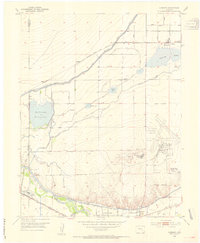 1953 Cheraw1954 Print · USGSOtero County at the start of the fifties shows a landscape reshaped by massive irrigation projects and the sugar beet industry. You can trace the railroad-dependent economy through the Sugar Refinery, locate family sites at Holbrook Cemetery, or explore the mid-century layout of Cheraw.4 unique versions available
 - 1953 Map of Hadley, 1954 Print
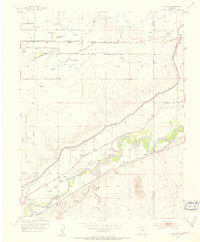 1953 Hadley1954 Print · USGSThe Arkansas River valley in the early fifties shows a transition from frontier history to modern irrigation. Genealogists and historians can trace the Old Fort Bent (Ruins), the settlement of Hadley, and the rural East Holbrook Church.3 unique versions available
 - 1954 Map of Meredith Hill, 1956 Print
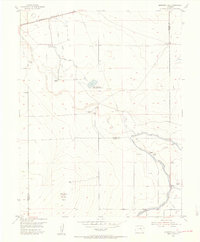 1954 Meredith Hill1956 Print · USGSSoutheastern Colorado ranchlands are documented here in the mid-fifties, showing the vital irrigation network along the Crowley and Otero County line. Genealogists and historians can trace family holdings like Herman Ranch and The Old Best Ranch near the Horse Creek drainage.2 unique versions available
 - 1954 Map of Olney Springs, 1956 Print
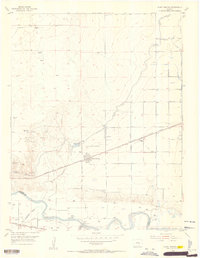 1954 Olney Springs1956 Print · USGSIn the mid-1950s, the irrigation and rail networks of the Arkansas River Valley were the lifeblood of this Crowley County landscape. Genealogists and historians can trace the foundations of Olney Springs, locate the Olney Springs Cemetery, and follow the path of the Missouri Pacific railroad.2 unique versions available
 - 1954 Map of Elder, 1956 Print
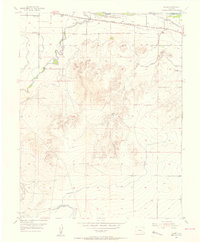 1954 Elder1956 Print · USGSIn the mid-1950s, the Otero County landscape was shaped by the vital irrigation networks surrounding the settlement of Elder. Genealogists and researchers can trace the Atchison Topeka and Santa Fe rail line, Number Six Sch, and Mount View Cemetery.3 unique versions available
 - 1954 Map of Ordway, 1956 Print
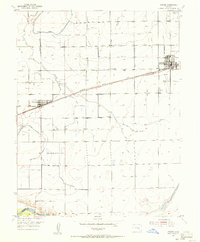 1954 Ordway1956 Print · USGSHigh plains agriculture and irrigation define this mid-century survey of Crowley and Otero counties. Genealogists and historians can trace the intricate network of water transport including the Colorado Canal and locate rural landmarks like the Numa Sch and Ordway Airport.2 unique versions available
 - 1954 Map of Manzanola, 1956 Print
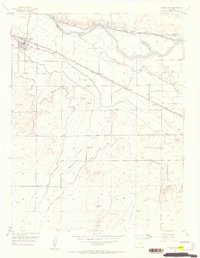 1954 Manzanola1956 Print · USGSThe Arkansas River valley in the mid-fifties reveals an intensive irrigation and rail network near the Otero and Crowley border. Genealogists can locate Manzanola, the District No 8 Sch, and traces of the Atchison Topeka and Santa Fe line.2 unique versions available
 - 1954 Map of Trinidad, 1963 Print
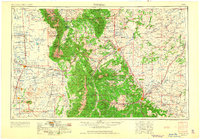 1954 Trinidad1963 Print · USGSSouthern Colorado is captured here during the mid-fifties, showing the vital rail-and-river connections between the San Luis Valley and the eastern foothills. Researchers can trace the Denver and Rio Grande Western line and locate rural landmarks like Malachite School and San Luis.2 unique versions available
 - 1954 Map of Lamar, 1964 Print
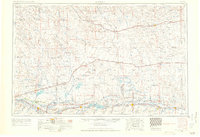 1954 Lamar1964 Print · USGSSoutheastern Colorado and the Kansas borderlands appear here in the mid-fifties, dominated by the vital Arkansas River irrigation network. Researchers can trace the development of river towns like Lamar and La Junta alongside the Amity Cemetery and several major reservoirs.3 unique versions available
 - 1954 Map of Pueblo, 1966 Print
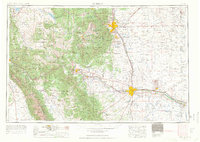 1954 Pueblo1966 Print · USGSMid-century Colorado comes alive in this survey of the Front Range and the high plains as the region expanded after the war. Genealogists and historians can trace family roots through rural landmarks like Hanover Church, Pioneer Cemetery, and the Grandview School.3 unique versions available
 - 1955 Map of Rocky Ford, 1956 Print
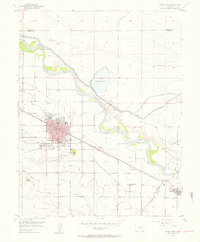 1955 Rocky Ford1956 Print · USGSThe Arkansas River valley thrived as a sugar beet and rail hub during the mid-fifties. Researchers can trace the industrial landscape of Rocky Ford through the Sugar Refinery, the Valley View Cem, and the Newdale Sch.2 unique versions available
 - 1955 Map of Lewis Ranch, 1956 Print
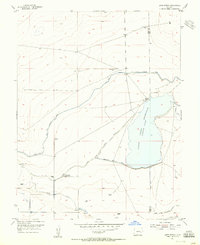 1955 Lewis Ranch1956 Print · USGSThe high plains of Otero and Bent Counties appear here in the mid-1950s as a landscape defined by ranching and complex water engineering. Researchers can trace historic homesteads like Lewis Ranch and Inge Ranch alongside the extensive Fort Lyon Storage Canal network.2 unique versions available
 - 1955 Map of La Junta, 1966 Print
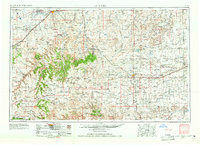 1955 La Junta1966 Print · USGSSoutheastern Colorado during the mid-fifties is captured here as a sprawling network of ranching outposts and rail sidings. Researchers can locate vanished landmarks like the Sunderland School, trace the isolated Lycan Post Office, or find the Bomb target (abandoned) on the western plains.3 unique versions available
 - 1955 Map of Trinidad, 1976 Print
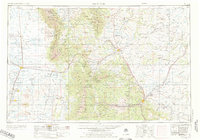 1955 Trinidad1976 Print · USGSSouthern Colorado during the mid-fifties is defined by the high-altitude agriculture of the San Luis Valley and the peaks of the Culebra Range. Genealogists can trace early settlements and rural schoolhouses like Medina Plaza, San Luis, and the Trujillo Creek School.
 - 1957 Map of Pueblo
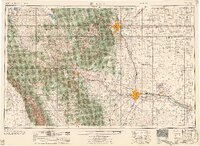 1957 Pueblo1957 Print · USGSMid-century Colorado comes alive as the Front Range urban centers expand alongside massive Cold War military installations. Genealogists and historians can trace the foundations of Stone City, rural sites like Hanover School, and the industrial Canon Imperial Mine.
 - 1958 Map of La Junta
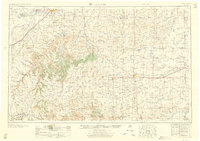 1958 La Junta1958 Print · USGSSoutheast Colorado and the Kansas borderlands appear in the late fifties as a landscape of isolated ranching outposts and vital rail junctions. Researchers can trace the lineage of vanished post offices and rural school sites like the Lycan Post Office and Sunderland School.2 unique versions available
 - 1958 Map of Trinidad
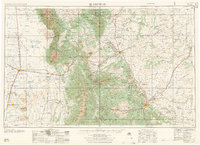 1958 Trinidad1958 Print · USGSSouthern Colorado in the late fifties was a landscape of high-altitude agriculture and coal production, centered on the San Luis Valley. Local historians can trace old community centers like the Malachite School or follow the mining and rail activity near Walsenburg and the Allen Mine.
 - 1958 Map of Pueblo
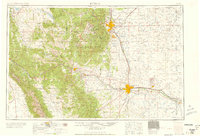 1958 Pueblo1958 Print · USGSColorado's Front Range and Arkansas River Valley come alive in the late fifties, showing the transition from historic mining districts to major military and rail hubs. Genealogists and historians can trace family roots in ranching communities and find landmarks like Cripple Creek, Manitou, and the Hanover School.
 - 1958 Map of Lamar
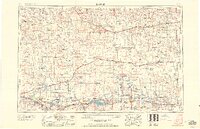 1958 Lamar1958 Print · USGSThe High Plains of Eastern Colorado and Western Kansas in the late fifties reveal a landscape tied to the Arkansas River and the rails. Trace the heritage of the river valley through Fort Lyon, the Atchison Topeka and Santa Fe RR, and rural landmarks like Kendrick Church.2 unique versions available
 - 1958 Map of Hardesty Reservoir, 1961 Print
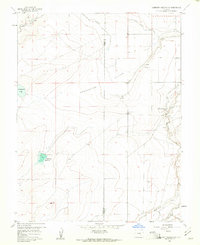 1958 Hardesty Reservoir1961 Print · USGSThe Pueblo and Otero county line in the late fifties was a landscape of precision water management and ranching. Genealogists and historians can trace the Arnold and Harriman Ranch or locate the Fowler Airfield near the Apishapa River.2 unique versions available
 - 1959 Map of Trinidad
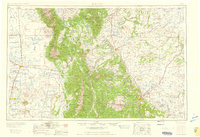 1959 Trinidad1959 Print · USGSThe San Luis Valley and the high Sangre de Cristo peaks are documented here in the late fifties, during a period of steady ranching and rail activity. Genealogy researchers can locate family-named landmarks and rural institutions like Trujillo Creek School and the historic San Luis settlement.
End of results
Showing maps 1-21 of 21
Top cities of Otero County
- La Junta historical maps
- Rocky Ford historical maps
- Fowler historical maps
- Swink historical maps
- Manzanola historical maps
- Cheraw historical maps
Frequently asked questions
- What are the different types of historical maps available for Otero County?
- What is the oldest map of Otero County?
- Where can I purchase historical maps of Otero County for my home or office?
- Where can I download high-res historical maps of Otero County?
- Are there historical topographic maps available for Otero County?
- Is there historical aerial imagery available for Otero County?
- Where are historical maps of Otero County sourced from?