Old Maps of Union, Connecticut for Metal Detecting
Plan your next treasure hunt with 59 historic maps of Union. Find old homesites, ghost towns, trails, and gathering spots that may be lost to time — perfect for identifying promising metal detecting locations.
- Locate forgotten sites: Uncover places like long-lost settlements, abandoned rail lines, or gathering spots.
- Plan better hunts: Use map overlays combined with LiDAR or satellite views to narrow in on historically rich areas.
- Made for detectorists: Thousands of hobbyists use these maps to discover relics, coins, and hidden history.
Use these historic maps to boost your research and find new opportunities beneath the surface of Union.
Union, CT maps
(59)- 1887 Map of Brookfield
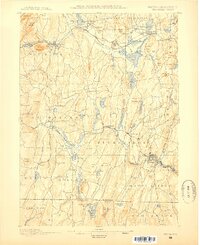 1887 Brookfield1887 Print · USGSWorcester County is shown in the late nineteenth century as a hub of manufacturing villages and developing rail lines. Genealogists can trace family roots through settlements like Fiskdale, Leadmine, and Sandersdale, or locate landmarks such as Steerage Rock.
 - 1890 Map of Brookfield
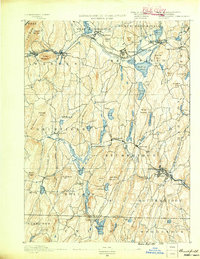 1890 Brookfield1890 Print · USGSCentral Massachusetts and the Connecticut border lands are captured here in the late nineteenth century, showing a landscape defined by water power and rail. You can trace the Boston and Albany Railroad corridor and explore industrial pockets like Globe Village and the historic Leadmine site.
 - 1892 Map of Woodstock
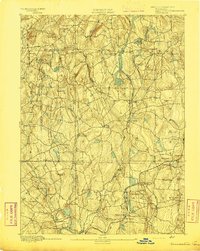 1892 Woodstock1892 Print · USGSNortheastern Connecticut at the close of the nineteenth century was a landscape of river-powered mill villages and independent farmsteads. Genealogists and historians can trace the paths between Mansfield Center, Phoenixville, and the New York and New England Railroad stops.6 unique versions available
 - 1893 Map of Brookfield
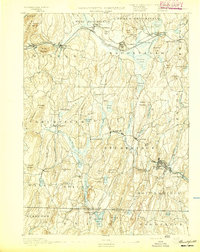 1893 Brookfield1893 Print · USGSCentral Massachusetts in the late 1800s was a landscape defined by bustling mill towns and the critical Boston and Albany Railroad corridor. Genealogists can trace family roots in early industrial centers like Fiskdale and Westville or locate the old Lead Mine near Holland.7 unique versions available
 - 1908 Map of Ware
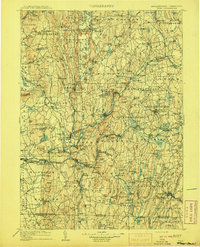 1908 Ware1908 Print · USGSCentral Massachusetts at the turn of the century reveals the Swift River Valley decades before the Quabbin Reservoir changed the landscape forever. Trace the lost footprints of Enfield and Dana, or follow the Central Vermont RR through Greenwich Village and Ware.2 unique versions available
 - 1915 Map of Brookfield
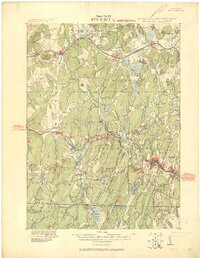 1915 Brookfield1915 Print · USGSCentral Massachusetts and the Connecticut border are captured in the final months of the pre-war era, showing a dense network of textile villages and rail lines. Genealogists and local historians can trace the growth of Southbridge or locate landmarks like the Electric Power Relay Station and Lead Mine Mountain.
 - 1921 Map of Woodstock
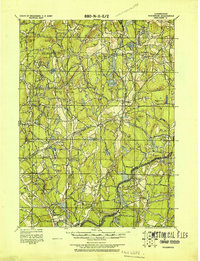 1921 Woodstock1921 Print · USGSWindham County villages and highland ridges are captured here during the early twentieth century, showing a landscape of small mill towns and glacial ponds. Researchers can trace the path of the New York New Haven and Hartford Railroad or locate family roots in Atwoodville, Phoenixville, or Mansfield Hollow.
 - 1921 Map of Brookfield
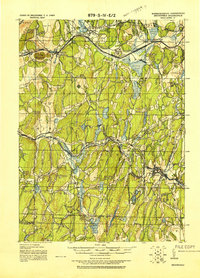 1921 Brookfield1921 Print · USGSMassachusetts and Connecticut borderlands appear here in the early twentieth century as a complex landscape of hill farms, industrial villages, and rail corridors. Genealogists can locate family landmarks like Foster Hill or trace the early industrial footprint of Leadmine and the Boston and Albany Railroad.
 - 1942 Map of Ware
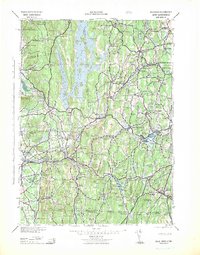 1942 Ware1942 Print · USGSCentral Massachusetts and the Connecticut border are captured here during the early years of the war, just as the landscape was being reshaped by the Quabbin Reservoir. Researchers can trace rail-era industry and local landmarks like the Lead Mine and the Bald Peak Hospital.
 - 1943 Map of Brookfield
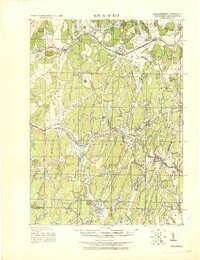 1943 Brookfield1943 Print · USGSCentral Massachusetts at the height of the war era shows a landscape of busy rail towns and upland ponds. Genealogists and historians can trace family-named peaks like Coys Hill and old industry along the Boston and Albany RR or near Southbridge.
 - 1945 Map of Eastford
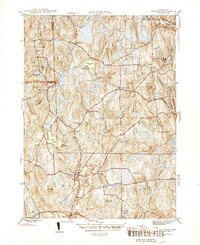 1945 Eastford1945 Print · USGSWindham County at the close of the Second World War remains a patchwork of dense woodlands and small agrarian villages. Genealogists and historians can trace family roots through local landmarks like Ridge Cem, Arke Sch, and the riverside settlement of Phoenixville.2 unique versions available
 - 1945 Map of Southbridge
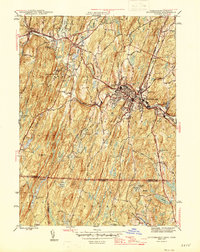 1945 Southbridge1945 Print · USGSSouth-central Massachusetts and northern Connecticut are captured here during the mid-forties, centered on the industrial corridor of the Quinebaug River. Genealogists and local researchers can trace family plots at Oak Ridge Cem or locate old community sites like Globe Village and Fiskdale.2 unique versions available
 - 1945 Map of Westford
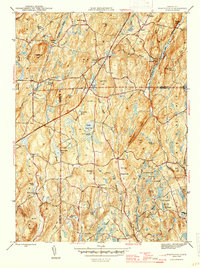 1945 Westford1945 Print · USGSThe borderlands of Windham and Tolland Counties are shown here during the mid-forties, a landscape of quiet hill towns and state forests. Genealogists and historians can trace local roots at the Swamp Burying Ground, Westford Hill Ch, and the old Red Sch.2 unique versions available
 - 1946 Map of Wales
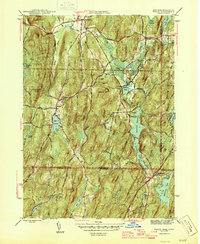 1946 Wales1946 Print · USGSThe Massachusetts-Connecticut borderlands are detailed here in the mid-1940s, showing the rural character of the southern New England uplands. Researchers can trace historic settlements like Wales and Mashapaug alongside landmarks such as St Anns Cem and the expansive Hamilton Reservoir.
 - 1947 Map of Hartford, 1955 Print
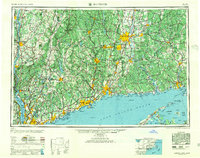 1947 Hartford1955 Print · USGSSouthern New England and the Hudson Valley are shown in detail during the post-war expansion era. Genealogists and researchers can trace local landmarks from the State Capitol and Yale University to the Stratford Lighthouse and Woodlawn Cem.2 unique versions available
 - 1948 Map of Hartford
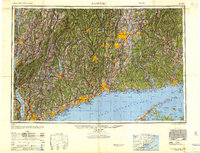 1948 Hartford1948 Print · USGSSouthern New England is captured here in the late 1940s, showcasing a landscape of thriving industrial cities and developing parkways. Genealogists and historians can trace the rail networks of the New York New Haven and Hartford RR or locate coastal defense sites like Fort Terry and Camp Shanks.2 unique versions available
 - 1948 Map of Albany, 1951 Print
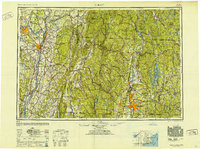 1948 Albany1951 Print · USGSThe Hudson and Connecticut River valleys are captured here in the late 1940s, showing the vital rail and water corridors of the Northeast. You can trace the Boston and Maine tracks past Mt Greylock or locate early settlements like Great Barrington and Bennington.
 - 1952 Map of Westford, 1953 Print
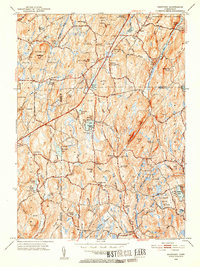 1952 Westford1953 Print · USGSIn the hills of Tolland and Windham counties in the early fifties, rural life centered on crossroads like Union and Westford. Genealogists can trace family footprints at Swamp Burying Ground, Moose Meadow Sch, and Westford Village.5 unique versions available
 - 1952 Map of Wales, 1954 Print
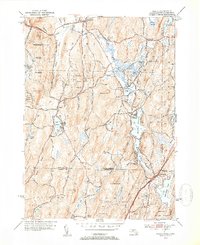 1952 Wales1954 Print · USGSThe rural borders of Massachusetts and Connecticut are captured here in the early fifties, showcasing a landscape of dense state forests and quiet reservoirs. Trace family sites near St Anns Cem or explore the mid-century layouts of Wales, Holland, and Mashapaug.4 unique versions available
 - 1952 Map of Southbridge, 1954 Print
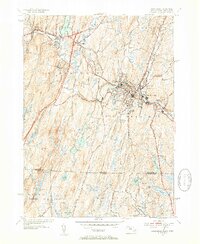 1952 Southbridge1954 Print · USGSThe Quinebaug River valley in the early fifties shows a transition from industrial mill towns to the forested borderlands of Connecticut. Local researchers can trace family landmarks like Oak Ridge Cem, the historic Old Sturbridge Village, and the Notre Dame Sem.5 unique versions available
 - 1953 Map of Eastford, 1954 Print
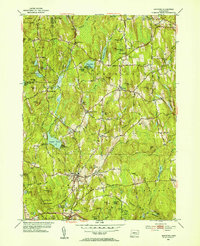 1953 Eastford1954 Print · USGSWindham County at the start of the 1950s remains a landscape of deep forests and quiet villages. Genealogists and historians can trace the foundations of local life through the Red and White Sch, the Old Cem, and the winding path of the Still River.5 unique versions available
 - 1956 Map of Albany, 1968 Print
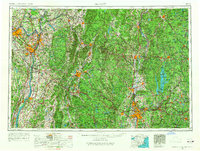 1956 Albany1968 Print · USGSThe industrial heart of the Northeast is revealed in the mid-1950s, from the Hudson Valley to the Connecticut River. Researchers can trace the legacy of the Quabbin Reservoir, locate Westover Air Force Base, or follow the Rutland RR through the Green Mountains.2 unique versions available
 - 1957 Map of Albany
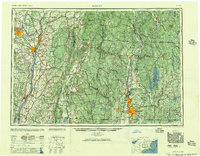 1957 Albany1957 Print · USGSThe Tri-State region and Connecticut River Valley are captured here during a period of significant postwar growth and infrastructure expansion. Genealogists and historians can trace the rail-and-river economy through landmarks like the Boston and Maine railroad, Quabbin Reservoir, and Westover Air Force Base.
 - 1959 Map of Albany
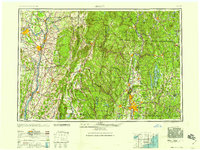 1959 Albany1959 Print · USGSThe Hudson and Connecticut River valleys are captured here during the late fifties, showing the region's dense rail networks and massive water projects. Researchers can trace the New York State Thruway or locate local landmarks like Mt Greylock and the Quabbin Reservoir.
 - 1961 Map of Hartford
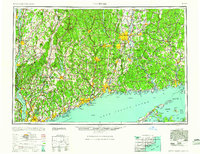 1961 Hartford1961 Print · USGSSouthern New England and the Hudson Valley are shown here in the mid-fifties, capturing a landscape of booming coastal cities and interior hill towns. Researchers can trace the legacy of the New York New Haven and Hartford rail corridor and find strategic sites like Camp Shanks and Fort Michie.
Showing maps 1-25 of 59
Top cities near Union
- Mansfield historical maps
- Southbridge historical maps
- Storrs historical maps
- Wilbraham historical maps
- Tolland historical maps
- Belchertown historical maps
See more
Top neighborhoods of Union
Frequently asked questions
- What are the different types of historical maps available for Union?
- What is the oldest map of Union?
- Where can I purchase historical maps of Union for my home or office?
- Where can I download high-res historical maps of Union?
- Are there historical topographic maps available for Union?
- Is there historical aerial imagery available for Union?
- Where are historical maps of Union sourced from?