1900s (20th Century) Maps of Waterford, Connecticut
Explore 22 historic maps of Waterford from the 1900s (20th Century). These maps offer a rare glimpse into what life looked like during the 1900s — showing old roads, neighborhoods, homes, and landmarks that have changed or disappeared over time.
Whether you're researching your family's past, planning a metal detecting trip, or studying how Waterford's landscape evolved across the 1900s, these high-resolution maps are a powerful tool for exploring the history of this region.
- Focus on a specific era: All maps on this page are from the 1900s, giving you a focused view of this time period.
- See what’s changed: Compare century-old streets, trails, and buildings to today's modern landscape using overlays and satellite layers.
- Research with precision: Use these maps for genealogy, historical research, land use analysis, or educational projects.
- View, download, or print: Maps are fully viewable online in high resolution, and can be downloaded or printed for your own records.
Start exploring Waterford's history through authentic maps from the 1900s. This is your window into the past.
Waterford, CT maps
(22)- 1921 Map of New London
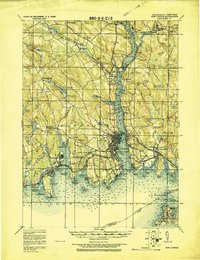 1921 New London1921 Print · USGSCoastal Connecticut thrived between the world wars as a strategic naval and rail hub. Genealogists and historians can trace the foundations of local life through the Norwich State Hospital, the sprawling US Naval Station, and small hamlets like Gales Ferry or Flanders Village.
 - 1934 Map of Niantic
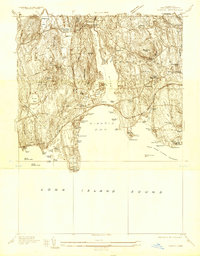 1934 Niantic1934 Print · USGSCoastal Connecticut in the 1930s reveals a landscape of growing beach colonies and significant state institutions. Genealogists and historians can trace family roots through Flanders Cem, or locate landmarks like the Seaside Connecticut State Sanatorium and the New York New Haven and Hartford Railroad.
 - 1935 Map of Montville
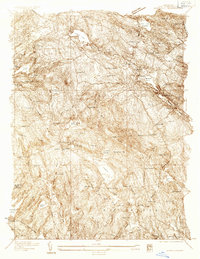 1935 Montville1935 Print · USGSNew London County in the mid-thirties remains a landscape of tightly clustered villages, family-named hills, and critical water reserves. Local historians can trace early community life through sites like Chesterfield Cem, the Yale Engineering Camp, and schools such as Chapell Hill Sch and West Side Sch.
 - 1938 Map of New London
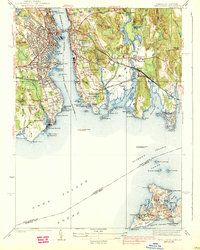 1938 New London1938 Print · USGSThe Thames River waterfront and Fishers Island are shown in detail during the late 1930s. Researchers can trace military and maritime history at Fort Trumbull and Fort H G Wright, or locate family sites like Bethel Cem and Fishtown Chapel.3 unique versions available
 - 1938 Map of Niantic
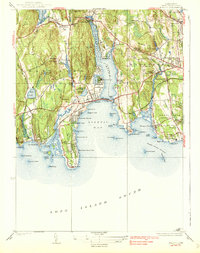 1938 Niantic1938 Print · USGSNiantic and East Lyme are captured here in the mid-1930s as the Connecticut shoreline evolved into a premier summer destination. Genealogists can locate family sites at Jordan Cem or St Marys Cem, while tracing the old Boston Post Road.3 unique versions available
 - 1939 Map of Montville
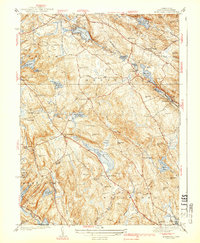 1939 Montville1939 Print · USGSNew London County hills and valleys were a network of small mill ponds and upland farmsteads in the mid-1930s. Genealogists can trace family names at Raymond Hill Cem or locate rural landmarks like Chapel Hill Sch and the Central Vermont RR.3 unique versions available
 - 1941 Map of Uncasville
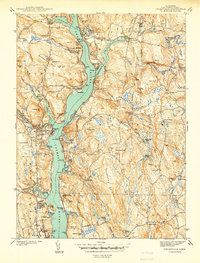 1941 Uncasville1941 Print · USGSThe Thames River corridor is captured here in the late 1930s, showing a vital mix of naval activity, collegiate rowing traditions, and old New England hamlets. Researchers can locate dozens of family cemeteries and landmarks like the Submarine Base, the Yale Boathouse, and The Ledyard Oak.2 unique versions available
 - 1947 Map of Hartford, 1955 Print
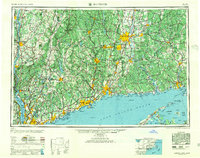 1947 Hartford1955 Print · USGSSouthern New England and the Hudson Valley are shown in detail during the post-war expansion era. Genealogists and researchers can trace local landmarks from the State Capitol and Yale University to the Stratford Lighthouse and Woodlawn Cem.2 unique versions available
 - 1948 Map of Hartford
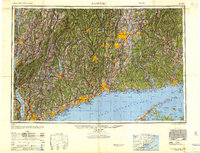 1948 Hartford1948 Print · USGSSouthern New England is captured here in the late 1940s, showcasing a landscape of thriving industrial cities and developing parkways. Genealogists and historians can trace the rail networks of the New York New Haven and Hartford RR or locate coastal defense sites like Fort Terry and Camp Shanks.2 unique versions available
 - 1952 Map of Uncasville
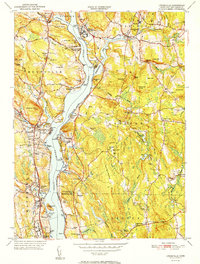 1952 Uncasville1952 Print · USGSThe Thames River corridor in the early fifties shows a fascinating mix of Ivy League rowing traditions and major state institutions. Trace family roots at Poquetanuck and Ledyard Center, or locate landmarks like the Yale Boathouse and the Norwich State Hospital.2 unique versions available
 - 1958 Map of Niantic, 1959 Print
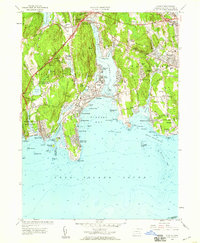 1958 Niantic1959 Print · USGSThe Connecticut coast at the dawn of the interstate era shows a mix of summer colonies and institutional history. Trace the development of Niantic and East Lyme through landmarks like the State Military Camp, Millstone Quarry, and the New London Airport.3 unique versions available
 - 1958 Map of Montville, 1959 Print
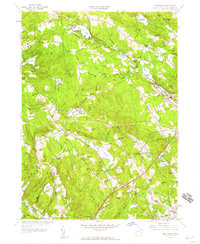 1958 Montville1959 Print · USGSMontville and East Lyme are captured during a period of steady mid-century growth along the Salem Turnpike and rural crossroads. Genealogists and historians can trace family-named landmarks and old burial sites like Whitaker Cem, Oakdale Fox Cem, and Chapel Hill.4 unique versions available
 - 1958 Map of Uncasville, 1960 Print
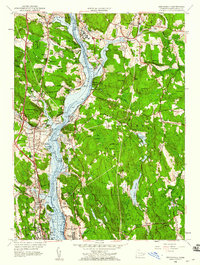 1958 Uncasville1960 Print · USGSNew London County's riverfront is captured here in the late fifties, showcasing the vital military and rail corridor along the Thames. Genealogists and historians can trace families near Uncasville, the Submarine Base, and Mohegan Ch.3 unique versions available
 - 1958 Map of New London, 1960 Print
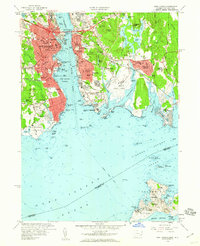 1958 New London1960 Print · USGSNew London and Groton sit at the center of this late-fifties coastal survey, showcasing the maritime infrastructure of the Thames River. Researchers can trace historic boundaries at Fort Trumbull or locate family plots in Cedar Grove Cemetery.3 unique versions available
 - 1961 Map of Hartford
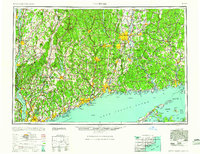 1961 Hartford1961 Print · USGSSouthern New England and the Hudson Valley are shown here in the mid-fifties, capturing a landscape of booming coastal cities and interior hill towns. Researchers can trace the legacy of the New York New Haven and Hartford rail corridor and find strategic sites like Camp Shanks and Fort Michie.
 - 1962 Map of Hartford, 1971 Print
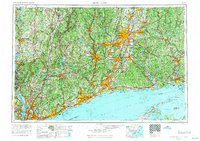 1962 Hartford1971 Print · USGSSouthern New England and the Hudson Valley are shown in the early sixties, as suburban growth reached into the foothills. Trace the path of the New York New Haven & Hartford RR and find landmarks like Camp Nathan Hale and Gillette Castle State Park.3 unique versions available
 - 1965 Map of Hartford
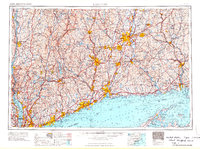 1965 Hartford1965 Print · USGSSouthern New England and the Hudson Valley are shown here during the mid-sixties expansion of the Interstate era. Trace the path of the New York New Haven & Hartford RR or locate historic landmarks like West Point Military Reservation and the Merritt Parkway.2 unique versions available
 - 1983 Map of Niantic
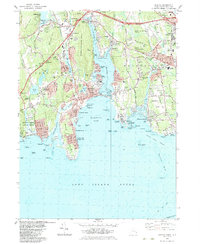 1983 Niantic1983 Print · USGSCoastal Connecticut in the early eighties shows a landscape of beach colonies and strategic infrastructure. Researchers can trace the development of Niantic and Flanders while locating local landmarks like Stone Church, Jordan Cem, and the New London-Waterford Airport.3 unique versions available
 - 1983 Map of Montville, 1984 Print
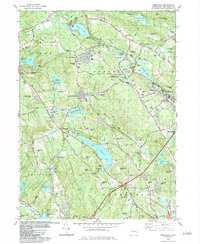 1983 Montville1984 Print · USGSNew London County's interior is captured here in the early eighties, showcasing a mix of suburban growth and traditional water-driven industry. Genealogists can trace family names across Noble Hill or Haines Hill, and locate local landmarks like Macks Mill and the Oakdale Sch.
 - 1983 Map of New Haven, 1985 Print
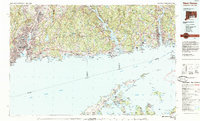 1983 New Haven1985 Print · USGSThe Connecticut shoreline and eastern Long Island are documented here in the early eighties, from the streets of New Haven to the piers of New London. Genealogists and historians can trace the geography of maritime heritage and academia at Yale University and the U.S. Coast Guard Academy.2 unique versions available
 - 1984 Map of Uncasville
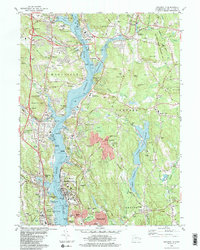 1984 Uncasville1984 Print · USGSThe Thames River valley in the early 1980s was a hub of naval and academic activity, from the USCG Academy to the U S Naval Reservation. Genealogists and historians can trace the foundations of Gales Ferry, locate dozens of burial sites like Hebrew Cem, and find landmarks like the Norwich State Hospital.2 unique versions available
 - 1984 Map of New London
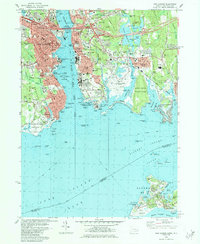 1984 New London1984 Print · USGSThe Thames River waterfront in the mid-1980s reveals a dense network of naval history and maritime industry. Researchers can trace the grounds of the US Coast Guard Academy or locate local landmarks like Cedar Grove Cemetery and the New London Harbor Lighthouse.2 unique versions available
End of results
Showing maps 1-22 of 22
Top cities near Waterford
- Norwich historical maps
- Groton historical maps
- East Hampton historical maps
- New London historical maps
- Southold historical maps
- Montville historical maps
See more
Top neighborhoods of Waterford
- Seaside historical maps
- Graniteville historical maps
- Manitock Spring historical maps
- Morningside Park historical maps
- Pleasure Beach historical maps
- Sandy Point historical maps
See more
Frequently asked questions
- What are the different types of historical maps available for Waterford?
- What is the oldest map of Waterford?
- Where can I purchase historical maps of Waterford for my home or office?
- Where can I download high-res historical maps of Waterford?
- Are there historical topographic maps available for Waterford?
- Is there historical aerial imagery available for Waterford?
- Where are historical maps of Waterford sourced from?