Old Maps of Chattooga County, Georgia
Explore 90 old maps of Chattooga County, spanning from 1886 to today. These high-resolution historic maps reveal how streets, neighborhoods, landmarks, and natural features evolved over time — perfect for genealogy, metal detecting, research, and local history exploration.
What you can do with these maps:
- See how Chattooga County changed over time: Compare historical maps to modern-day views to trace roads, homesites, rail lines & more.
- View detailed metadata: Each map includes creators, publishers, year, scale, and archive source.
- Overlay maps with satellite & LiDAR: Visualize the past alongside modern tools to explore terrain & human change.
- Trusted historical sources: Maps sourced from the USGS, Library of Congress, and other archives.
- Access maps your way: View online, download high-res files, or order prints for personal or research use.
Start exploring old maps of Chattooga County to uncover forgotten places, hidden landmarks, and the deep history beneath your feet.
Chattooga County, GA maps
(90)- 1886 Map of Ringgold
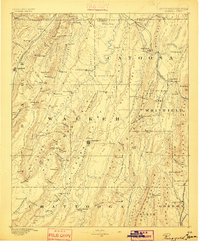 1886 Ringgold1886 Print · USGSNorthwest Georgia in the 1880s was a landscape of industrial river valleys and steep ridges defined by early rail lines. Local historians can trace family-named landmarks like Gilreath's Mill, the Trion Factory textile site, and the rural stop at Tap's Store.
 - 1886 Map of Rome
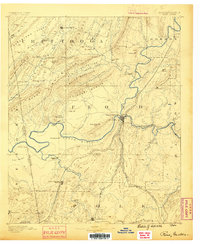 1886 Rome1886 Print · USGSNorthwest Georgia in the mid-1880s is captured as a vital junction of river navigation and emerging rail power. Genealogists and historians can trace family locations near Rome and Cedartown or find rural landmarks like Kirk's Grave and Cunningham or Agate P.O.
 - 1886 Map of Stevenson
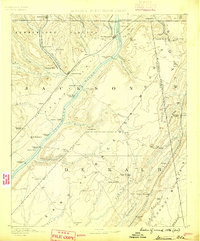 1886 Stevenson1886 Print · USGSNortheast Alabama at the peak of the railroad era shows a landscape tied to the river and the rails. Genealogists can trace family landmarks like Coffey's Store or locate river crossings such as Caperton Ferry and Snodgrass Ferry.
 - 1892 Map of Ringgold
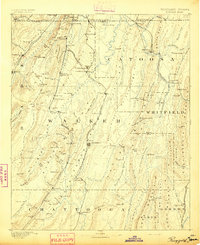 1892 Ringgold1892 Print · USGSNorth Georgia and the Tennessee border are mapped here in the late nineteenth century as the region transitioned into a post-war rail and tourism hub. Researchers can trace the early National Park boundaries, industrial Coal Mines, and vanished stops like High Point or Lisbon Sta..9 unique versions available
 - 1892 Map of Stevenson
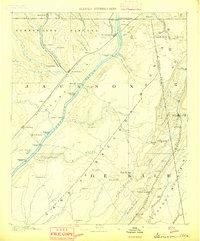 1892 Stevenson1892 Print · USGSNortheast Alabama and the Tennessee border in the 1890s reveal a landscape of mountain coves and vital river crossings. Genealogists and historians can trace rail junctions at Stevenson, river landings like Coffey's Ferry, and landmarks like Nickajack Cave.
 - 1893 Map of Fort Payne
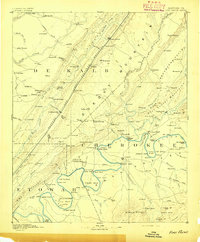 1893 Fort Payne1893 Print · USGSNortheast Alabama is shown here in the late nineteenth century as the rail network transformed the valley floor. Genealogists and historians can trace family-named crossroads like Hoge's X Roads and vital river crossings including Coker Ferry and Sewell Ferry.
 - 1895 Map of Stevenson
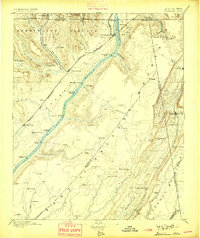 1895 Stevenson1895 Print · USGSThe Tennessee River valley and surrounding plateaus were a hub of rail and river commerce at the close of the century. Genealogists can trace family crossings at Island Creek Ferry or locate old communities like Bellefonte, Stevenson, and Valley Head.6 unique versions available
 - 1898 Map of Rome, 1960 Print
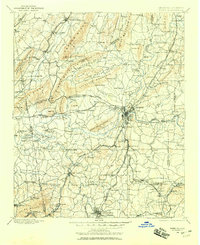 1898 Rome1960 Print · USGSNorthwest Georgia in the late nineteenth century is a landscape of mountain ridges and busy river confluences. Researchers can trace historic river crossings like Perkins Ferry and the rail-side growth of Summerville, Lindale, and Rome.
 - 1898 Map of Fort Payne, 1964 Print
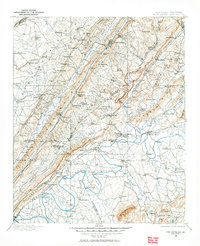 1898 Fort Payne1964 Print · USGSDeKalb and Cherokee counties in the late 1890s are defined by the steep ridges of Lookout Mountain and a bustling network of river ferries. Genealogists can trace family roots through numerous river crossings like Hardwick Ferry and early industrial sites such as Sloan Mill or Abernathy Mill.
 - 1899 Map of Rome
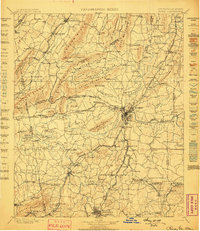 1899 Rome1899 Print · USGSNorthwest Georgia and the Alabama border are captured in the late 1890s, when river travel and mountain gaps dictated the flow of commerce. Genealogists can trace family footprints near Miller Ferry, Raccoon Mills, and the thriving rail hub of Rome.
 - 1900 Map of Fort Payne
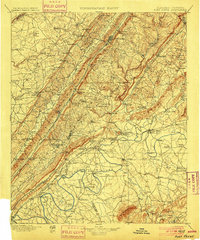 1900 Fort Payne1900 Print · USGSNortheast Alabama is defined by its deep ridges and river valleys in the late nineteenth century. Researchers can trace the era's ferry network across the Coosa River and find old family-run landmarks like Wagners Store and Santy Mills.6 unique versions available
 - 1904 Map of Rome
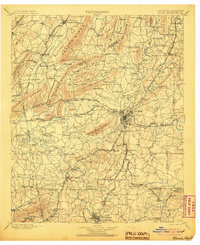 1904 Rome1904 Print · USGSNorthwest Georgia and the Alabama borderlands are captured here during a period of heavy river traffic and expanding rail lines. Genealogists can trace family footprints across dozens of river crossings like Freeman Ferry and early settlements such as Chubbtown or Raccoon Mills.4 unique versions available
 - 1936 Map of Dougherty Gap
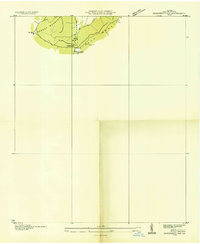 1936 Dougherty Gap1936 Print · USGSNorthern Georgia mountain terrain comes into focus in the mid-1930s as federal agencies mapped the convergence of LOOKOUT MOUNTAIN and PIGEON MOUNTAIN. Genealogists and historians can trace the early road through Dougherty Gap and locate the site of a CCC Camp (Abandoned).
 - 1936 Map of Little Falls
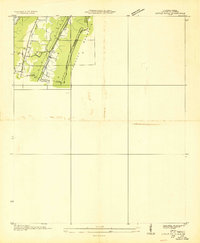 1936 Little Falls1936 Print · USGSDeKalb County, Alabama, is captured in the mid-1930s just as the Tennessee Valley Authority began modernizing the region. Researchers can trace rural life through the upland community of Violet Hill, its Violet Hill Ch, and the high ridges of Lookout Mountain.
 - 1946 Map of Valley Head, 1956 Print
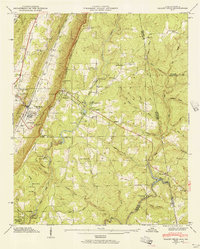 1946 Valley Head1956 Print · USGSThe Alabama-Georgia state line and the slopes of Lookout Mountain are captured here in the mid-1940s. Genealogists and researchers can locate the Southern Railroad corridor, rural schools like Moon Lake Sch, and local landmarks including Mentone and Valley Head.2 unique versions available
 - 1946 Map of Dougherty Gap, 1964 Print
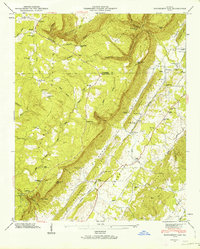 1946 Dougherty Gap1964 Print · USGSNorthwest Georgia in the mid-forties reveals a landscape shaped by the steep walls of Pigeon Mountain and the Tennessee Alabama and Georgia rail line. Genealogists can trace family footprints at Long Cem, Teloga Sch, and rural congregations like New Hope Ch.2 unique versions available
 - 1947 Map of Valley Head
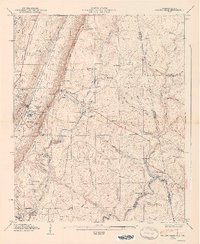 1947 Valley Head1947 Print · USGSDeKalb County and the Alabama-Georgia borderlands are captured here just after the war, showing the mountain communities and valley rail lines of the late 1940s. Genealogists can locate family landmarks like Jones Cem, Johns Chapel, and the Davenport Chapel School.2 unique versions available
 - 1947 Map of Dougherty Gap
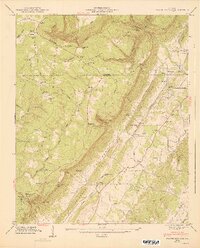 1947 Dougherty Gap1947 Print · USGSNorthwest Georgia in the late 1940s is defined here by the steep summits of Lookout Mountain and the remote communities of Chattooga County. Researchers can trace rural life through landmarks like Camp Juliette Low, the Macedonia Ch, and the route of the Tennessee Alabama and Georgia RR.2 unique versions available
 - 1955 Map of Rome
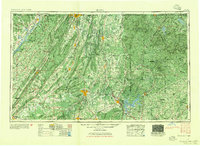 1955 Rome1955 Print · USGSThe tri-state borderlands of Georgia, Alabama, and Tennessee appear in the mid-fifties as a landscape of ridge-and-valley industry and river navigation. Genealogists can trace family footprints near Chattanooga, the iron works of Gadsden, and textile towns like Trion or Summerville.
 - 1958 Map of Rome, 1966 Print
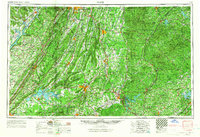 1958 Rome1966 Print · USGSNorthwest Georgia and neighboring Tennessee and Alabama are captured here in the late fifties, showcasing a landscape of high ridges and river valleys. Researchers can trace historic rail lines like the Seaboard Air Line RR and explore the bounds of Cloudland Canyon State Park or Fort Oglethorpe.3 unique versions available
 - 1961 Map of Rome
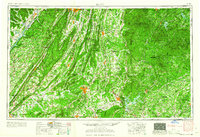 1961 Rome1961 Print · USGSNorthwest Georgia and neighboring Tennessee and Alabama are shown here at a moment of significant mid-century growth. Researchers can trace the rail networks of the Central of Georgia or locate landmarks within Chickamauga and Chattanooga Nat Military Park.
 - 1963 Map of Rome
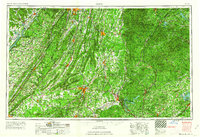 1963 Rome1963 Print · USGSThe tri-state corner of Georgia, Alabama, and Tennessee is captured here during a period of massive reservoir expansion and post-war growth. Genealogists and historians can trace the rail corridors of the Southern Ry or locate landmarks like Fort Oglethorpe and Cloudland Canyon State Park.
 - 1966 Map of Lyerly, 1969 Print
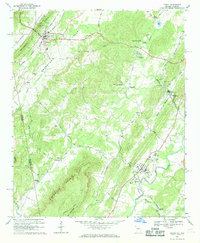 1966 Lyerly1969 Print · USGSThe Chattooga River valley in the mid-sixties reveals a landscape of ridge-and-valley agriculture and small rail-side settlements. Genealogists and local historians can trace family locations near Lyerly, Menlo, and Alpine Ch, or locate the Summerville State Fish Hatchery and the Central of Georgia rail line.2 unique versions available
 - 1967 Map of Trion, 1968 Print
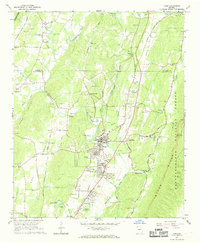 1967 Trion1968 Print · USGSNorthwest Georgia's industrial and rural character is preserved here in the late sixties as the Central of Georgia railroad threads through Trion. Genealogists can locate family landmarks like West Hill Cem, Lookout Hall Ch, and the County Home.
 - 1967 Map of Summerville, 1968 Print
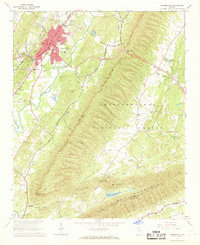 1967 Summerville1968 Print · USGSSummerville and the surrounding Chattooga Valley are captured here in the late sixties as the town expanded alongside the Central of Georgia railroad. Trace family history through rural landmarks like Gore Sch, Midway Ch, and Oak Hill Cem.
Showing maps 1-25 of 90
Top cities of Chattooga County
Frequently asked questions
- What are the different types of historical maps available for Chattooga County?
- What is the oldest map of Chattooga County?
- Where can I purchase historical maps of Chattooga County for my home or office?
- Where can I download high-res historical maps of Chattooga County?
- Are there historical topographic maps available for Chattooga County?
- Is there historical aerial imagery available for Chattooga County?
- Where are historical maps of Chattooga County sourced from?