1960s Maps of Heard County, Georgia
Explore 12 historic maps of Heard County from the 1960s. These maps offer a rare glimpse into what life looked like during the 1960s — showing old roads, neighborhoods, homes, and landmarks that have changed or disappeared over time.
Whether you're researching your family's past, planning a metal detecting trip, or studying how Heard County's landscape evolved across the 1960s, these high-resolution maps are a powerful tool for exploring the history of this region.
- Focus on a specific era: All maps on this page are from the 1960s, giving you a focused view of this time period.
- See what’s changed: Compare century-old streets, trails, and buildings to today's modern landscape using overlays and satellite layers.
- Research with precision: Use these maps for genealogy, historical research, land use analysis, or educational projects.
- View, download, or print: Maps are fully viewable online in high resolution, and can be downloaded or printed for your own records.
Start exploring Heard County's history through authentic maps from the 1960s. This is your window into the past.
Heard County, GA maps
(12)- 1964 Map of Hogansville, 1965 Print
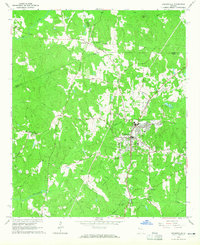 1964 Hogansville1965 Print · USGSHogansville and its surrounding crossroads are captured here in the mid-1960s, showing a landscape defined by the Atlanta and West Point rail line. Genealogists can trace family landmarks like Myrtle Hill Cemetery and old rural meeting places such as Harmonia Ch or Corinth.3 unique versions available
 - 1964 Map of Glenn, 1966 Print
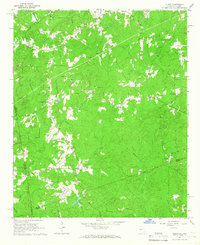 1964 Glenn1966 Print · USGSThe Georgia-Alabama borderlands come alive in the mid-1960s, showing a rural landscape of crossroads settlements and small country parishes. Family historians can trace ancestral sites like Pleasant Grove Ch, Liberty Hill Cem, and the old community at Denver.2 unique versions available
 - 1964 Map of Hillcrest, 1966 Print
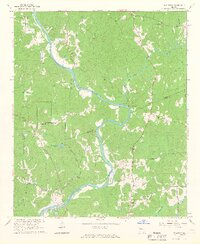 1964 Hillcrest1966 Print · USGSHeard and Troup counties come alive in the mid-sixties, showing a landscape of river-bend settlements and old rural crossings. Researchers can trace family history through sites like the Sanitarium at Hillcrest, the Old Philpot Ferry, and country churches like Shiloh Ch.3 unique versions available
 - 1964 Map of Roopville, 1966 Print
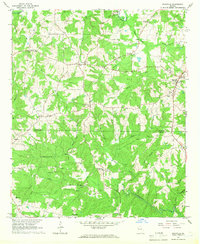 1964 Roopville1966 Print · USGSIn the mid-1960s, the borderlands between Carroll and Heard County remained a tapestry of small church-centered communities and winding creeks. Local historians can trace the foundations of Roopville and Ephesus, or locate landmarks like Unity Cem Ch and the Lookout Tower.2 unique versions available
 - 1964 Map of Franklin, 1966 Print
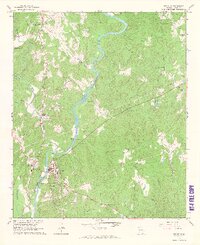 1964 Franklin1966 Print · USGSHeard County life in the mid-sixties centered on the river and rural crossroad communities like Centralhatchee and Franklin. Researchers can trace family sites from Wesley Chapel to numerous local burial grounds including Simms Cem and Ebenezer Cem.3 unique versions available
 - 1964 Map of Lowell, 1966 Print
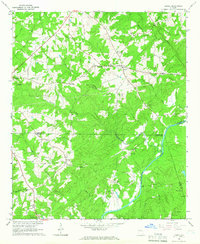 1964 Lowell1966 Print · USGSThe rural landscapes of Carroll and Heard Counties appear here in the mid-1960s, defined by tight-knit communities and winding creeks. Genealogists can trace family lines through several local burial sites like Pentecost Cem and Hollingsworth Cem.2 unique versions available
 - 1964 Map of Frolona, 1966 Print
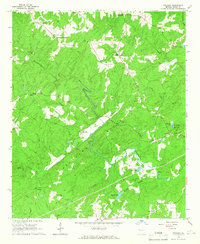 1964 Frolona1966 Print · USGSHeard County in the mid-1960s is defined by its ridge-and-creek topography and a network of historic crossroads communities. Local historians and genealogists can trace family landmarks like Mahalley Crossroads, Olive Branch Ch, and the Hearn Cem burial grounds.2 unique versions available
 - 1965 Map of Newnan SW, 1966 Print
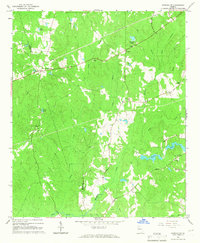 1965 Newnan SW1966 Print · USGSCoweta and Heard Counties are captured here in the mid-1960s, showing a rural landscape defined by creek drainages and small crossroads settlements. Genealogists can trace family roots through numerous landmarks such as Emory Chapel, St Smyrna Ch, and Stallings Crossroads.2 unique versions available
 - 1965 Map of Whitesburg, 1966 Print
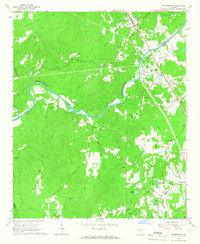 1965 Whitesburg1966 Print · USGSThe Chattahoochee River corridor in the mid-1960s reveals a rural landscape transitioning toward modern infrastructure. Genealogists can trace family roots through landmarks like Rotherwood Ch, the Springer Cem, and schools such as Western High Sch.3 unique versions available
 - 1969 Map of Roanoke East, 1973 Print
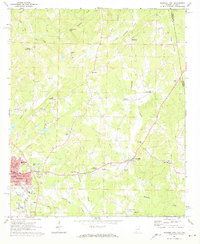 1969 Roanoke East1973 Print · USGSRandolph County's rural landscape is captured in the late sixties, showing a network of crossroads settlements and active rail lines near the Georgia border. Genealogists and historians can trace family roots through Randolph Memory Gardens, Bacon Level, and the many rural schools like Handley High Sch.2 unique versions available
 - 1969 Map of Napoleon, 1973 Print
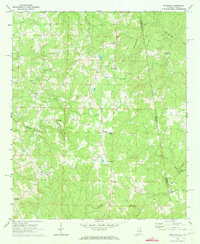 1969 Napoleon1973 Print · USGSThe Alabama-Georgia borderlands come into focus in the late sixties, centered on the Napoleon and Omaha communities. Researchers can trace rural lineages through numerous country churches like Mount Carmel Ch and the crossroads at Potash.
 - 1969 Map of Graham, 1973 Print
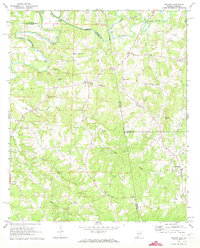 1969 Graham1973 Print · USGSRandolph and Cleburne Counties are captured here in the late sixties as traditional agricultural communities along the Georgia border. Researchers can trace family roots at numerous rural sites like Graham, the Old Shiloh Church, and Sewell.3 unique versions available
End of results
Showing maps 1-12 of 12
Top cities of Heard County
Frequently asked questions
- What are the different types of historical maps available for Heard County?
- What is the oldest map of Heard County?
- Where can I purchase historical maps of Heard County for my home or office?
- Where can I download high-res historical maps of Heard County?
- Are there historical topographic maps available for Heard County?
- Is there historical aerial imagery available for Heard County?
- Where are historical maps of Heard County sourced from?