Old Maps of Columbus, Georgia
Explore 75 old maps of Columbus, spanning from 1907 to today. These high-resolution historic maps reveal how streets, neighborhoods, landmarks, and natural features evolved over time — perfect for genealogy, metal detecting, research, and local history exploration.
What you can do with these maps:
- See how Columbus changed over time: Compare historical maps to modern-day views to trace roads, homesites, rail lines & more.
- View detailed metadata: Each map includes creators, publishers, year, scale, and archive source.
- Overlay maps with satellite & LiDAR: Visualize the past alongside modern tools to explore terrain & human change.
- Trusted historical sources: Maps sourced from the USGS, Library of Congress, and other archives.
- Access maps your way: View online, download high-res files, or order prints for personal or research use.
Start exploring old maps of Columbus to uncover forgotten places, hidden landmarks, and the deep history beneath your feet.
Columbus, GA maps
(75)- 1907 Map of Talbotton
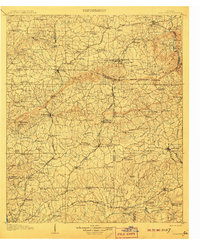 1907 Talbotton1907 Print · USGSWest-central Georgia at the turn of the century is a landscape of ridges and rail-lines, dominated by the thermal waters of Warm Springs. Local historians can trace the foundations of Talbotton and rural life at Turntime Crossroads, Cataula Camp Ground, and Greens Mill.3 unique versions available
 - 1907 Map of Opelika, 1963 Print
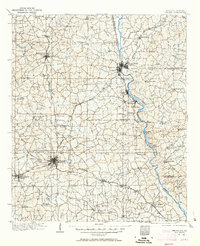 1907 Opelika1963 Print · USGSEastern Alabama and western Georgia come alive in this early 1900s survey of the rail-and-river economy. Genealogists can trace family names at Mitchell Crossroads, find rural landmarks like the Poor Farm, and locate historic river crossings like Dixon Ferry.
 - 1908 Map of Columbus
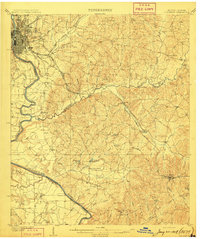 1908 Columbus1908 Print · USGSThe Chattahoochee riverfront at the dawn of the century shows the thriving river-and-rail economy of the Georgia-Alabama border. Genealogists and historians can trace early landings like BRADLEY LDG, rural congregations at Goodhope Church, and the operations at Cooks Mill.8 unique versions available
 - 1909 Map of Opelika
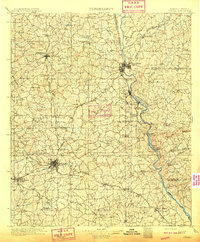 1909 Opelika1909 Print · USGSEastern Alabama and western Georgia are seen here in the first decade of the twentieth century as the river-and-rail economy reached its peak. Genealogists and historians can trace old river crossings like Blanton Ferry, rural post offices such as Antioch Church Huckabee P O, and the path of the Chattahoochee Valley railroad.4 unique versions available
 - 1929 Map of Columbus
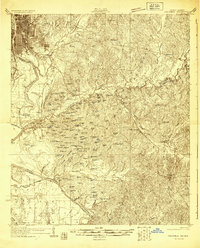 1929 Columbus1929 Print · USGSThe Georgia-Alabama borderlands come alive in this late 1920s survey of the bustling military and rail hub around Columbus. Genealogists and historians can trace the transition from rural farmsteads to military grounds at Fort Benning, identifying family landmarks like Greenwood Hill and Holliday Hill.
 - 1947 Map of Columbus, 1954 Print
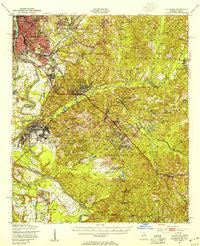 1947 Columbus1954 Print · USGSPostwar Georgia and Alabama meet along the Chattahoochee River in this detailed study of military expansion and urban growth. Genealogists and historians can trace family-named landmarks across Fort Benning and locate sites like Riverdale Cem, Midway Ch, and Baker Village.2 unique versions available
 - 1949 Map of Midland
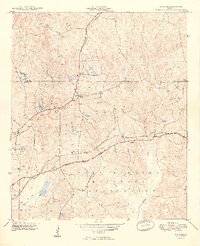 1949 Midland1949 Print · USGSMuscogee and Harris Counties appear here just after the war, showing the expansion of the Fort Benning Military Reservation. Researchers can trace the Southern rail lines connecting Midland and Schatulga.2 unique versions available
 - 1949 Map of Upatoi
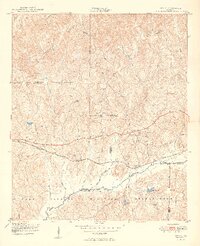 1949 Upatoi1949 Print · USGSThe Fort Benning boundary and the Central of Georgia railroad define this corner of Georgia in the late forties. Researchers can trace family landmarks like Mt Carmel Church and the rural settlements at Upatoi and Box Springs.2 unique versions available
 - 1949 Map of Ochillee
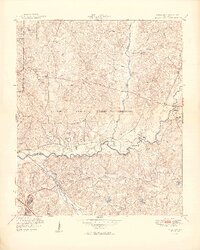 1949 Ochillee1949 Print · USGSThe border of Muscogee and Chattahoochee counties in the late 1940s reveals a landscape transitioning between rural life and military expansion. Genealogists and historians can trace the paths of the Central of Georgia railroad near Ochillee or find family landmarks like Midway School Cemetery and Eelbeck.2 unique versions available
 - 1949 Map of Buena Vista NW
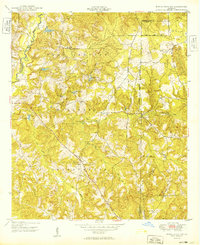 1949 Buena Vista NW1949 Print · USGSChattahoochee and Marion counties appear here in the late 1940s as the expanding military footprint integrated with rural Georgia life. Researchers can trace land use and community hubs like Gallups Mill, John Thomas School, and the remote Fellowship Church.
 - 1949 Map of Columbus
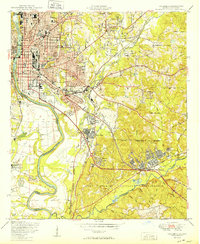 1949 Columbus1949 Print · USGSColumbus and Phenix City flank the Chattahoochee River during a period of massive military growth following the war. Genealogists can trace family footprints through Linwood Cem and neighborhood schools like St Elmo School or Jordan High School.2 unique versions available
 - 1950 Map of Fort Benning
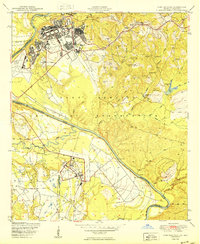 1950 Fort Benning1950 Print · USGSFort Benning and the surrounding riverlands appear in sharp detail during the post-war era as the military reservation expanded across the Georgia-Alabama line. Researchers can trace the mid-century infrastructure of the Fort Benning post alongside natural landmarks like Uchee Creek and McMurrin Pond.
 - 1950 Map of Fortson, 1953 Print
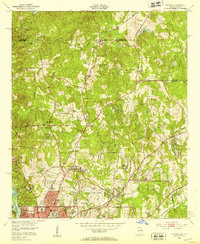 1950 Fortson1953 Print · USGSThe northern suburbs of Columbus were beginning to take shape in the early fifties, while rural outposts like Fortson and Nankipooh remained distinct. Genealogists can locate family landmarks such as Mealing Cem and Double Churches or trace the early layout of the Muscogee County Airport.2 unique versions available
 - 1950 Map of Buena Vista, 1955 Print
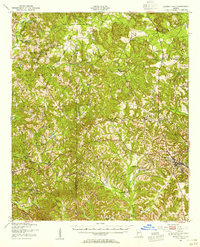 1950 Buena Vista1955 Print · USGSWest Georgia in the mid-1950s shows a landscape of rural schoolhouses and family-run mills bordering the Fort Benning Military Reservation. Researchers can locate historic rural centers like Brantley, trace the Central of Georgia rail line, and find sites like Callops Mill or Bates Chapel School and Cemetery.
 - 1950 Map of Talbotton, 1955 Print
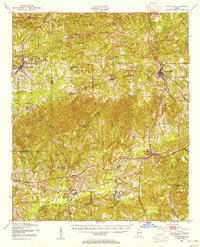 1950 Talbotton1955 Print · USGSWestern Georgia at the start of the fifties reveals a landscape of rural railroad towns and numerous country churches. Genealogists can trace family connections at Waverly Hall Cem or locate old community centers like Box Springs, Geneva, and Matthews Chapel.
 - 1950 Map of Ellerslie, 1955 Print
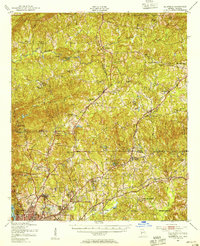 1950 Ellerslie1955 Print · USGSThe Muscogee and Harris County borderlands appear here in the mid-twentieth century as the city of Columbus begins its northward expansion. Researchers can trace the rural roots of the region through landmarks like Turntime Crossroads, Double Churches, and the Columbus Speedway Racetrack.
 - 1955 Map of Ochillee, 1959 Print
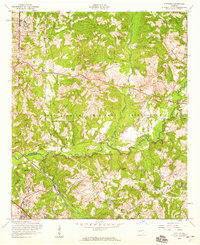 1955 Ochillee1959 Print · USGSMuscogee and Chattahoochee Counties are shown in the mid-1950s as the military landscape of Fort Benning reshaped the rural South. Researchers can trace the Central of Georgia rail line past Ochillee, Midway Ch, and landmarks like Cooks Mill Pond.5 unique versions available
 - 1955 Map of Buena Vista NW, 1959 Print
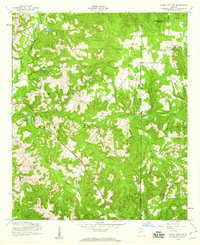 1955 Buena Vista NW1959 Print · USGSChattahoochee and Marion Counties are shown in the mid-fifties as the military landscape expanded through the Georgia woods. Researchers can locate family landmarks like Gallups Millpond and rural worship sites including County Line Ch.3 unique versions available
 - 1955 Map of Fort Benning, 1959 Print
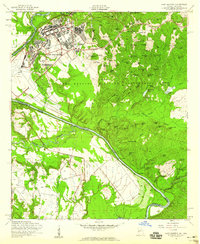 1955 Fort Benning1959 Print · USGSThe mid-1950s expansion of the Fort Benning Military Reservation is captured here along the Chattahoochee River. Researchers can trace the development of military infrastructure at Lawson Field and locate family-named landmarks like Riche Hill or McMurrin Pond.4 unique versions available
 - 1955 Map of Columbus, 1959 Print
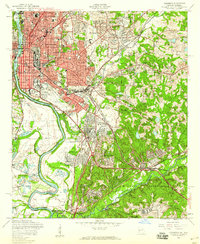 1955 Columbus1959 Print · USGSMid-century Columbus and Phenix City thrive along the river at the height of their industrial and military significance. Genealogists and local historians can locate many vanished city schools, the sprawling Rose Hill Cemetery, and the early layout of the Fort Benning Military Reservation.5 unique versions available
 - 1955 Map of Midland, 1959 Print
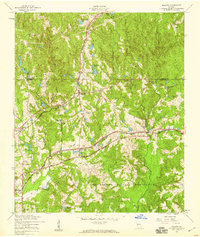 1955 Midland1959 Print · USGSThe Muscogee and Harris County borderlands in the mid-fifties show a landscape of rail-fed settlements and expanding military borders. Genealogists can find legacy sites like Lynch Road Sch, Pitts Chapel, and the intersection of the SOUTHERN and CENTRAL OF GEORGIA rail lines.4 unique versions available
 - 1955 Map of Fortson, 1959 Print
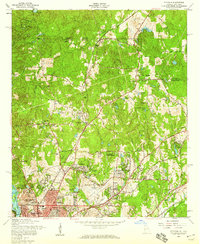 1955 Fortson1959 Print · USGSMuscogee County is shown in the mid-fifties as the northern edge of Columbus begins its post-war expansion into the countryside. Researchers can trace old family roots and rural landmarks at Double Churches, Pierce Chapel Cemetery, and the historic settlement of Nankipooh.5 unique versions available
 - 1955 Map of Upatoi, 1959 Print
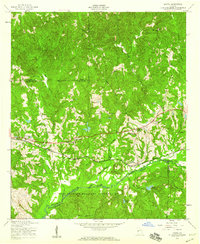 1955 Upatoi1959 Print · USGSThe rural borderlands of Talbot and Muscogee counties are captured here in the mid-1950s, split between timbered creeks and federal land. Genealogists can locate family landmarks like Phillips Cem, Mt Paron Ch, and the Crossroads Sch along the Central of Georgia line.3 unique versions available
 - 1955 Map of Ellerslie, 1961 Print
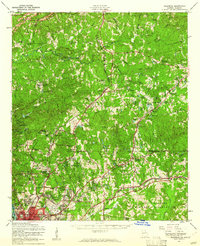 1955 Ellerslie1961 Print · USGSMid-century Harris and Muscogee counties were defined by rural crossroads and the northward expansion of Columbus. Genealogists and researchers can trace family landmarks like Turntime Crossroads, Pierce Chapel, and the Good Samaritan Home for Aged.
 - 1955 Map of Columbus, 1961 Print
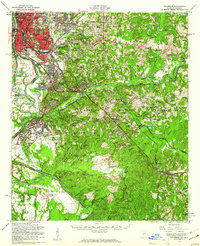 1955 Columbus1961 Print · USGSColumbus and the neighboring military lands at Fort Benning are shown here during a period of significant post-war growth. Researchers can trace family sites among the many named hills and local landmarks like Montgomery Mill, St Peters Ch, and the Central of Georgia rail lines.
Showing maps 1-25 of 75
Top cities near Columbus
- Phenix City historical maps
- Cusseta historical maps
- Smiths Station historical maps
- Ladonia historical maps
- Waverly Hall historical maps
Top neighborhoods of Columbus
- Edgewood historical maps
- Patton Village historical maps
- McGraw Village historical maps
- Crystal Valley historical maps
- Fortson historical maps
- Foxfire historical maps
See more
Frequently asked questions
- What are the different types of historical maps available for Columbus?
- What is the oldest map of Columbus?
- Where can I purchase historical maps of Columbus for my home or office?
- Where can I download high-res historical maps of Columbus?
- Are there historical topographic maps available for Columbus?
- Is there historical aerial imagery available for Columbus?
- Where are historical maps of Columbus sourced from?