Old Maps of LaGrange, Georgia for Hiking & Exploration
Hike through history with 39 historic maps of LaGrange. Explore old trails, ghost towns, and forgotten backroads — perfect for outdoor adventurers and local explorers.
- Rediscover forgotten places: Map out old mining camps, roads, and footpaths that no longer exist on modern maps.
- Layer with modern tools: Combine with LiDAR or satellite views to plan hikes through historical terrain.
- Made for exploration: Popular among hikers, overlanders, and local history lovers.
Use these maps to find adventure and explore the hidden past of LaGrange.
LaGrange, GA maps
(39)- 1899 Map of Wedowee, 1958 Print
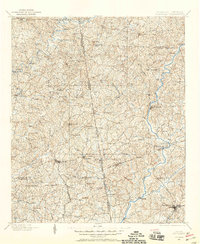 1899 Wedowee1958 Print · USGSEastern Alabama and western Georgia are mapped here at the close of the nineteenth century, documenting the rural river-and-rail landscape. Researchers can trace historic crossings like Philpots Ferry and early industrial sites such as the Copper Mine.
 - 1902 Map of Wedowee
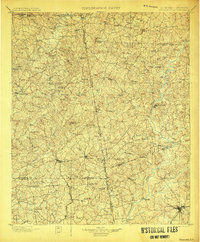 1902 Wedowee1902 Print · USGSThe Alabama and Georgia state line bisects this turn-of-the-century landscape of river crossings and hill-country settlements. Genealogists can trace early homesteads and commerce at Philpots Ferry, the Copper Mine, or the town of Wedowee.3 unique versions available
 - 1907 Map of Talbotton
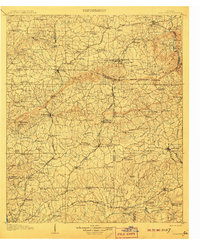 1907 Talbotton1907 Print · USGSWest-central Georgia at the turn of the century is a landscape of ridges and rail-lines, dominated by the thermal waters of Warm Springs. Local historians can trace the foundations of Talbotton and rural life at Turntime Crossroads, Cataula Camp Ground, and Greens Mill.3 unique versions available
 - 1907 Map of Opelika, 1963 Print
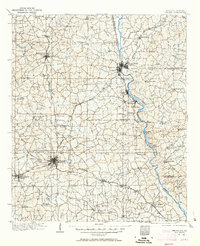 1907 Opelika1963 Print · USGSEastern Alabama and western Georgia come alive in this early 1900s survey of the rail-and-river economy. Genealogists can trace family names at Mitchell Crossroads, find rural landmarks like the Poor Farm, and locate historic river crossings like Dixon Ferry.
 - 1909 Map of Opelika
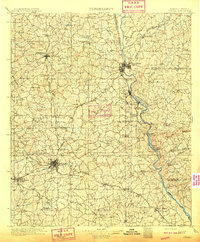 1909 Opelika1909 Print · USGSEastern Alabama and western Georgia are seen here in the first decade of the twentieth century as the river-and-rail economy reached its peak. Genealogists and historians can trace old river crossings like Blanton Ferry, rural post offices such as Antioch Church Huckabee P O, and the path of the Chattahoochee Valley railroad.4 unique versions available
 - 1953 Map of Atlanta, 1965 Print
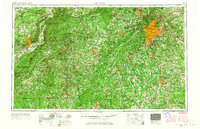 1953 Atlanta1965 Print · USGSThe growing Atlanta metro and the industrial corridors of Eastern Alabama are captured here during the mid-century transition. Researchers can trace the rail-to-road shift through hubs like Anniston and La Grange or locate sites within Fort McClellan.2 unique versions available
 - 1955 Map of Phenix City, 1964 Print
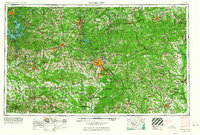 1955 Phenix City1964 Print · USGSPost-war Alabama and Georgia meet along the Chattahoochee River as industry and military installations expand. Trace the rail lines of the Central of Georgia through towns like Opelika, Tuskegee, and Alexander City.3 unique versions available
 - 1957 Map of Phenix City
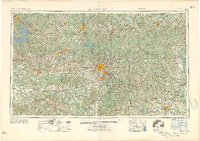 1957 Phenix City1957 Print · USGSThe Alabama-Georgia borderlands are captured here in the mid-fifties, centered on the bustling river crossing at Phenix City and Columbus. Researchers can trace the mid-century footprint of the Fort Benning Military Reservation or locate smaller textile and railroad towns like Langdale and Camp Hill.
 - 1957 Map of Atlanta
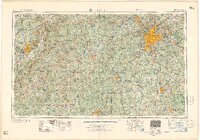 1957 Atlanta1957 Print · USGSAtlanta and the Alabama borderlands appear here in the mid-fifties, capturing the region's post-war suburban and industrial transition. Trace the development of early transport hubs and military sites like Fort McPherson, Anniston, and the Kennesaw Mountain National Battlefield Park.
 - 1958 Map of Phenix City
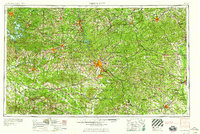 1958 Phenix City1958 Print · USGSThe Alabama-Georgia borderlands thrive during the late fifties, anchored by the river-driven industry of Columbus and Phenix City. Researchers can trace the mid-century footprints of Fort Benning, Auburn, and the textile towns of Fairfax and Lanett.
 - 1958 Map of Atlanta
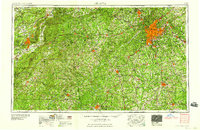 1958 Atlanta1958 Print · USGSMid-century Georgia and Alabama are shown in this regional study of the corridor between the Chattahoochee River and the Appalachian foothills. Local historians can trace the development of suburban Atlanta alongside vital landmarks like Stone Mountain, Dobbins AFB, and the Seaboard Air Line rail routes.
 - 1964 Map of Cannonville, 1965 Print
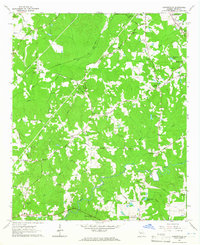 1964 Cannonville1965 Print · USGSTroup County's rural crossroads and ridge-top settlements are captured here in the mid-sixties. Local researchers can trace family lands near Gray Hill Ch, locate ancestral burials at Hammetts Cem, and follow the old routes through Cannonville.4 unique versions available
 - 1964 Map of Mountville, 1965 Print
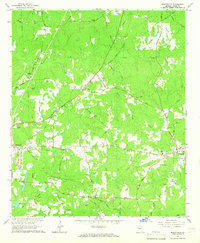 1964 Mountville1965 Print · USGSTroup County in the mid-sixties remains a landscape of traditional family-named roads and rural rail crossings. Genealogists and local historians can trace family sites at the Traylor-Johnson Cem, Mount Pleasant Sch, and the community of Mountville.3 unique versions available
 - 1964 Map of La Grange, 1966 Print
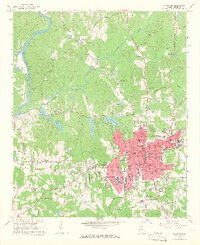 1964 La Grange1966 Print · USGSLa Grange and Troup County appear in the mid-sixties as a thriving textile and education center just east of the Chattahoochee. Researchers can trace the town's expansion through sites like La Grange College, Stonewall Cem, and the Dunson Mills Sch.3 unique versions available
 - 1964 Map of Hilyer, 1966 Print
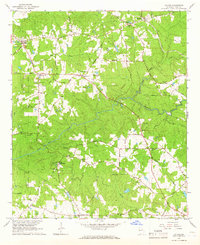 1964 Hilyer1966 Print · USGSTroup County’s rural landscape is captured here in the mid-1960s, a time when small agricultural communities like Hilyer and Big Springs thrived. Local researchers can trace family roots at Smiths Mill or explore the many named burial grounds like Talley Cem and McGee Cem.2 unique versions available
 - 1978 Map of La Grange, 1980 Print
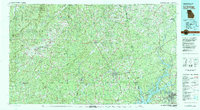 1978 La Grange1980 Print · USGSThe Alabama-Georgia borderlands are captured here in the late seventies, just as the newly formed West Point Lake reshaped the eastern landscape. Local historians can trace the Seaboard Coast Line rail corridor through hubs like Roanoke, Ashland, and Lineville.
 - 1979 Map of Griffin, 1980 Print
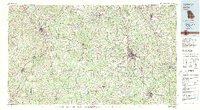 1979 Griffin1980 Print · USGSWest-central Georgia at the close of the seventies reveals a landscape of historic rail towns and growing suburbs between the major river systems. Trace the rail lines and early road networks connecting Griffin, Peachtree City, and Newnan, or locate smaller settlements like Senoia and Experiment.3 unique versions available
 - 1981 Map of Opelika, 1982 Print
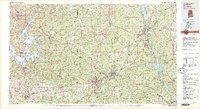 1981 Opelika1982 Print · USGSEast Alabama and West Georgia appear in the early 1980s as a region defined by massive river reservoirs and the storied textile corridor. Genealogists can trace family roots through the valley towns of Lanett and Fairfax or locate sites near Horseshoe Bend National Military Park.
 - 1981 Map of Thomaston, 1982 Print
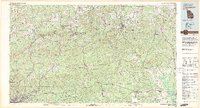 1981 Thomaston1982 Print · USGSCentral Georgia’s ridgeline and river country comes into focus in this early 1980s survey of the Pine Mountain corridor. Researchers can trace historic church sites like Oak Grove Ch, the rail junctions at Manchester, and the expansive Franklin D Roosevelt State Park.
 - 2011 Map of Cannonville, 2011 Print
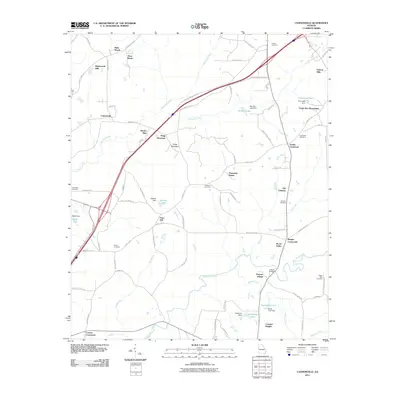 2011 Cannonville2011 Print · USGSTroup County at the start of the 2010s shows a landscape of traditional crossroads and evolving residential communities. Genealogists can trace family heritage at Fannin Cemetery and McCalls Cemetery, or locate landmarks like Old Chimney and State Bridge.
 - 2011 Map of Hilyer, 2011 Print
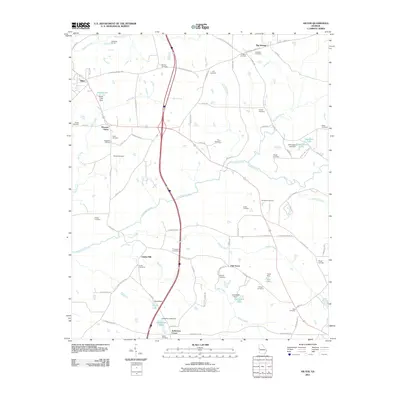 2011 Hilyer2011 Print · USGSTroup County at the start of the 2010s reveals a landscape of enduring rural settlements and family legacies. Researchers can trace ancestral roots through dozens of local burial sites like Rakestraw Cemetery and Hamby Cemetery or locate historic hubs such as Smiths Mill.
 - 2011 Map of La Grange, 2011 Print
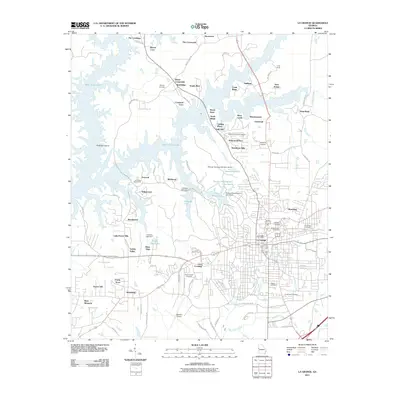 2011 La Grange2011 Print · USGSLa Grange and the surrounding Troup County countryside are shown in detail during a period of modern growth and lakefront development. Genealogists and historians can locate numerous burial sites like Shadowlawn Cemetery and Mount Beulah Cemetery, or trace the shores of West Point Lake.
 - 2011 Map of Mountville, 2011 Print
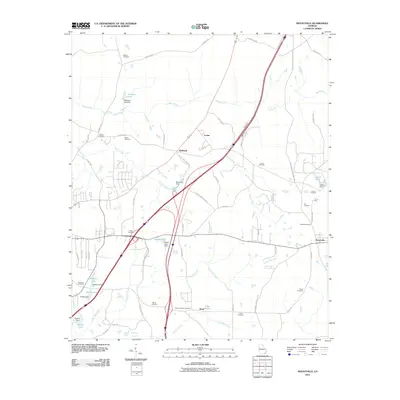 2011 Mountville2011 Print · USGSTroup County in the early twenty-first century shows a landscape of rural settlements and managed waters north of LaGrange. Researchers can trace family history through a dense network of burial grounds like Heard Cemetery and Jones Cemetery, or locate Knott Forest.
 - 2014 Map of Mountville, 2014 Print
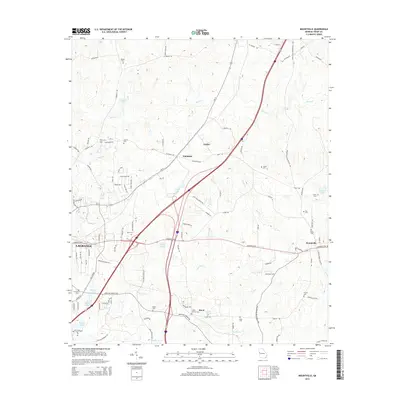 2014 Mountville2014 Print · USGSTroup County’s landscape near the LaGrange outskirts is captured here in the early twenty-first century. Genealogists and local historians can trace over a dozen burial sites, including Shilott Cem, Union Cem, and Heard Cem, alongside the community of Mountville.
 - 2014 Map of Cannonville, 2014 Print
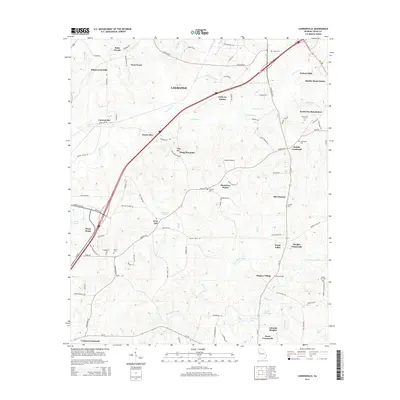 2014 Cannonville2014 Print · USGSSoutheast of LaGrange in the early twenty-first century, this landscape shows a mix of suburban expansion and deep-rooted rural settlements. Researchers can locate family landmarks like Bethel Cem and Hogg Mountain or trace the routes through Smiths Crossroad.
Showing maps 1-25 of 39
Top cities near LaGrange
- Valley historical maps
- Lanett historical maps
- West Point historical maps
- Grantville historical maps
- Hogansville historical maps
- Huguley historical maps
See more
Top neighborhoods of LaGrange
- Sassafrass Hills historical maps
- Eagles Rest historical maps
- Foxcroft historical maps
- Holly Hill historical maps
- Willowcrest historical maps
- Ashling Place historical maps
See more
Frequently asked questions
- What are the different types of historical maps available for LaGrange?
- What is the oldest map of LaGrange?
- Where can I purchase historical maps of LaGrange for my home or office?
- Where can I download high-res historical maps of LaGrange?
- Are there historical topographic maps available for LaGrange?
- Is there historical aerial imagery available for LaGrange?
- Where are historical maps of LaGrange sourced from?