1950s Maps of Sugar City, Idaho
Explore 6 historic maps of Sugar City from the 1950s. These maps offer a rare glimpse into what life looked like during the 1950s — showing old roads, neighborhoods, homes, and landmarks that have changed or disappeared over time.
Whether you're researching your family's past, planning a metal detecting trip, or studying how Sugar City's landscape evolved across the 1950s, these high-resolution maps are a powerful tool for exploring the history of this region.
- Focus on a specific era: All maps on this page are from the 1950s, giving you a focused view of this time period.
- See what’s changed: Compare century-old streets, trails, and buildings to today's modern landscape using overlays and satellite layers.
- Research with precision: Use these maps for genealogy, historical research, land use analysis, or educational projects.
- View, download, or print: Maps are fully viewable online in high resolution, and can be downloaded or printed for your own records.
Start exploring Sugar City's history through authentic maps from the 1950s. This is your window into the past.
Sugar City, ID maps
(6)- 1950 Map of Parker
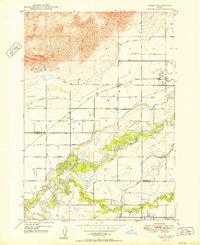 1950 Parker1950 Print · USGSThe northern Snake River Plain comes into focus in this midcentury survey as agricultural irrigation meets the shifting Sand Dunes. Genealogists and historians can trace the irrigation networks of the St Anthony Canal, settlements like Parker, and the Fort Henry Historic Monument.
 - 1950 Map of Rexburg
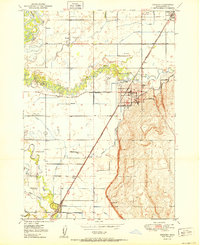 1950 Rexburg1950 Print · USGSRexburg and its surrounding irrigation district are shown at mid-century, just as the local economy was anchored by the railway and college. Genealogists and researchers can locate Ricks College, the Independence Ward Ch, and family plots in Rexburg Cem.
 - 1950 Map of St Anthony
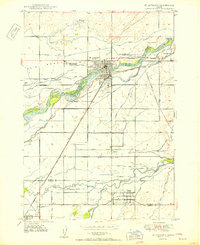 1950 St Anthony1950 Print · USGSMid-century Fremont County is defined here by the meeting of the Henrys Fork and the Teton River amidst a massive irrigation network. Researchers can trace the Union Pacific rail line through St. Anthony and locate the Idaho Industrial Training School or Riverview Cemetery.3 unique versions available
 - 1951 Map of Moody, 1952 Print
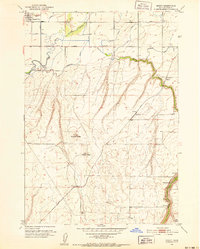 1951 Moody1952 Print · USGSMadison County's high-desert agricultural life is detailed here in the early fifties, showing the intricate canal systems and rail lines of the Snake River Plain. Trace family roots at Sugar City, the Teton Cem, or the rural schoolhouse at Moody Sch.2 unique versions available
 - 1955 Map of Driggs, 1967 Print
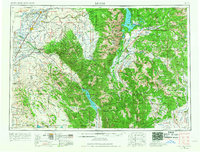 1955 Driggs1967 Print · USGSEastern Idaho and Western Wyoming appear at a mid-century crossroads as the river valleys were fully settled and the high peaks protected. Genealogists and researchers can trace the rail towns of Rexburg and Driggs or follow the Snake River from Irwin to the Palisades Reservoir.3 unique versions available
 - 1958 Map of Driggs
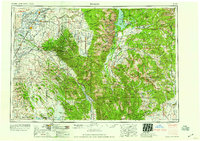 1958 Driggs1958 Print · USGSThe high Teton peaks and Snake River valleys are captured here in the mid-fifties, showing the region's agricultural and wilderness boundaries. Researchers can trace the Union Pacific rail corridor through Rexburg or locate early settlements like Clementsville and Tetonia.2 unique versions available
End of results
Showing maps 1-6 of 6
Top cities near Sugar City
- Rexburg historical maps
- Rigby historical maps
- St. Anthony historical maps
- Teton historical maps
- Menan historical maps
- Parker historical maps
Frequently asked questions
- What are the different types of historical maps available for Sugar City?
- What is the oldest map of Sugar City?
- Where can I purchase historical maps of Sugar City for my home or office?
- Where can I download high-res historical maps of Sugar City?
- Are there historical topographic maps available for Sugar City?
- Is there historical aerial imagery available for Sugar City?
- Where are historical maps of Sugar City sourced from?