1900s (20th Century) Maps of Scotts Mill, Illinois
Explore 9 historic maps of Scotts Mill from the 1900s (20th Century). These maps offer a rare glimpse into what life looked like during the 1900s — showing old roads, neighborhoods, homes, and landmarks that have changed or disappeared over time.
Whether you're researching your family's past, planning a metal detecting trip, or studying how Scotts Mill's landscape evolved across the 1900s, these high-resolution maps are a powerful tool for exploring the history of this region.
- Focus on a specific era: All maps on this page are from the 1900s, giving you a focused view of this time period.
- See what’s changed: Compare century-old streets, trails, and buildings to today's modern landscape using overlays and satellite layers.
- Research with precision: Use these maps for genealogy, historical research, land use analysis, or educational projects.
- View, download, or print: Maps are fully viewable online in high resolution, and can be downloaded or printed for your own records.
Start exploring Scotts Mill's history through authentic maps from the 1900s. This is your window into the past.
Scotts Mill, IL maps
(9)- 1923 Map of Rushville, 1958 Print
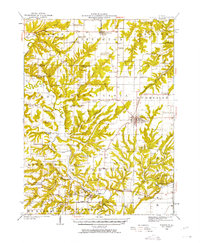 1923 Rushville1958 Print · USGSSchuyler County's agricultural and social landscape is captured here in the early 1920s, centered on the rail terminus at Rushville. Genealogists and historians can trace numerous rural schools and churches, including Muley School, Ebenezer Church, and Pokeberry School.
 - 1926 Map of Rushville
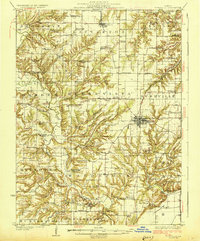 1926 Rushville1926 Print · USGSSchuyler and Brown counties appear in the mid-1920s as a landscape of small farmsteads and rural social hubs. Genealogists and historians can trace an extraordinary density of local institutions, from White Frame School to the Ebenezer Church and the rails of the Chicago Burlington and Quincy.2 unique versions available
 - 1958 Map of Burlington, 1968 Print
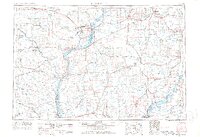 1958 Burlington1968 Print · USGSThe tri-state river country of Iowa, Illinois, and Missouri is captured here in the mid-fifties, dominated by the Mississippi River and major rail lines. Genealogists and historians can trace the development of river towns like Keokuk or locate the sprawling Iowa Army Ammunition Plant.4 unique versions available
 - 1961 Map of Burlington
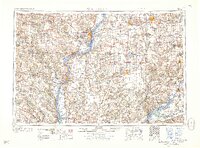 1961 Burlington1961 Print · USGSThe tri-state borderlands along the Mississippi River are captured here during the late fifties and early sixties, showing the vital river-and-rail economy of Iowa, Illinois, and Missouri. Genealogists and historians can trace the development of major hubs like Galesburg and Macomb alongside landmark sites such as the Iowa Ordnance Plant and the historic river town of Nauvoo.
 - 1963 Map of Burlington
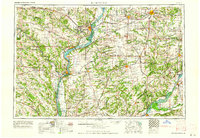 1963 Burlington1963 Print · USGSThe tri-state river country of the Mississippi and Illinois valleys comes alive in this mid-century survey. Genealogists and historians can trace the industrial and academic growth of the region, from the Iowa Ordnance Plant to campuses like Knox College and Western Illinois University.
 - 1981 Map of Ripley
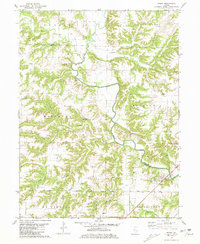 1981 Ripley1981 Print · USGSThe La Moine River valley of Illinois is documented here in the early 1980s as it meanders through Brown and Schuyler counties. Researchers can trace rural lineages through family-named landmarks like Beans Cem and Wilson Cem or locate the site of Scotts Mill.
 - 1985 Map of Macomb
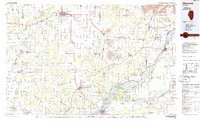 1985 Macomb1985 Print · USGSWest Central Illinois in the mid-eighties shows a robust network of river towns and rail corridors spanning from the Illinois River to the Lamoine. Genealogists and historians can trace the foundations of Macomb, find rural landmarks like Pennington Point, or locate early conservation sites like Argyle Lake State Park.
 - 1989 Map of Macomb
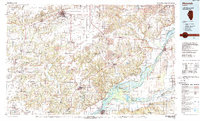 1989 Macomb1989 Print · USGSWest Central Illinois in the late eighties shows a landscape of river-bottom conservation and rail-town commerce. Researchers can trace the extensive wetlands of the Illinois River or locate historic transport hubs in Macomb, Colchester, and Beardstown.
 - 1990 Map of Burlington
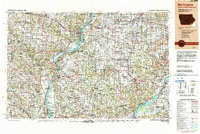 1990 Burlington1990 Print · USGSThe tri-state confluence of Iowa, Illinois, and Missouri is mapped here at the end of the twentieth century. Genealogists and historians can trace the riverfront heritage of Burlington, Keokuk, and Fort Madison, or locate sites like the Battle of Athens State Historic Site.2 unique versions available
End of results
Showing maps 1-9 of 9
Top cities near Scotts Mill
- Rushville historical maps
- Mount Sterling historical maps
- Versailles historical maps
- Cooperstown historical maps
- Brooklyn historical maps
- Littleton historical maps
See more
Frequently asked questions
- What are the different types of historical maps available for Scotts Mill?
- What is the oldest map of Scotts Mill?
- Where can I purchase historical maps of Scotts Mill for my home or office?
- Where can I download high-res historical maps of Scotts Mill?
- Are there historical topographic maps available for Scotts Mill?
- Is there historical aerial imagery available for Scotts Mill?
- Where are historical maps of Scotts Mill sourced from?