1900s (20th Century) Maps of Ashland Farm, Champaign
Explore 15 historic maps of Ashland Farm from the 1900s (20th Century). These maps offer a rare glimpse into what life looked like during the 1900s — showing old roads, neighborhoods, homes, and landmarks that have changed or disappeared over time.
Whether you're researching your family's past, planning a metal detecting trip, or studying how Ashland Farm's landscape evolved across the 1900s, these high-resolution maps are a powerful tool for exploring the history of this region.
- Focus on a specific era: All maps on this page are from the 1900s, giving you a focused view of this time period.
- See what’s changed: Compare century-old streets, trails, and buildings to today's modern landscape using overlays and satellite layers.
- Research with precision: Use these maps for genealogy, historical research, land use analysis, or educational projects.
- View, download, or print: Maps are fully viewable online in high resolution, and can be downloaded or printed for your own records.
Start exploring Ashland Farm's history through authentic maps from the 1900s. This is your window into the past.
Ashland Farm, Champaign maps
(15)- 1906 Map of Urbana
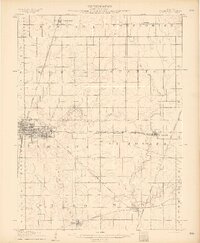 1906 Urbana1906 Print · USGSChampaign County at the turn of the century is a landscape of thriving railroad towns and prairie farmsteads. Trace the early growth of Champaign and Urbana or find the sites of vanished rural stops like Mayview, Glover, and Angerville.7 unique versions available
 - 1907 Map of Mahomet
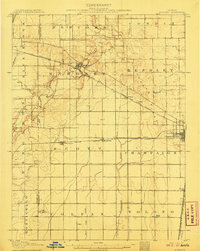 1907 Mahomet1907 Print · USGSChampaign County at the peak of the rail era shows a landscape of burgeoning prairie towns and rural schools. Genealogists and historians can trace family locations near Mahomet, find the precise sites of Bunker Hill School and Fisher School, or follow the Sangamon River.5 unique versions available
 - 1957 Map of Urbana, 1958 Print
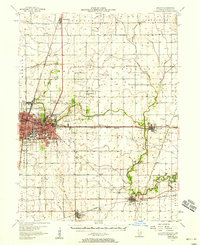 1957 Urbana1958 Print · USGSCentral Illinois during the late fifties reveals the mid-century growth of the twin cities and their surrounding rail towns. Genealogists can locate family landmarks like Mt Olive Cem, Carley Ch, and the rural Locust Grove Sch.2 unique versions available
 - 1957 Map of Rising, 1958 Print
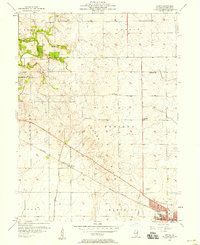 1957 Rising1958 Print · USGSChampaign and its rural northern townships are shown here during the mid-century transition from family farming to suburban growth. Genealogists and local historians can trace rural landmarks like Phillippe Cem, the tiny settlement of Rising, and early residential plats near Switzer Sch.
 - 1957 Map of Mahomet, 1958 Print
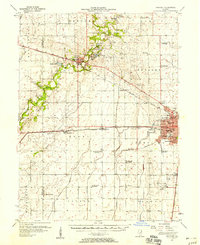 1957 Mahomet1958 Print · USGSChampaign and its rural neighbors are captured in the late fifties as the city expanded westward toward the Sangamon River. Local researchers can trace family landmarks like Dunkard Cem, the St John Chi, and the University of Illinois Airport.2 unique versions available
 - 1957 Map of Thomasboro, 1959 Print
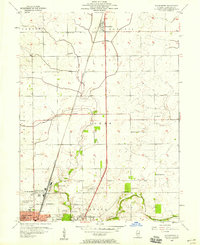 1957 Thomasboro1959 Print · USGSChampaign County farming communities met mid-century growth in the years following the war, as the urban limits of Urbana and Champaign pushed northward. Researchers can locate rural landmarks like Fiedler Sch, the Illini Airport, and several family cemeteries such as Yearsley Cem.
 - 1958 Map of Peoria, 1969 Print
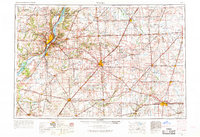 1958 Peoria1969 Print · USGSCentral Illinois thrived as a hub of education and transport during the late sixties, as the new interstate system began to reshape the prairie. Genealogists and historians can trace local landmarks like Springdale Cem, Bradley University, and the sprawling grounds of Chanute AFB.4 unique versions available
 - 1961 Map of Peoria
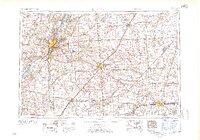 1961 Peoria1961 Print · USGSCentral Illinois thrived at the intersection of river trade and rail power during the late fifties. Genealogists and local historians can trace the rail networks of the Illinois Central and Wabash, alongside landmarks like Chanute AFB and Weldon Springs State Park.
 - 1963 Map of Peoria
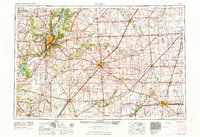 1963 Peoria1963 Print · USGSCentral Illinois thrived as a rail and highway crossroads during the early sixties, centered on the bustling Illinois River valley. Genealogists and historians can trace the mid-century layout of Peoria, locate the grounds of Chanute Air Force Base, and follow historic lines like the Toledo Peoria and Western Railway.
 - 1970 Map of Thomasboro, 1972 Print
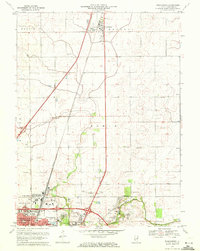 1970 Thomasboro1972 Print · USGSChampaign County at the start of the 1970s shows a landscape balancing its deep agricultural roots with the expansion of its twin cities. Genealogists can locate family burial grounds like St Elizabeth Cem and Yearsley Cem or trace the early footprint of Illini Airport.3 unique versions available
 - 1970 Map of Rising, 1972 Print
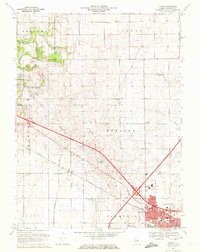 1970 Rising1972 Print · USGSChampaign and its northern rural townships are captured here during a period of significant suburban and infrastructure growth in the early seventies. Genealogists and local historians can trace family-named sites such as Fisher Cem, Hensley Sch, and the rail stop at Rising.3 unique versions available
 - 1985 Map of Champaign, 1986 Print
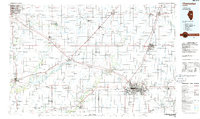 1985 Champaign1986 Print · USGSThe Illinois prairie comes alive in this mid-eighties survey of the vital rail corridor between Bloomington and Champaign. Genealogists and historians can trace the development of township hubs like Saybrook and Bellflower or locate Chanute Air Force Base and the Sangamon River.2 unique versions available
 - 1990 Map of Peoria
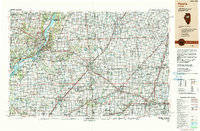 1990 Peoria1990 Print · USGSCentral Illinois at the start of the nineties reveals a landscape of industrial river towns and sprawling university campuses. Researchers can trace the legacy of major institutions like Chanute Air Force Base and the University of Illinois alongside regional landmarks such as Sand Ridge State Forest.
 - 1998 Map of Rising, 2001 Print
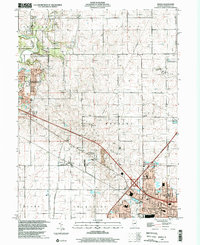 1998 Rising2001 Print · USGSChampaign and the rural townships of Hensley and Condit are shown at the close of the twentieth century. Researchers can locate numerous historic family burial sites like Phillippe Cem and Bethlehem Cem along the Illinois Central Gulf railroad line.
 - 1998 Map of Thomasboro, 2002 Print
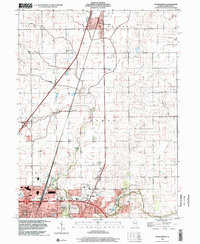 1998 Thomasboro2002 Print · USGSNorthern Champaign County at the close of the century shows a landscape defined by the Illinois Central Railroad and rising suburban density. Researchers can trace the roots of smaller communities like Leverett and Augerville or locate family plots in St Elizabeth Cem and Clements Cem.
End of results
Showing maps 1-15 of 15
Frequently asked questions
- What are the different types of historical maps available for Ashland Farm?
- What is the oldest map of Ashland Farm?
- Where can I purchase historical maps of Ashland Farm for my home or office?
- Where can I download high-res historical maps of Ashland Farm?
- Are there historical topographic maps available for Ashland Farm?
- Is there historical aerial imagery available for Ashland Farm?
- Where are historical maps of Ashland Farm sourced from?