Old Maps of Austin, Chicago
Explore 51 old maps of Austin, spanning from 1889 to today. These high-resolution historic maps reveal how streets, neighborhoods, landmarks, and natural features evolved over time — perfect for genealogy, metal detecting, research, and local history exploration.
What you can do with these maps:
- See how Austin changed over time: Compare historical maps to modern-day views to trace roads, homesites, rail lines & more.
- View detailed metadata: Each map includes creators, publishers, year, scale, and archive source.
- Overlay maps with satellite & LiDAR: Visualize the past alongside modern tools to explore terrain & human change.
- Trusted historical sources: Maps sourced from the USGS, Library of Congress, and other archives.
- Access maps your way: View online, download high-res files, or order prints for personal or research use.
Start exploring old maps of Austin to uncover forgotten places, hidden landmarks, and the deep history beneath your feet.
Austin, Chicago maps
(51)- 1889 Map of Chicago
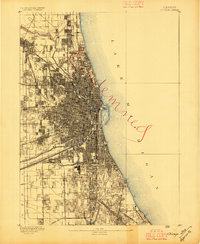 1889 Chicago1889 Print · USGSChicago in the late Victorian era was a sprawling rail and maritime titan on the shores of Lake Michigan. Genealogists and historians can trace the early urban grid and massive rail yards of the Belt Railroad and Chicago and Northwestern R.R.
 - 1891 Map of Chicago
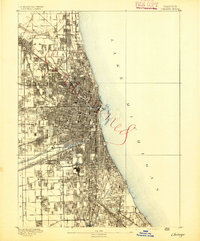 1891 Chicago1891 Print · USGSChicago was a booming rail and water hub in the late nineteenth century, just before the turn of the century. Trace the intricate network of the Illinois and Michigan Canal and major lines like the Wisconsin Central R.R. and Belt Railroad.
 - 1891 Map of Riverside
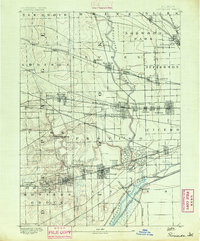 1891 Riverside1891 Print · USGSWest of Chicago in the early nineties, these developing suburbs formed a dense network of rail-side settlements and waterworks. Genealogists can trace early homesteads and vanished landmarks like the County Farm and Mammoth Springs alongside the banks of the Des Plaines River.
 - 1893 Map of Riverside
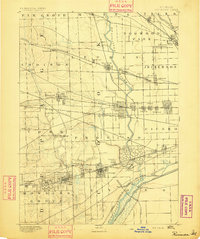 1893 Riverside1893 Print · USGSWest of Chicago in the 1890s, the landscape was a growing network of rail-centered villages and industrial canals. Genealogists and local historians can trace early property and town layouts in Riverside, Maywood, and the Dunning County Farm alongside the Desplaines River.
 - 1900 Map of Chicago
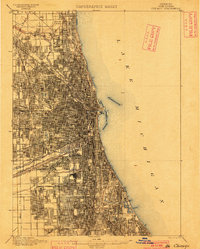 1900 Chicago1900 Print · USGSChicago at the turn of the century shows a city of massive infrastructure, from its emerging park system to its complex rail hubs. Researchers can trace the development of early neighborhoods like Mayfair and South Lynn or locate grounds like Rose Hill Cemetery and the historic Illinois and Michigan Canal.
 - 1900 Map of Riverside
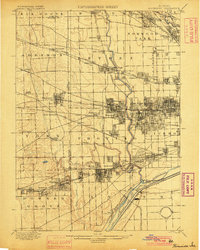 1900 Riverside1900 Print · USGSThe western Chicago suburbs and the Desplaines River valley are captured here during a period of massive industrial and rail expansion. Genealogists can locate early settlements like Fullersburg and Lace, or trace family plots in Waldheim Cemetery.
 - 1901 Map of Riverside
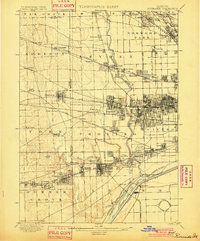 1901 Riverside1901 Print · USGSGreater Chicago and the Desplaines River valley are captured here at a moment of rapid rail expansion and civic engineering. Genealogists and historians can trace early settlements and burial sites like Waldheim Cemetery, the Chicago Union Transfer Railroad Yards, and Jefferson Park.4 unique versions available
 - 1901 Map of Chicago
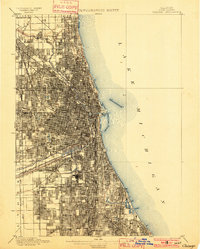 1901 Chicago1901 Print · USGSChicago was a booming industrial and rail hub in the late nineteenth century, defined by its lakefront and canal systems. Genealogists and urban historians can trace early neighborhood boundaries and rail corridors through Elsdon, Chicago Lawn, and Rose Hill Cemetery.5 unique versions available
 - 1928 Map of Berwyn
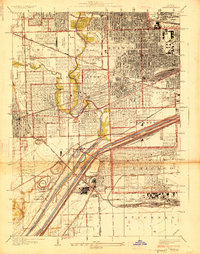 1928 Berwyn1928 Print · USGSThe suburban expansion west of Chicago is in full swing in the late twenties as industrial and rail networks reshape the land. Trace family history at Waldheim Cemetery or explore early aviation at the Maywood U S Mail Airport.3 unique versions available
 - 1928 Map of River Forest
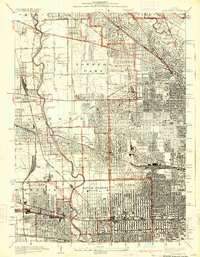 1928 River Forest1928 Print · USGSIn the late twenties, the Chicago city limits pushed westward toward the Des Plaines River, transforming prairie and farmland into a dense suburban grid. Genealogists and historians can trace family plots in St Joseph Cemetery or locate early landmarks like Rosary College and the Chicago State Hospital.4 unique versions available
 - 1929 Map of Englewood
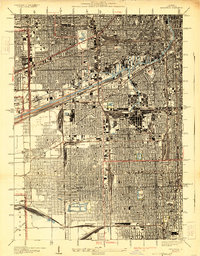 1929 Englewood1929 Print · USGSThe South Side of Chicago in the mid-twenties shows a landscape transformed by heavy industry and rail transport. Genealogy and local history researchers can trace the dense grid around the Union Stock Yards, Englewood, and the sprawling Corwith Yards.3 unique versions available
 - 1929 Map of Chicago Loop, 1939 Print
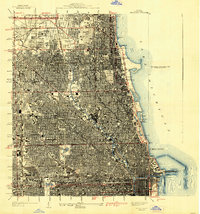 1929 Chicago Loop1939 Print · USGSChicago and its lakefront are captured here between the world wars, showing a city defined by its rigid grid and grand public parks. Genealogists and historians can trace old neighborhoods near Rose Hill Cemetery, the grounds of Loyola University, or the original layout of the Municipal Pier.2 unique versions available
 - 1953 Map of River Forest, 1955 Print
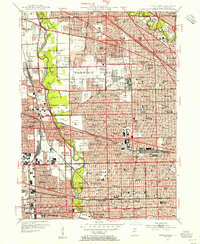 1953 River Forest1955 Print · USGSSuburban Cook County is seen in a period of dense growth during the early fifties, showing the maturing street grids of River Grove and Oak Park. Genealogists can locate numerous local landmarks like St Joseph Cemetery and schools such as Wright Jr College.
 - 1953 Map of Chicago Loop, 1956 Print
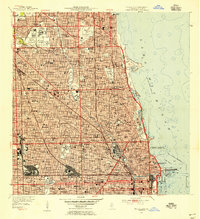 1953 Chicago Loop1956 Print · USGSMid-century Chicago is captured here at a moment of significant infrastructure expansion and urban density. Genealogists and historians can trace neighborhood parish schools like St Michael High Sch, local cemeteries such as Rosehill Cemetery, and the rise of the Congress Street Expressway.
 - 1953 Map of Englewood, 1956 Print
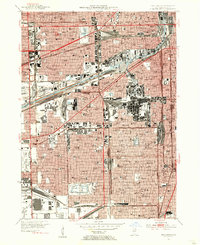 1953 Englewood1956 Print · USGSMid-century Southwest Chicago reveals a landscape defined by heavy industry and deep-rooted neighborhoods during the post-war era. Researchers can trace the massive rail infrastructure of the Indiana Harbor Belt and find local landmarks like Marquette Park and the US Quartermaster Depot.
 - 1953 Map of Berwyn, 1956 Print
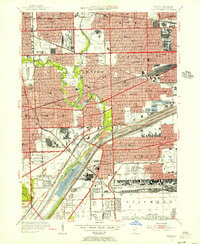 1953 Berwyn1956 Print · USGSWestern Cook County thrives as a mid-century industrial and transport hub, where dense residential blocks meet massive rail yards and canals. Genealogists can locate family sites across the Jewish Cemeteries or trace neighborhood landmarks like Morton Junior College and Stinson Airport.
 - 1953 Map of Chicago, 1964 Print
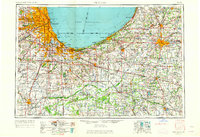 1953 Chicago1964 Print · USGSThe southern Lake Michigan shoreline was rapidly modernizing in the mid-fifties, balancing heavy industry with its famous academic centers. Researchers can trace the footprints of Notre Dame University or locate vanished sites like the Kingsbury Ordnance Plant and Meigs Field.5 unique versions available
 - 1957 Map of Chicago
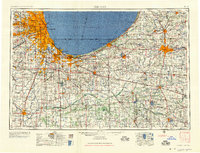 1957 Chicago1957 Print · USGSThe industrial heartland and southern Great Lakes shoreline are captured here during the peak of mid-century growth. Researchers can trace the massive Gary Steel Works, the grounds of the University of Notre Dame, and the early paths of the Tri-State Tollway.
 - 1963 Map of Chicago Loop, 1964 Print
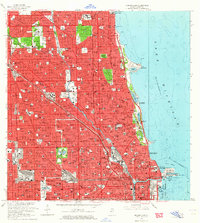 1963 Chicago Loop1964 Print · USGSChicago's north side neighborhoods and the Loop are captured in the early sixties as the modern expressway system reshaped the urban grid. Researchers can trace historic parish boundaries through sites like St Hyacinth Sch or locate long-standing landmarks like Riverview Park and Rosehill Cemetery.3 unique versions available
 - 1963 Map of River Forest, 1964 Print
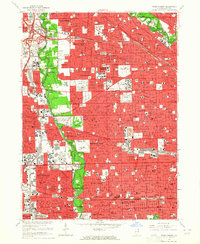 1963 River Forest1964 Print · USGSMid-century suburban expansion meets the Des Plaines riverfront in this 1960s view of western Cook County. Researchers can trace family history through numerous landmarks like St Joseph Cemetery, Maywood Park Racetrack, and the Chicago State Hospital.4 unique versions available
 - 1963 Map of Berwyn, 1965 Print
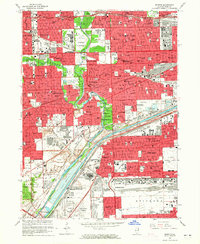 1963 Berwyn1965 Print · USGSThe western Chicago suburbs are seen here in the mid-sixties as post-war industrial and residential growth peaks. Local historians can trace family roots through the dense cemetery district or locate long-standing landmarks like Morton Jr College and the Chicago Zoological Park.3 unique versions available
 - 1963 Map of Englewood, 1965 Print
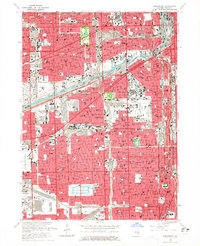 1963 Englewood1965 Print · USGSThe South Side of Chicago and Cicero are seen here in the mid-sixties, a period defined by the rise of the great expressways and dense rail corridors. Genealogists and local historians can trace parish life and neighborhoods through sites like St Rita High Sch, Elsdon, and the International Amphitheatre.4 unique versions available
 - 1980 Map of Chicago
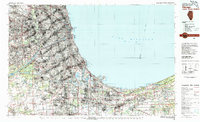 1980 Chicago1980 Print · USGSThe Chicago metropolitan area and the industrial shores of Northwest Indiana are captured here at the start of the 1980s. Genealogists and local historians can trace the vast urban landscape through landmarks like Loyola University, St Casimir Cemetery, and the busy docks of Calumet Harbor.
 - 1993 Map of Englewood
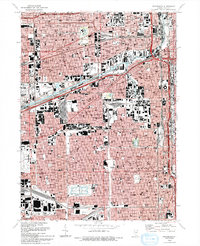 1993 Englewood1993 Print · USGSChicago's southwestern neighborhoods are captured here in the early nineties, showing a landscape defined by heavy rail and industrial canals. Researchers can trace local history through the many neighborhood institutions like the International Amphitheatre, Maria High Sch, and the rail hub at Elsdon.2 unique versions available
 - 1993 Map of Berwyn
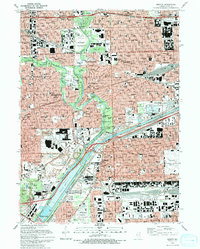 1993 Berwyn1993 Print · USGSThe western suburbs of Chicago and the busy Des Plaines riverfront are captured here in the early nineties. Genealogists and researchers can trace local landmarks like Waldheim Cemetery, the Brookfield Zoo, and the Hines VA Hospital.2 unique versions available
Showing maps 1-25 of 51
Frequently asked questions
- What are the different types of historical maps available for Austin?
- What is the oldest map of Austin?
- Where can I purchase historical maps of Austin for my home or office?
- Where can I download high-res historical maps of Austin?
- Are there historical topographic maps available for Austin?
- Is there historical aerial imagery available for Austin?
- Where are historical maps of Austin sourced from?