1950s Maps of Itasca, Illinois
Explore 6 historic maps of Itasca from the 1950s. These maps offer a rare glimpse into what life looked like during the 1950s — showing old roads, neighborhoods, homes, and landmarks that have changed or disappeared over time.
Whether you're researching your family's past, planning a metal detecting trip, or studying how Itasca's landscape evolved across the 1950s, these high-resolution maps are a powerful tool for exploring the history of this region.
- Focus on a specific era: All maps on this page are from the 1950s, giving you a focused view of this time period.
- See what’s changed: Compare century-old streets, trails, and buildings to today's modern landscape using overlays and satellite layers.
- Research with precision: Use these maps for genealogy, historical research, land use analysis, or educational projects.
- View, download, or print: Maps are fully viewable online in high resolution, and can be downloaded or printed for your own records.
Start exploring Itasca's history through authentic maps from the 1950s. This is your window into the past.
Itasca, IL maps
(6)- 1953 Map of Lombard, 1955 Print
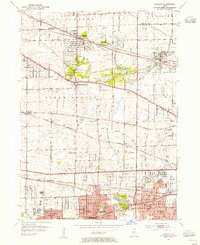 1953 Lombard1955 Print · USGSDuPage County was undergoing rapid postwar growth when this mid-century survey was conducted, showing the expansion of towns along major rail lines. Researchers can find numerous parochial schools and cemeteries like Sacred Heart Sch, St Pauls Cem, and the historic Old Mill.
 - 1953 Map of Elmhurst, 1956 Print
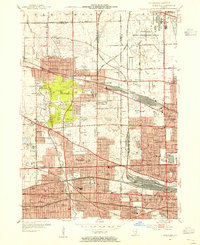 1953 Elmhurst1956 Print · USGSThe western suburbs of Chicago are seen in a period of intense postwar expansion, from the rising O'Hare Field to the core of Elmhurst. Genealogists and historians can trace local institutions and early aviation sites like the Mater Dolorosa Seminary, Zion Cem, and Sky Haven Airport.
 - 1953 Map of Chicago, 1964 Print
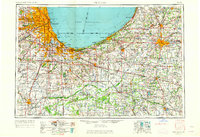 1953 Chicago1964 Print · USGSThe southern Lake Michigan shoreline was rapidly modernizing in the mid-fifties, balancing heavy industry with its famous academic centers. Researchers can trace the footprints of Notre Dame University or locate vanished sites like the Kingsbury Ordnance Plant and Meigs Field.5 unique versions available
 - 1954 Map of Wheaton, 1960 Print
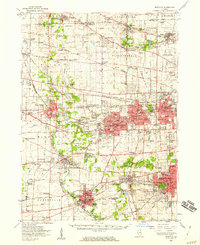 1954 Wheaton1960 Print · USGSDuPage County transitions from its agricultural roots to a bustling suburban corridor during the mid-fifties. Genealogists and historians can trace institutional landmarks like the Zace Sanitarium, Old Ontarioville Cem, and Sacred Heart Academy before later development.2 unique versions available
 - 1957 Map of Chicago
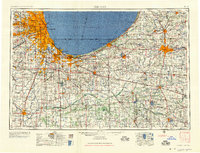 1957 Chicago1957 Print · USGSThe industrial heartland and southern Great Lakes shoreline are captured here during the peak of mid-century growth. Researchers can trace the massive Gary Steel Works, the grounds of the University of Notre Dame, and the early paths of the Tri-State Tollway.
 - 1958 Map of Aurora, 1969 Print
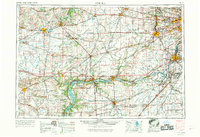 1958 Aurora1969 Print · USGSNorthern Illinois in the late fifties shows a landscape of powerful river industry and expanding transport corridors. Genealogists and historians can trace the development of Aurora and Joliet or locate sites like the Elwood Ordnance Plant and Starved Rock.3 unique versions available
End of results
Showing maps 1-6 of 6
Top cities near Itasca
- Chicago historical maps
- Aurora historical maps
- Naperville historical maps
- Elgin historical maps
- Schaumburg historical maps
- Arlington Heights historical maps
See more
Frequently asked questions
- What are the different types of historical maps available for Itasca?
- What is the oldest map of Itasca?
- Where can I purchase historical maps of Itasca for my home or office?
- Where can I download high-res historical maps of Itasca?
- Are there historical topographic maps available for Itasca?
- Is there historical aerial imagery available for Itasca?
- Where are historical maps of Itasca sourced from?