Old Maps of Johnson County, Illinois for Academic Research
Study the evolution of Johnson County with 108 high-resolution historic maps. Whether you're teaching, researching, or modeling changes in land use, these maps provide essential visual documentation of urban, environmental, and geographic change.
- Analyze long-term change: Track patterns in development, transportation, and natural features.
- Ideal for environmental or urban studies: Support academic projects with primary historical map data.
- Use in the classroom or lab: Educators and researchers rely on these maps to bring historical context to life.
These maps are a powerful tool for teaching, research, and visualizing how Johnson County has changed over the decades.
Johnson County, IL maps
(108)- 1917 Map of Brownfield
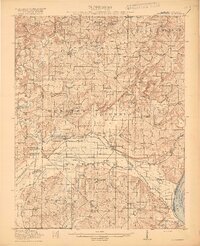 1917 Brownfield1917 Print · USGSSouthern Illinois in the years before the Great War is captured here through its dense network of rural schoolhouses and rail sidings. Researchers can locate family landmarks like Lackey Bridge, Allard College School, and Dixon Springs Sta (Renshaw P.O.).4 unique versions available
 - 1918 Map of Vienna, 1943 Print
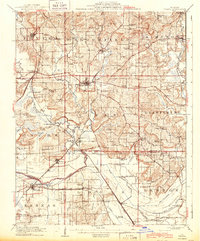 1918 Vienna1943 Print · USGSJohnson and Massac Counties appear here during the height of the steam rail era, centered on the crossroads of VIENNA. Local historians can trace old rural schoolhouses like Taylor School, family sites at Oliver Cemetery, and early settlements such as Ganntown and Samoth.
 - 1919 Map of Vienna
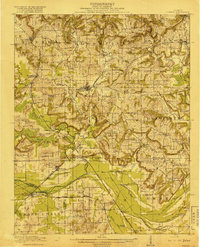 1919 Vienna1919 Print · USGSSouthern Illinois during the late teens reveals a landscape defined by extensive drainage engineering and a high density of rural schools. Genealogists can trace family roots at Oliver Cemetery or locate early rural schoolhouses like Peach School and Whiteside School.
 - 1920 Map of Dongola, 1953 Print
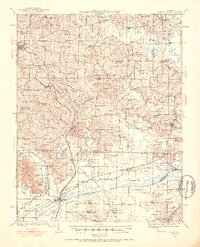 1920 Dongola1953 Print · USGSSouthern Illinois at the close of the 1910s reveals a landscape of river-bottom farms and busy rail junctions. Genealogists can trace family roots through dozens of local landmarks like Beech Grove School, Joppa Junction, and the State Hospital.3 unique versions available
 - 1922 Map of Carbondale
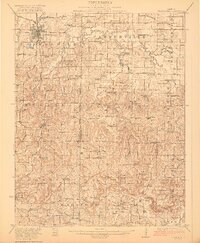 1922 Carbondale1922 Print · USGSSouthern Illinois in the early 1920s is captured here at the height of its rail-driven rural development. Genealogists can trace family connections through dozens of named rural sites like Stone School, Cottage Home Church, and the Illinois Central corridor.3 unique versions available
 - 1923 Map of Dongola
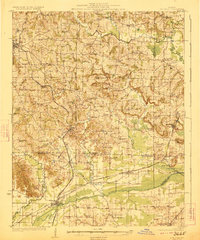 1923 Dongola1923 Print · USGSSouthern Illinois in the early twenties reveals a landscape of marshy river bottoms and upland family farms. Researchers can trace ancestral locations through dozens of named rural sites like St Johns Church, Egypt School, and Hoppa Junction.2 unique versions available
 - 1925 Map of Marion
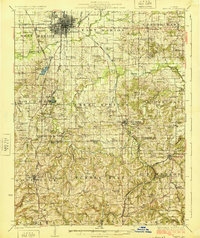 1925 Marion1925 Print · USGSSouthern Illinois in the mid-twenties was a landscape of coal-country rail hubs and remote ridge-top settlements. Genealogists and historians can trace the network of country schools and churches like Coalbank Springs Church, the industrial footprint of Pilleys Mill, and the rail corridors through Tunnel Hill.3 unique versions available
 - 1925 Map of Harrisburg
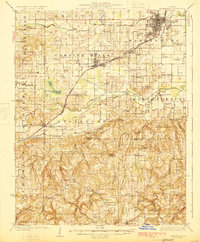 1925 Harrisburg1925 Print · USGSSouthern Illinois coal country is in its prime during the 1920s, showing a landscape of rail-connected mining towns and remote hill settlements. Genealogists can locate dozens of country schools and churches like Mayhew School and Salem Church, alongside industrial landmarks like Wasson Mine No 2.3 unique versions available
 - 1939 Map of Harrisburg, 1959 Print
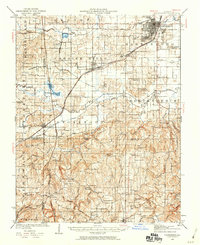 1939 Harrisburg1959 Print · USGSSouthern Illinois at the end of the Depression era reveals a landscape of growing coal towns and dozens of rural school districts. Genealogists can trace family connections at Ward Cem, Stonefort, and rural outposts like McCormick and Allenby.
 - 1940 Map of Marion, 1958 Print
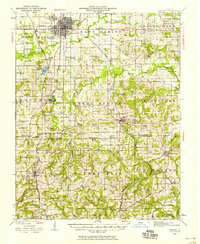 1940 Marion1958 Print · USGSSouthern Illinois during the early 1940s reveals a landscape defined by its rail junctions and scattered rural schools. Genealogists can trace family roots through sites like Bainbridge Cem, Pulleys Mill, and the many schools like Skaggs School.
 - 1941 Map of Carbondale, 1955 Print
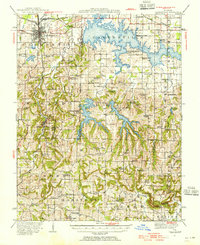 1941 Carbondale1955 Print · USGSSouthern Illinois was undergoing a transformation in the early 1940s as new reservoirs reshaped the topography near Carbondale. Researchers can trace rural life through dozens of named sites like Clemmenstown School and South County Line Church.2 unique versions available
 - 1942 Map of Vienna, 1958 Print
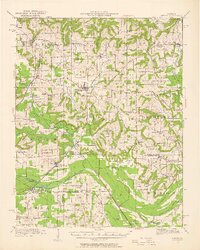 1942 Vienna1958 Print · USGSSouthern Illinois hill country and the Cache River lowlands are shown here during the early 1940s, highlighting a landscape of rail-connected towns and rural school districts. Researchers can trace family roots through numerous sites like Oliver Cemetery, Tall Tree School, and the Crossroads Store.2 unique versions available
 - 1949 Map of Paducah
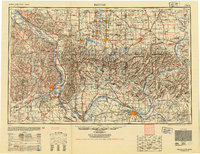 1949 Paducah1949 Print · USGSThe confluence of the Ohio, Mississippi, Tennessee, and Cumberland rivers at the close of the 1940s reveals a region bound by water and rail. Researchers can trace historic river landings, timberlands in the Shawnee National Forest, and the coal-mining infrastructure around West Frankfort and Herrin.2 unique versions available
 - 1950 Map of Paducah
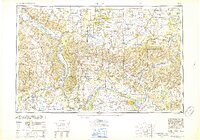 1950 Paducah1950 Print · USGSThe confluence of the great midwestern rivers defines this mid-century landscape at the intersection of Illinois, Kentucky, and Missouri. Genealogists and historians can trace the rail-and-river economy through the hubs of Paducah, Cairo, and Metropolis or locate family roots near the Wildcat Hills.
 - 1954 Map of Paducah
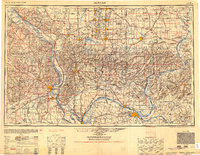 1954 Paducah1954 Print · USGSSouthern Illinois and Western Kentucky intersect at the great river confluences during this mid-century era of rail and river industry. Genealogists and historians can trace family roots and commerce through river towns like Cairo, Metropolis, and Golconda, or along the tracks of the Illinois Central Railroad.2 unique versions available
 - 1961 Map of Paducah
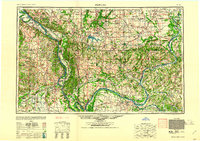 1961 Paducah1961 Print · USGSThe Lower Ohio Valley at mid-century is a landscape defined by its great rivers and newly formed reservoirs. Researchers can trace the riverfronts of Paducah and Metropolis, or locate smaller settlements like Old Shawneetown and Cave in Rock along the banks.2 unique versions available
 - 1961 Map of Stonefort, 1962 Print
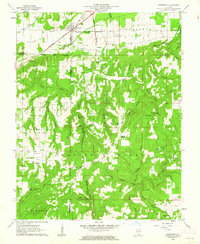 1961 Stonefort1962 Print · USGSSouthern Illinois at the start of the sixties shows a network of family cemeteries and rural parishes tucked between the ridges of the Shawnee National Forest. Genealogists can trace family names at Rushing Cem and Old Zion Cem, or locate the Reagan Sch and McCormick Lookout Tower.2 unique versions available
 - 1961 Map of Harrisburg, 1965 Print
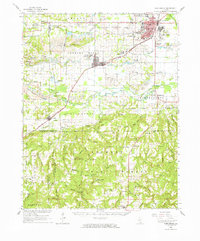 1961 Harrisburg1965 Print · USGSSouthern Illinois coal country and forest lands meet in the early sixties as the rail networks of the New York Central serve a landscape of active mines. Researchers can locate family cemeteries and vanished stops like Dykersburg, Newcastle, and the Sahara Mine No 16 Cem.
 - 1962 Map of Reevesville, 1963 Print
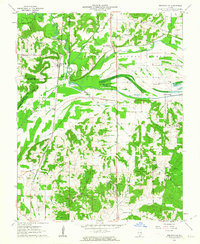 1962 Reevesville1963 Print · USGSSouthern Illinois rural life centers on the Illinois Central railroad and the Shawnee National Forest in the early sixties. Genealogists can locate family landmarks like Mt Olive Cem, Benton Ch, and the vanished Bay Valley School.3 unique versions available
 - 1962 Map of Glendale, 1963 Print
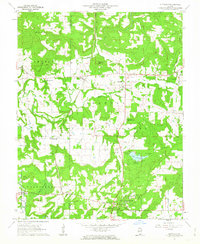 1962 Glendale1963 Print · USGSSouthern Illinois forest country in the early sixties was a landscape of remote ridges and rail-side settlements. Genealogists can trace family roots through sites like Rock Springs Ch or the McShanahan Cem while rail fans follow the Illinois Central line.
 - 1962 Map of Brownfield, 1965 Print
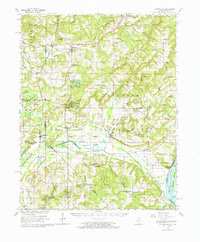 1962 Brownfield1965 Print · USGSSouthern Illinois at the peak of the mid-century era shows a landscape where the deep woods of the Shawnee National Forest meet the Ohio River. Genealogists and historians can trace rail-side towns like Reevesville and discover dozens of family burial grounds, including Barger Cem and Nelson Cem.
 - 1964 Map of Paducah
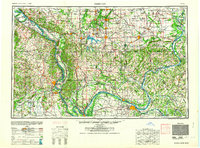 1964 Paducah1964 Print · USGSThe river-and-rail corridor of Southern Illinois and Western Kentucky is captured here during the height of the mid-century industrial era. Genealogists and researchers can trace local landmarks across several counties, from the rail yards of Paducah to the waters of Crab Orchard Lake and Kentucky Reservoir.2 unique versions available
 - 1966 Map of Bloomfield, 1967 Print
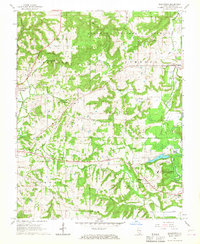 1966 Bloomfield1967 Print · USGSSouthern Illinois during the mid-sixties reveals a landscape of forestry and rural infrastructure at the edge of the Shawnee National Forest. Researchers can trace old family lineages at Odd Fellows Cem and Whiteside Cem, or locate the Illinois State Prison (Vienna Branch) and local landmarks like Grantsburg Sch.3 unique versions available
 - 1966 Map of Karnak, 1967 Print
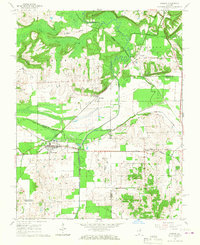 1966 Karnak1967 Print · USGSThe confluence of three counties in southern Illinois comes alive in this mid-sixties survey, showcasing a landscape defined by the drainage of the Cache River. Trace the rail lines of the New York Central through Karnak or locate family sites like Miller Cem and West Eden Ch.3 unique versions available
 - 1966 Map of Cypress, 1967 Print
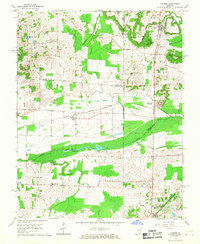 1966 Cypress1967 Print · USGSSouthern Illinois river bottoms and rail lines come alive in the mid-1960s as the Chicago and Eastern Illinois railroad threads through these three-county borderlands. Genealogists can trace family roots through sites like Masonic Cem, Century Sch, and the unique Charcoal Ovens near White Hill.
Showing maps 1-25 of 108
Top cities of Johnson County
- Vienna historical maps
- Goreville historical maps
- Cypress historical maps
- New Burnside historical maps
- Buncombe historical maps
- Belknap historical maps
See more
Frequently asked questions
- What are the different types of historical maps available for Johnson County?
- What is the oldest map of Johnson County?
- Where can I purchase historical maps of Johnson County for my home or office?
- Where can I download high-res historical maps of Johnson County?
- Are there historical topographic maps available for Johnson County?
- Is there historical aerial imagery available for Johnson County?
- Where are historical maps of Johnson County sourced from?