Old Maps of Poag, Illinois
Explore 17 old maps of Poag, spanning from 1927 to today. These high-resolution historic maps reveal how streets, neighborhoods, landmarks, and natural features evolved over time — perfect for genealogy, metal detecting, research, and local history exploration.
What you can do with these maps:
- See how Poag changed over time: Compare historical maps to modern-day views to trace roads, homesites, rail lines & more.
- View detailed metadata: Each map includes creators, publishers, year, scale, and archive source.
- Overlay maps with satellite & LiDAR: Visualize the past alongside modern tools to explore terrain & human change.
- Trusted historical sources: Maps sourced from the USGS, Library of Congress, and other archives.
- Access maps your way: View online, download high-res files, or order prints for personal or research use.
Start exploring old maps of Poag to uncover forgotten places, hidden landmarks, and the deep history beneath your feet.
Poag, IL maps
(17)- 1927 Map of Alton
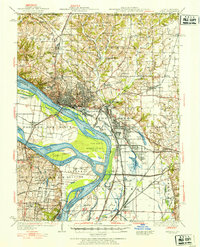 1927 Alton1927 Print · USGSThe industrial and riverfront corridor of the Mississippi and Missouri confluence is captured here during a period of heavy rail and ferry traffic. Researchers can trace historic family locations through dozens of rural landmarks like Monticello Seminary, Greenwood Cem, and the City of St Louis Farms.
 - 1934 Map of Alton
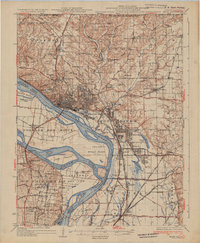 1934 Alton1934 Print · USGSThe confluence of the Mississippi and Missouri rivers in the early 1930s shows a dense industrial and rail corridor centered on Alton. Genealogists and researchers can trace dozens of rural schools and landmarks like Monticello Seminary, Mt Olive Church, and the City of St Louis Farms.2 unique versions available
 - 1948 Map of Wood River, 1955 Print
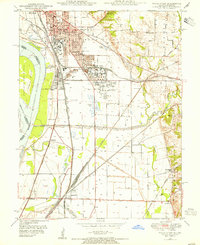 1948 Wood River1955 Print · USGSMadison County industrial hubs and river lowlands are captured here in the late 1940s as the regional energy sector expanded. Genealogists and historians can trace the foundations of Wood River refineries alongside local landmarks like St Paul Ch and the North Coal Mine.
 - 1949 Map of Saint Louis
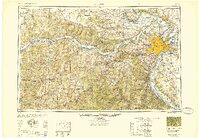 1949 Saint Louis1949 Print · USGSGreater St. Louis and its surrounding river valleys are captured here just after the war, showing the metropolitan core and the rural Ozark fringe. Researchers can trace the sprawling rail network of the Wabash RR or locate landmarks like Meramec Caverns Airport and Scott Air Force Base.2 unique versions available
 - 1951 Map of Wood River
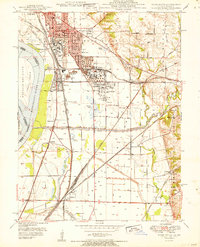 1951 Wood River1951 Print · USGSThe industrial heart of Madison County comes into focus in the early 1950s, showing the massive refining operations and rail hubs along the Mississippi. Researchers can trace local history through the Oil Refinery sites, Bohm Sch, and Sunset Hill Cem.
 - 1955 Map of Wood River, 1959 Print
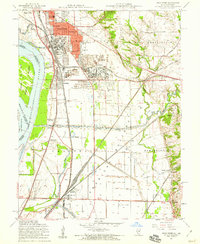 1955 Wood River1959 Print · USGSMid-century Madison County thrives at the junction of heavy industry and historic bottomlands as the postwar rail network expands. Researchers can trace family roots through the Wanda Cem or locate the Indian Mounds and the Sunset Speedway.4 unique versions available
 - 1955 Map of Alton, 1960 Print
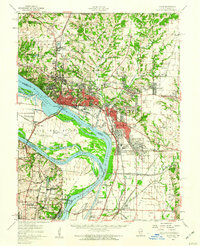 1955 Alton1960 Print · USGSThe industrial riverfronts and expanding rail corridors of the Metro East are captured here in the mid-fifties. Researchers can trace the development of Alton State Hospital, the grounds of Monticello College, and historic sites like Fort Bellefontaine.2 unique versions available
 - 1962 Map of St. Louis
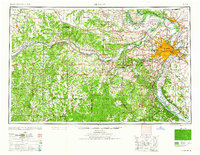 1962 St. Louis1962 Print · USGSThe mid-century gateway to the west shows the metropolitan expansion of St Louis alongside its critical river confluences. Genealogists and historians can trace the rail corridors of the Missouri Pacific RR and settlements from Fulton to De Soto.
 - 1963 Map of St. Louis, 1970 Print
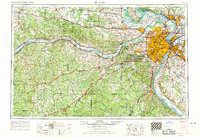 1963 St. Louis1970 Print · USGSSt. Louis and its surrounding river valleys are captured here during the peak of mid-century suburban expansion and industrial activity. Trace the historic rail routes of the Norfolk and Western Ry or locate the St Louis Ordnance Plant and early stretches of US Highway 66.4 unique versions available
 - 1966 Map of St. Louis
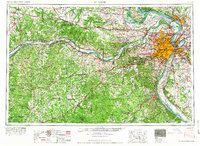 1966 St. Louis1966 Print · USGSThe St. Louis metropolitan area and its surrounding river valleys are captured here during the mid-sixties era of suburban growth and industrial strength. Genealogists and historians can trace the foundations of local communities through sites like Old Pioneer Cem, Parks College, and the Jefferson Barracks Military Reservation.
 - 1985 Map of St Louis
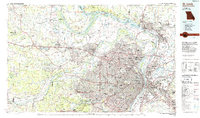 1985 St Louis1985 Print · USGSThe St. Louis metropolitan area and its river confluences are captured here during a period of significant suburban expansion in the 1980s. Genealogists and historians can trace the development of older neighborhoods and landmarks like Jefferson Barracks, Cahokia Mounds State Park, and Washington University.3 unique versions available
 - 1994 Map of Wood River, 1995 Print
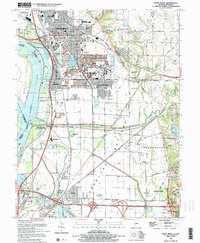 1994 Wood River1995 Print · USGSThe industrial heart of Madison County and the lowlands of the Mississippi floodplain are detailed in this mid-nineties survey. Genealogists and local historians can trace family sites at Springley Cem, the grounds of Southern Illinois University, or the old rail stops at Poag.2 unique versions available
 - 2012 Map of Wood River, 2012 Print
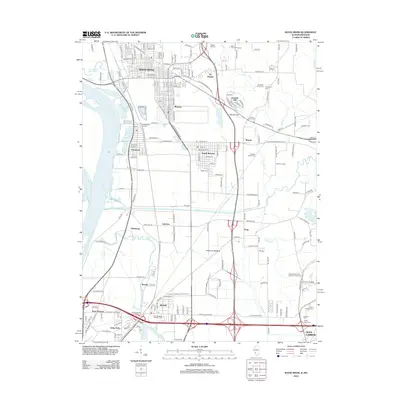 2012 Wood River2012 Print · USGSThe industrial corridor and family farmsteads of Madison County are captured here in the early twenty-first century. Genealogists and local researchers can trace numerous family burial sites like Vaughn Hill Cem and Smith Family Cem near the growth of Wood River and Roxana.
 - 2015 Map of Wood River, 2015 Print
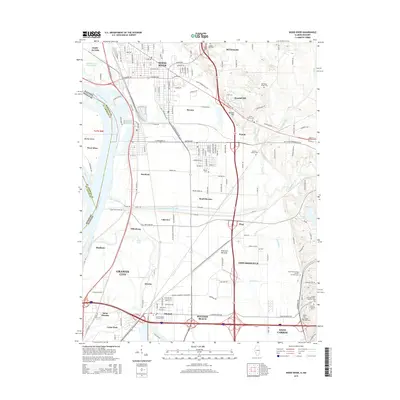 2015 Wood River2015 Print · USGSThe industrial riverfronts of Madison County appear in high detail during the mid-2010s, showing the intersection of the Mississippi and Missouri Rivers. Genealogists can trace family heritage at Vaughn Hill Cem, Wanda Cem, and the Sanders Family Cem.
 - 2018 Map of Wood River, 2018 Print
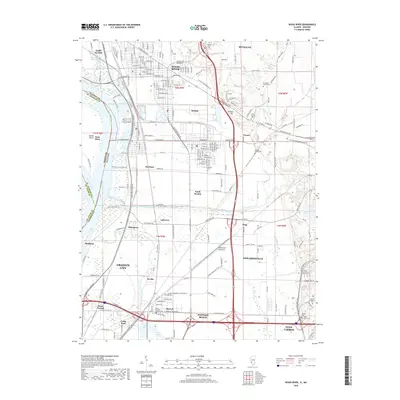 2018 Wood River2018 Print · USGSThe industrial riverfront and fertile floodplains of Madison County are documented here in the late 2010s. Researchers can trace family history through several private burial grounds like Smith Family Cem and Vaughn Hill Cem, or explore the unique layout of Pontoon Beach and the Cahokia Diversion Channel.
 - 2021 Map of Wood River, 2021 Print
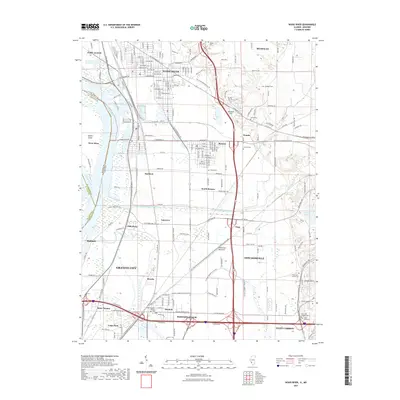 2021 Wood River2021 Print · USGSThe industrial heart of the Mississippi floodplain is captured here in the early twenty-first century. Genealogists and local historians can trace family roots through numerous burial sites like Nix Judy Pioneer Cem and Saint Paul Church Cem or study the rail and water networks of Wood River and Hartford.
 - 2024 Map of Wood River, 2024 Print
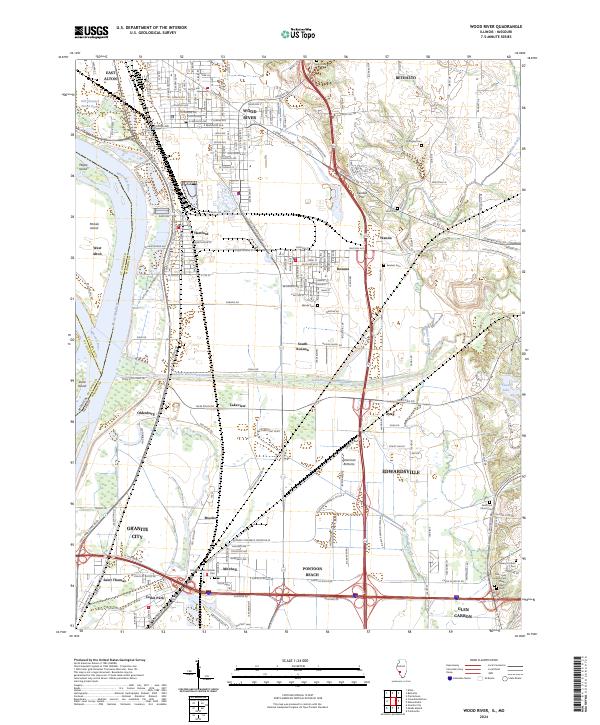 2024 Wood River2024 Print · USGSModern Madison County industry meets deep-rooted history in this 2024 landscape of the Mississippi floodplain. Researchers can trace ancestral burial sites at Nix-Judy Pioneer Cem and Springley Cem or explore the massive Cahokia Diversion Channel.
End of results
Showing maps 1-17 of 17
Top cities near Poag
- St. Louis historical maps
- Belleville historical maps
- O'Fallon historical maps
- Granite City historical maps
- Edwardsville historical maps
- Alton historical maps
See more
Frequently asked questions
- What are the different types of historical maps available for Poag?
- What is the oldest map of Poag?
- Where can I purchase historical maps of Poag for my home or office?
- Where can I download high-res historical maps of Poag?
- Are there historical topographic maps available for Poag?
- Is there historical aerial imagery available for Poag?
- Where are historical maps of Poag sourced from?