1960s Maps of Randolph County, Illinois
Explore 16 historic maps of Randolph County from the 1960s. These maps offer a rare glimpse into what life looked like during the 1960s — showing old roads, neighborhoods, homes, and landmarks that have changed or disappeared over time.
Whether you're researching your family's past, planning a metal detecting trip, or studying how Randolph County's landscape evolved across the 1960s, these high-resolution maps are a powerful tool for exploring the history of this region.
- Focus on a specific era: All maps on this page are from the 1960s, giving you a focused view of this time period.
- See what’s changed: Compare century-old streets, trails, and buildings to today's modern landscape using overlays and satellite layers.
- Research with precision: Use these maps for genealogy, historical research, land use analysis, or educational projects.
- View, download, or print: Maps are fully viewable online in high resolution, and can be downloaded or printed for your own records.
Start exploring Randolph County's history through authentic maps from the 1960s. This is your window into the past.
Randolph County, IL maps
(16)- 1960 Map of Rolla
 1960 Rolla1960 Print · USGSThe Ozark Highlands in the mid-twentieth century reveal a landscape of deep timber and heavy industry. Researchers can trace the rail-and-mine economy through the St Louis-San Francisco RR and the Iron Mountain Mine, alongside the growth of Fort Leonard Wood.
 - 1961 Map of Paducah
 1961 Paducah1961 Print · USGSThe Lower Ohio Valley at mid-century is a landscape defined by its great rivers and newly formed reservoirs. Researchers can trace the riverfronts of Paducah and Metropolis, or locate smaller settlements like Old Shawneetown and Cave in Rock along the banks.2 unique versions available
 - 1962 Map of St. Louis
 1962 St. Louis1962 Print · USGSThe mid-century gateway to the west shows the metropolitan expansion of St Louis alongside its critical river confluences. Genealogists and historians can trace the rail corridors of the Missouri Pacific RR and settlements from Fulton to De Soto.
 - 1962 Map of Belleville
 1962 Belleville1962 Print · USGSSouthern Illinois in the late fifties reveals a landscape of industrial growth and ancient landmarks before the full expansion of the interstate system. Genealogists can trace family names and rural post offices near Centralia, Salem, and the historic Monks Mound.
 - 1963 Map of St. Louis, 1970 Print
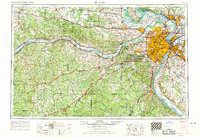 1963 St. Louis1970 Print · USGSSt. Louis and its surrounding river valleys are captured here during the peak of mid-century suburban expansion and industrial activity. Trace the historic rail routes of the Norfolk and Western Ry or locate the St Louis Ordnance Plant and early stretches of US Highway 66.4 unique versions available
 - 1964 Map of Paducah
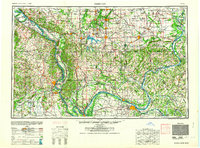 1964 Paducah1964 Print · USGSThe river-and-rail corridor of Southern Illinois and Western Kentucky is captured here during the height of the mid-century industrial era. Genealogists and researchers can trace local landmarks across several counties, from the rail yards of Paducah to the waters of Crab Orchard Lake and Kentucky Reservoir.2 unique versions available
 - 1965 Map of Tilden, 1966 Print
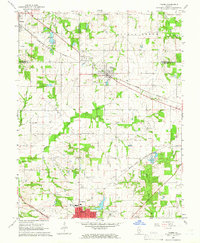 1965 Tilden1966 Print · USGSSouthwestern Illinois was a critical rail and energy hub in the 1960s, shaped by three major railroad lines and an emerging aviation presence. Local historians can trace the development of Sparta and Tilden alongside landmarks like St Johns Ch and the Caledonia Cemetery.2 unique versions available
 - 1965 Map of Percy, 1966 Print
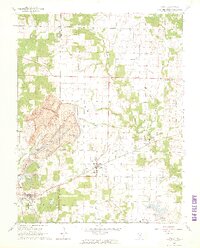 1965 Percy1966 Print · USGSRandolph and Perry Counties are shown in the mid-1960s, just as coal extraction was reshaping the Southern Illinois landscape. Genealogists and historians can trace the massive Strip Mine near Percy or locate family sites like Weitzel Cem and the Lost Prairie Sch.3 unique versions available
 - 1965 Map of Coulterville, 1966 Print
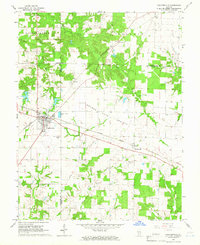 1965 Coulterville1966 Print · USGSThe Illinois prairie meets the railroad junction in the mid-1960s at the intersection of three counties. Genealogists and rail historians can trace the paths of the Illinois Central through Coulterville or find local landmarks like Bethel Cem and McKinley.2 unique versions available
 - 1965 Map of Steeleville, 1966 Print
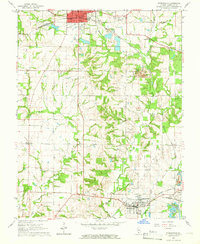 1965 Steeleville1966 Print · USGSRandolph County's coal and rail corridors are frozen in time during the mid-sixties, from the streets of Sparta to the mills of Steeleville. Researchers can trace old family sites at Union Ch and Peace Cem or locate industrial landmarks like the local STRIP MINE.2 unique versions available
 - 1966 Map of Rolla
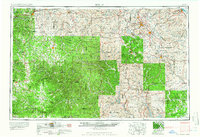 1966 Rolla1966 Print · USGSThe Missouri Ozarks are revealed here in the mid-1960s, showing the intersection of heavy industry and sprawling national forests. Trace the development of the Lead Belt near Flat River or locate family roots in vanished hamlets like Enough and Howes Mill.
 - 1966 Map of St. Louis
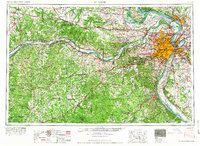 1966 St. Louis1966 Print · USGSThe St. Louis metropolitan area and its surrounding river valleys are captured here during the mid-sixties era of suburban growth and industrial strength. Genealogists and historians can trace the foundations of local communities through sites like Old Pioneer Cem, Parks College, and the Jefferson Barracks Military Reservation.
 - 1968 Map of Rockwood, 1969 Print
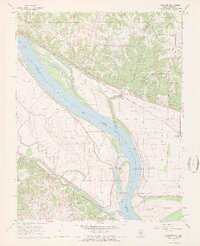 1968 Rockwood1969 Print · USGSThe Mississippi River borderlands of Illinois and Missouri are captured here in the late sixties. Trace the many family burial sites like Woods Cem and Hindman Cem, or the rail lines of the Missouri Pacific near Rockwood.3 unique versions available
 - 1968 Map of Willisville, 1970 Print
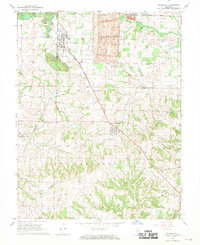 1968 Willisville1970 Print · USGSWillisville and Campbell Hill sat at the intersection of rail and resource extraction during the late sixties. Genealogists and local historians can trace family burial grounds at St Lukes Cem and Barrow Cem or locate the Gulf Mobile and Ohio rail line.2 unique versions available
 - 1968 Map of Welge, 1970 Print
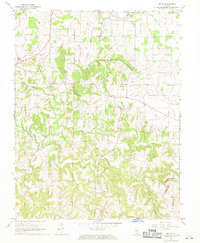 1968 Welge1970 Print · USGSIn the late sixties, the rural communities of southern Illinois remained centered around family farms and country churches. Genealogists can trace local history through numerous landmarks like Paradise Cem, St Johns Ch, and the settlement of Welge.
 - 1968 Map of Chester, 1993 Print
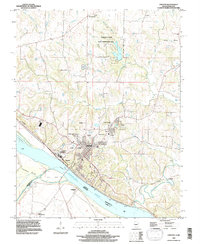 1968 Chester1993 Print · USGSChester and the Mississippi River bluffs are captured here during a period of late-century infrastructure and institutional growth. Researchers can trace the sprawling grounds of the Menard State Correctional Center, old family burial grounds like Mann Cemetery, and the riverfront settlement of Claryville.
End of results
Showing maps 1-16 of 16
Top cities of Randolph County
- Chester historical maps
- Sparta historical maps
- Red Bud historical maps
- Steeleville historical maps
- Coulterville historical maps
- Percy historical maps
See more
Frequently asked questions
- What are the different types of historical maps available for Randolph County?
- What is the oldest map of Randolph County?
- Where can I purchase historical maps of Randolph County for my home or office?
- Where can I download high-res historical maps of Randolph County?
- Are there historical topographic maps available for Randolph County?
- Is there historical aerial imagery available for Randolph County?
- Where are historical maps of Randolph County sourced from?