2000s (21st Century) Maps of Castle Junction, Illinois
Explore 6 historic maps of Castle Junction from the 2000s (21st Century). These maps offer a rare glimpse into what life looked like during the 2000s — showing old roads, neighborhoods, homes, and landmarks that have changed or disappeared over time.
Whether you're researching your family's past, planning a metal detecting trip, or studying how Castle Junction's landscape evolved across the 2000s, these high-resolution maps are a powerful tool for exploring the history of this region.
- Focus on a specific era: All maps on this page are from the 2000s, giving you a focused view of this time period.
- See what’s changed: Compare century-old streets, trails, and buildings to today's modern landscape using overlays and satellite layers.
- Research with precision: Use these maps for genealogy, historical research, land use analysis, or educational projects.
- View, download, or print: Maps are fully viewable online in high resolution, and can be downloaded or printed for your own records.
Start exploring Castle Junction's history through authentic maps from the 2000s. This is your window into the past.
Castle Junction, IL maps
(6)- 2000 Map of Milan, 2001 Print
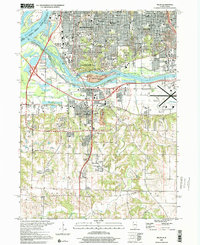 2000 Milan2001 Print · USGSThe Quad Cities region comes into sharp focus at the end of the century, where the river-based industrial legacy meets modern suburban expansion. Researchers can trace family sites from Chippiannock Cem to rural outposts like Coyne Center and Oak Grove.
 - 2012 Map of Milan, 2012 Print
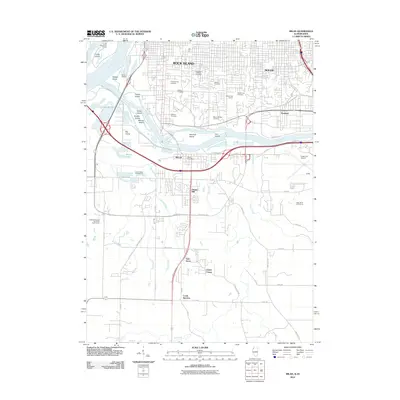 2012 Milan2012 Print · USGSThe Illinois-Iowa borderlands are captured here in the early twenty-first century as the Quad Cities expand south of the Rock River. Genealogists can locate family sites at Chippiannock Cemetery or William Carr Cemetery, while others trace the growth of Milan and Coyne Center.2 unique versions available
 - 2015 Map of Milan, 2015 Print
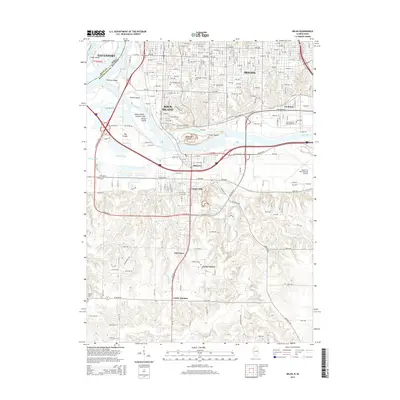 2015 Milan2015 Print · USGSThe Quad Cities area in the mid-2010s shows a landscape defined by the branching Rock River and its numerous islands. Local historians can trace established neighborhoods and numerous burial sites like Chippiannock Cem, Hebrew Cem, and William Carr Cem.
 - 2018 Map of Milan, 2018 Print
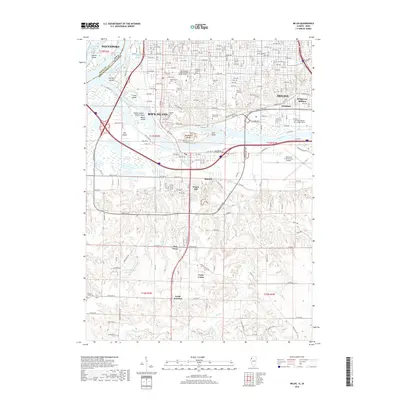 2018 Milan2018 Print · USGSThe Illinois-Iowa border communities are charted here at the confluence of the Mississippi and Rock Rivers. Local historians can trace the development of Milan and Coyne Center alongside significant landmarks like Chippiannock Cem and the Quad City International Airport.
 - 2021 Map of Milan, 2021 Print
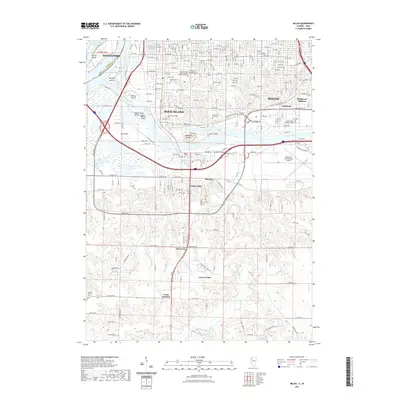 2021 Milan2021 Print · USGSThe Tri-Cities area of Iowa and Illinois appears in the early twenty-first century as a complex landscape of industry, aviation, and river life. Researchers can locate numerous local landmarks such as Chippiannock Cem, Ginger Hill, and the Quad City International Airport.
 - 2024 Map of Milan, 2024 Print
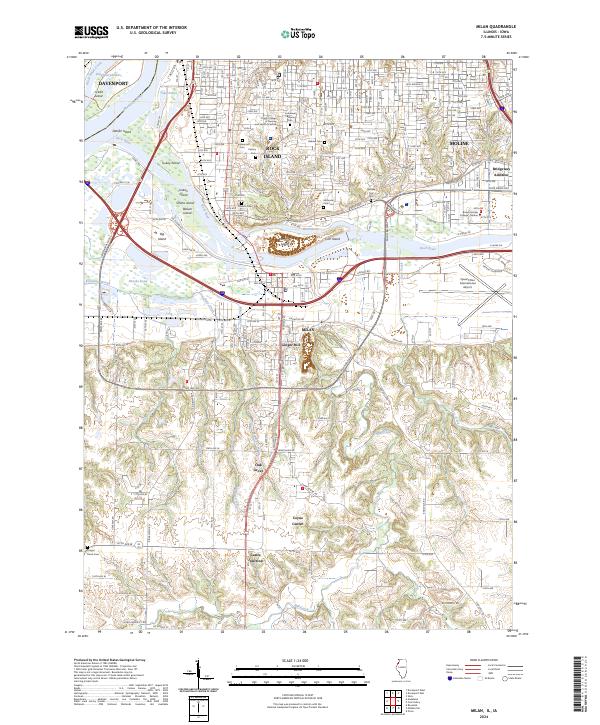 2024 Milan2024 Print · USGSThe confluence of the Mississippi and Rock Rivers comes alive in this current-era mapping of the Quad Cities region. Researchers can trace the boundaries of historic burial grounds like Chippiannock Cem and Hebrew Cem, or locate landmarks such as Ginger Hill and Credit Island.
End of results
Showing maps 1-6 of 6
Top cities near Castle Junction
- Davenport historical maps
- Moline historical maps
- Bettendorf historical maps
- Rock Island historical maps
- East Moline historical maps
- Silvis historical maps
See more
Frequently asked questions
- What are the different types of historical maps available for Castle Junction?
- What is the oldest map of Castle Junction?
- Where can I purchase historical maps of Castle Junction for my home or office?
- Where can I download high-res historical maps of Castle Junction?
- Are there historical topographic maps available for Castle Junction?
- Is there historical aerial imagery available for Castle Junction?
- Where are historical maps of Castle Junction sourced from?