1970s Maps of White County, Illinois
Explore 10 historic maps of White County from the 1970s. These maps offer a rare glimpse into what life looked like during the 1970s — showing old roads, neighborhoods, homes, and landmarks that have changed or disappeared over time.
Whether you're researching your family's past, planning a metal detecting trip, or studying how White County's landscape evolved across the 1970s, these high-resolution maps are a powerful tool for exploring the history of this region.
- Focus on a specific era: All maps on this page are from the 1970s, giving you a focused view of this time period.
- See what’s changed: Compare century-old streets, trails, and buildings to today's modern landscape using overlays and satellite layers.
- Research with precision: Use these maps for genealogy, historical research, land use analysis, or educational projects.
- View, download, or print: Maps are fully viewable online in high resolution, and can be downloaded or printed for your own records.
Start exploring White County's history through authentic maps from the 1970s. This is your window into the past.
White County, IL maps
(10)- 1971 Map of Golden Gate, 1973 Print
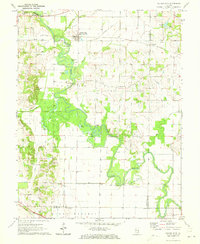 1971 Golden Gate1973 Print · USGSSoutheastern Illinois in the early 1970s is characterized by the winding oxbows of the Little Wabash River and active riverfront industry. Genealogists can trace several family burial sites including Wilson Cem and Stewart Cem, while historians can locate the Old Iron Bridge and Southern Railway corridor.
 - 1971 Map of Albion South, 1973 Print
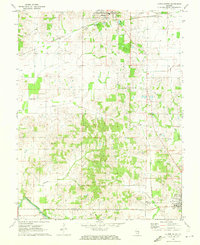 1971 Albion South1973 Print · USGSEdwards County in the early seventies shows a landscape where historic river crossings meet a growing energy sector. Genealogists and historians can trace numerous rural burial grounds like Birk Prairie Cem and old river landmarks such as Dixon Shoals near the Little Wabash River.2 unique versions available
 - 1971 Map of Burnt Prairie, 1973 Print
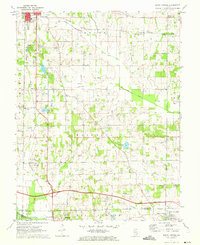 1971 Burnt Prairie1973 Print · USGSSoutheastern Illinois reveals a landscape of active petroleum extraction and family homesteads in the early seventies. Genealogists and historians can trace numerous rural burial grounds like Koontz Cem and Gifford Cem alongside the heavy rail presence of the Baltimore and Ohio RR.
 - 1974 Map of Enfield, 1977 Print
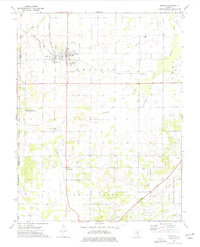 1974 Enfield1977 Print · USGSEnfield and the surrounding White County prairie lands are shown here in the mid-1970s at the height of the local rail and oil era. Genealogists and historians can trace numerous rural landmarks like Wesley Chapel, Sharon Ch, and the Enfield Cem.
 - 1974 Map of Crossville, 1977 Print
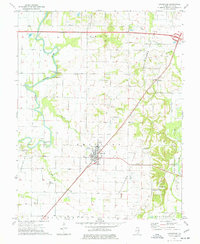 1974 Crossville1977 Print · USGSWhite County’s oil and river economy is on full display in the 1970s as the Albion Oil Field surrounds the hub of Crossville. Genealogists and historians can trace local landmarks like Stokes Chapel, the Riverside Cemetery, and the Penn Central rail line.
 - 1974 Map of Maunie, 1977 Print
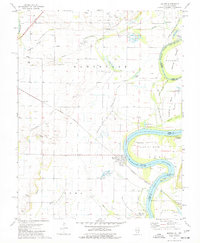 1974 Maunie1977 Print · USGSThe Wabash River borderlands in the mid-seventies reveal a landscape defined by oil extraction and river navigation. Genealogists and local historians can trace family plots like Kuykendall Cem and explore riverside life near Maunie and Rising Sun.
 - 1974 Map of Springerton, 1977 Print
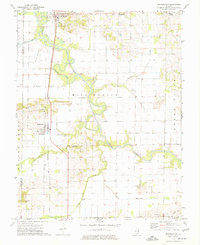 1974 Springerton1977 Print · USGSWhite and Hamilton Counties appear in the mid-1970s as a landscape of productive bottomlands and tight-knit rural communities. Genealogists can locate several local burial sites such as Kitty Sweeten Cem and Hammack Cem, or trace the rail route of the Baltimore and Ohio through Springerton.
 - 1974 Map of Centerville, 1977 Print
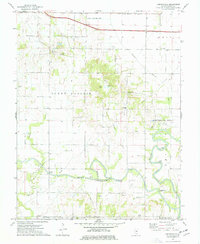 1974 Centerville1977 Print · USGSWhite County’s river-bound landscapes are captured here during the mid-seventies, showing a rural economy defined by petroleum and river bottomlands. Researchers can locate numerous family burial grounds like Salem Cem and Miller Cem, alongside early infrastructure like Sumpter Bridge.
 - 1974 Map of Carmi, 1977 Print
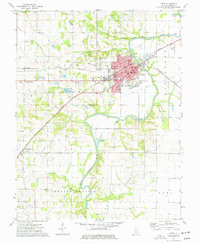 1974 Carmi1977 Print · USGSWhite County’s riverfront and rail corridors are captured in the mid-1970s as industrial development and petroleum extraction shaped the landscape. Genealogists can trace family roots through sites like The Old Graveyard, St Polycarp Cem, and the rural community at Bingman Station.
 - 1978 Map of Emma, 1979 Print
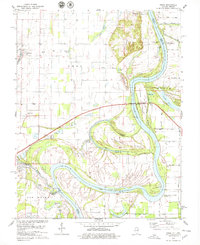 1978 Emma1979 Print · USGSThe river bottomlands of White County and the Illinois-Indiana border are captured here in the late seventies. Researchers can trace local genealogy and river history through landmarks like Emma Concord Ch, Marshall Ferry, and the Dogtown Hills.2 unique versions available
End of results
Showing maps 1-10 of 10
Top cities of White County
- Carmi historical maps
- Norris City historical maps
- Mill Shoals historical maps
- Crossville historical maps
- Enfield historical maps
- Emma historical maps
See more
Frequently asked questions
- What are the different types of historical maps available for White County?
- What is the oldest map of White County?
- Where can I purchase historical maps of White County for my home or office?
- Where can I download high-res historical maps of White County?
- Are there historical topographic maps available for White County?
- Is there historical aerial imagery available for White County?
- Where are historical maps of White County sourced from?