1900s (20th Century) Maps of Bingman Station, Illinois
Explore 6 historic maps of Bingman Station from the 1900s (20th Century). These maps offer a rare glimpse into what life looked like during the 1900s — showing old roads, neighborhoods, homes, and landmarks that have changed or disappeared over time.
Whether you're researching your family's past, planning a metal detecting trip, or studying how Bingman Station's landscape evolved across the 1900s, these high-resolution maps are a powerful tool for exploring the history of this region.
- Focus on a specific era: All maps on this page are from the 1900s, giving you a focused view of this time period.
- See what’s changed: Compare century-old streets, trails, and buildings to today's modern landscape using overlays and satellite layers.
- Research with precision: Use these maps for genealogy, historical research, land use analysis, or educational projects.
- View, download, or print: Maps are fully viewable online in high resolution, and can be downloaded or printed for your own records.
Start exploring Bingman Station's history through authentic maps from the 1900s. This is your window into the past.
Bingman Station, IL maps
(6)- 1940 Map of Carmi, 1965 Print
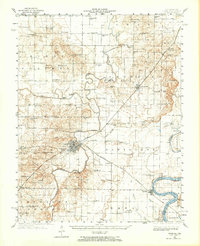 1940 Carmi1965 Print · USGSThe river-and-rail hub of Carmi and the surrounding White County prairies are documented here just before the mid-century. Researchers can trace rural family roots through dozens of named sites like Miller Cem, Stokes Chapel, and Williams Sch.
 - 1943 Map of Carmi
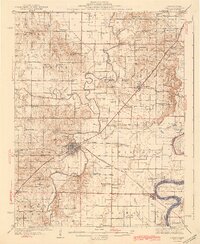 1943 Carmi1943 Print · USGSWhite County, Illinois, is captured during the early 1940s at a critical rail and river junction. Genealogists and researchers can locate scores of rural schools and churches, from Stokes Chapel and Sylvan Glen Sch to the Baptist Orphanage near Carmi.2 unique versions available
 - 1958 Map of Belleville, 1973 Print
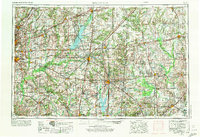 1958 Belleville1973 Print · USGSSouthern Illinois during the mid-twentieth century reveals a landscape of industrial growth and massive new reservoirs. Genealogists and historians can trace the paths of the Illinois Central RR through towns like Centralia or locate landmarks such as Emerald Mound and the Looking Glass Prairie.3 unique versions available
 - 1962 Map of Belleville
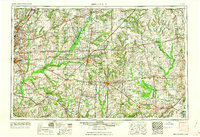 1962 Belleville1962 Print · USGSSouthern Illinois in the late fifties reveals a landscape of industrial growth and ancient landmarks before the full expansion of the interstate system. Genealogists can trace family names and rural post offices near Centralia, Salem, and the historic Monks Mound.
 - 1974 Map of Carmi, 1977 Print
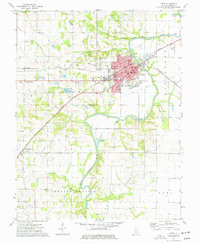 1974 Carmi1977 Print · USGSWhite County’s riverfront and rail corridors are captured in the mid-1970s as industrial development and petroleum extraction shaped the landscape. Genealogists can trace family roots through sites like The Old Graveyard, St Polycarp Cem, and the rural community at Bingman Station.
 - 1982 Map of Mount Vernon
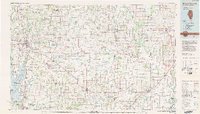 1982 Mount Vernon1982 Print · USGSSouthern Illinois and Southwestern Indiana meet here during a period of significant regional water management and transit growth. Researchers can trace the development of Rend Lake and locate vanished rail stops along the Southern RR near Bluford and Golden Gate.
End of results
Showing maps 1-6 of 6
Top cities near Bingman Station
- Carmi historical maps
- Norris City historical maps
- Mill Shoals historical maps
- Crossville historical maps
- Enfield historical maps
- Barnhill historical maps
See more
Frequently asked questions
- What are the different types of historical maps available for Bingman Station?
- What is the oldest map of Bingman Station?
- Where can I purchase historical maps of Bingman Station for my home or office?
- Where can I download high-res historical maps of Bingman Station?
- Are there historical topographic maps available for Bingman Station?
- Is there historical aerial imagery available for Bingman Station?
- Where are historical maps of Bingman Station sourced from?