1900s (20th Century) Maps of Spring Hill, Illinois
Explore 6 historic maps of Spring Hill from the 1900s (20th Century). These maps offer a rare glimpse into what life looked like during the 1900s — showing old roads, neighborhoods, homes, and landmarks that have changed or disappeared over time.
Whether you're researching your family's past, planning a metal detecting trip, or studying how Spring Hill's landscape evolved across the 1900s, these high-resolution maps are a powerful tool for exploring the history of this region.
- Focus on a specific era: All maps on this page are from the 1900s, giving you a focused view of this time period.
- See what’s changed: Compare century-old streets, trails, and buildings to today's modern landscape using overlays and satellite layers.
- Research with precision: Use these maps for genealogy, historical research, land use analysis, or educational projects.
- View, download, or print: Maps are fully viewable online in high resolution, and can be downloaded or printed for your own records.
Start exploring Spring Hill's history through authentic maps from the 1900s. This is your window into the past.
Spring Hill, IL maps
(6)- 1952 Map of Erie, 1953 Print
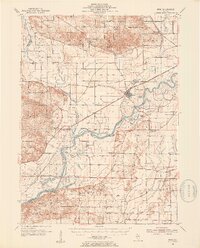 1952 Erie1953 Print · USGSWhiteside and Henry counties are mapped here in the early fifties, showing a rural river-bound landscape along the Rock River. Local historians can trace family roots at Pink Prairie Cem or locate the site of the Old Stage Line Monument and Kingsbury Sch.2 unique versions available
 - 1958 Map of Davenport, 1968 Print
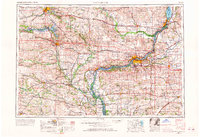 1958 Davenport1968 Print · USGSEastern Iowa and western Illinois thrive along the river during the late fifties, defined by the industrial Quad Cities and a robust rail network. Genealogists can trace family roots through settlements like Oasis and Stanwood or along the Cedar River.2 unique versions available
 - 1961 Map of Davenport
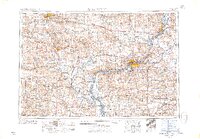 1961 Davenport1961 Print · USGSThe Quad Cities and the eastern Iowa riverlands are captured here in the early sixties, showing the region's transition into a modern industrial and transit hub. Genealogists and historians can trace the paths of major railroads and find river landmarks like Rock Island Arsenal, Huron Island, and the Coralville Reservoir.
 - 1962 Map of Davenport
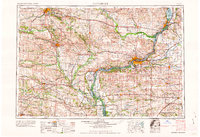 1962 Davenport1962 Print · USGSThe Quad Cities and the Mississippi River corridor are shown at their industrial peak just before the interstate era fully transformed the region. Researchers can trace the sprawling rail networks of the Chicago Rock Island and Pacific and find landmarks like the Rock Island Arsenal and Wild Cat Den State Park.
 - 1982 Map of Spring Hill
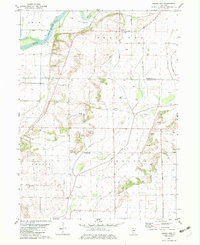 1982 Spring Hill1982 Print · USGSHenry County farmland at the start of the 1980s reveals a quiet landscape of township boundaries and family-named homesteads. Genealogists can trace local roots across numerous rural burial sites including Bowman Cem, Kemmis Cem, and the community at Spring Hill.
 - 1984 Map of Davenport, 1985 Print
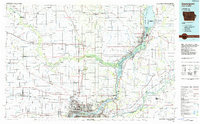 1984 Davenport1985 Print · USGSThe Quad Cities and the eastern Iowa riverlands are captured in the mid-eighties as industry and conservation converged along the Mississippi. Genealogists and local historians can trace rural roots through Stender Church, Oxford Mills, and the Elmwood Cem burial grounds.2 unique versions available
End of results
Showing maps 1-6 of 6
Top cities near Spring Hill
- Clinton historical maps
- Geneseo historical maps
- Camanche historical maps
- Morrison historical maps
- Prophetstown historical maps
- Erie historical maps
See more
Frequently asked questions
- What are the different types of historical maps available for Spring Hill?
- What is the oldest map of Spring Hill?
- Where can I purchase historical maps of Spring Hill for my home or office?
- Where can I download high-res historical maps of Spring Hill?
- Are there historical topographic maps available for Spring Hill?
- Is there historical aerial imagery available for Spring Hill?
- Where are historical maps of Spring Hill sourced from?